
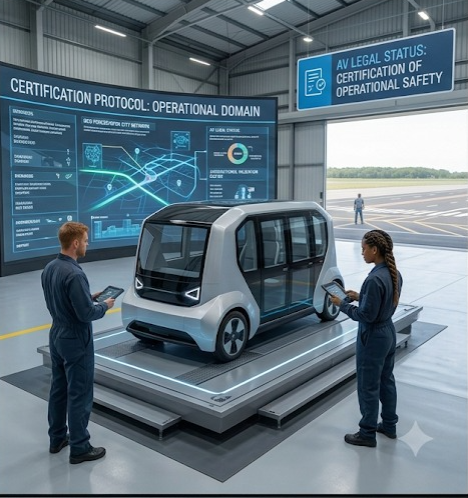
Autonomous vehicles are rapidly changing the transportation industry by combining artificial intelligence, sensors, cameras, and advanced software to reduce or eliminate the need for human drivers. As self-driving technology develops, governments and regulators are facing an important question: What is the legal status of autonomous vehicles? The answer varies between countries and depends on factors such as vehicle automation levels, road safety regulations, liability rules, insurance requirements, and data protection laws.
What Are Autonomous Vehicles?
Autonomous vehicles, also known as self-driving or driverless vehicles, are vehicles capable of performing some or all driving tasks with limited human involvement. These vehicles use technologies such as artificial intelligence, radar, LiDAR, GPS, cameras, and machine learning to understand their surroundings and make driving decisions.
The Society of Automotive Engineers (SAE) commonly categorizes vehicle automation from Level 0, where the driver performs all driving tasks, to Level 5, where the vehicle can operate completely without human control. This classification is important because legal requirements can differ depending on the level of automation.
Current Legal Framework for Autonomous Vehicles
The legal status of autonomous vehicles is still developing in many parts of the world. Traditional traffic laws generally assume that a human driver is responsible for controlling a vehicle. Autonomous technology challenges this assumption because software may perform important driving functions instead.
Some countries have introduced specific legislation or testing regulations for self-driving vehicles. Others allow autonomous vehicle trials under existing motor vehicle laws while developing new rules for commercial deployment.
Regulators are particularly focused on ensuring that autonomous vehicles meet safety standards before they are allowed to operate widely on public roads.
Who Is Responsible After an Accident?
One of the biggest legal challenges involving autonomous vehicles is determining liability. In a conventional accident, responsibility usually falls on the driver, depending on the circumstances. With a self-driving vehicle, several parties could potentially be involved.
These may include the vehicle owner, manufacturer, software developer, technology supplier, or maintenance provider. If an accident occurs because of a software defect, sensor failure, manufacturing problem, or improper maintenance, determining responsibility can become complicated.
Future autonomous vehicle laws will need clear rules explaining how liability is assigned when human decisions and automated systems interact.

Insurance and Autonomous Vehicles
Insurance is another important part of the legal status of autonomous vehicles. Traditional car insurance is largely based on driver-related risks, including driving history and behavior. Autonomous vehicles may shift some of this risk from the driver toward manufacturers and technology providers.
Insurance companies may therefore need new models that consider software reliability, vehicle automation levels, cybersecurity, system performance, and maintenance records. Governments may also establish minimum insurance requirements specifically for autonomous vehicles.
Data Privacy and Cybersecurity Concerns
Autonomous vehicles generate and process significant amounts of information. Cameras, sensors, GPS systems, and connected services can collect information about roads, vehicles, passengers, and locations.
This creates important questions about data privacy and autonomous vehicles. Regulators may require companies to explain what information is collected, how it is stored, and who can access it.
Cybersecurity is equally important. A compromised autonomous vehicle could create serious safety risks, making strong security standards essential for connected and driverless transportation.
Autonomous Vehicles in India
In India, the legal framework surrounding fully autonomous vehicles is still evolving. Existing motor vehicle regulations were primarily designed around human drivers and conventional vehicles. Autonomous driving therefore presents new regulatory challenges involving testing, safety certification, liability, insurance, and road infrastructure.
As autonomous technology develops, India may need updated legislation that balances technological innovation with public safety and accountability.
The Future of Autonomous Vehicle Laws
The future legal framework for self-driving cars will likely involve cooperation between governments, vehicle manufacturers, technology companies, insurers, cybersecurity experts, and transportation authorities. Clear standards could help encourage innovation while protecting road users.
International cooperation may also become important because autonomous vehicles can cross borders, while software and technology suppliers often operate globally.
The legal status of autonomous vehicles remains an evolving area of transportation law. While self-driving technology offers potential benefits such as improved road safety, greater mobility, and reduced human error, it also creates complex questions about liability, insurance, privacy, cybersecurity, and regulatory responsibility.
As autonomous vehicles move from testing environments toward everyday transportation, governments will need flexible and technology-neutral laws. A clear legal framework can help ensure that innovation continues while keeping safety, accountability, and public trust at the center of the autonomous driving revolution.
Legal Age of Marriage in India