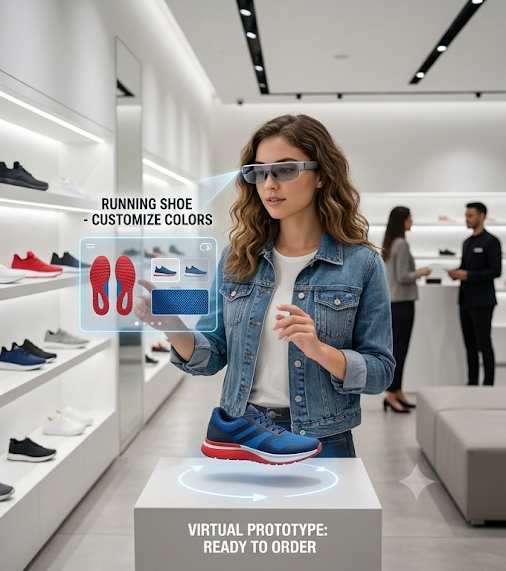
The rapid growth of e-commerce has changed the way people discover, compare, and purchase products. However, online shopping still has one major limitation: customers cannot physically see or try a product before buying it. Augmented Reality (AR) is helping solve this challenge by bringing interactive and immersive experiences directly to shoppers. From virtually trying on clothes to viewing furniture inside a home, AR is transforming e-commerce shopping and creating a more engaging digital retail experience.
What Is Augmented Reality in E-Commerce?
Augmented Reality combines digital content with the real-world environment through smartphones, tablets, smart glasses, and other connected devices. In e-commerce, AR allows shoppers to interact with products virtually before making a purchase.
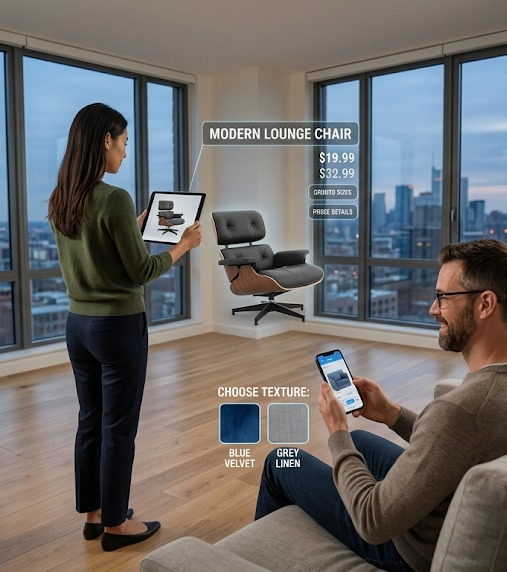
For example, a customer can use a smartphone camera to see how a sofa might look in their living room or preview how a pair of glasses fits their face. This technology makes online shopping more visual, interactive, and personalized.
Virtual Product Visualization
One of the biggest advantages of AR in e-commerce is virtual product visualization. Traditional product pages usually depend on photographs, descriptions, and customer reviews. While these features remain important, they may not provide enough information about a product’s size, appearance, or suitability.
AR allows shoppers to place a digital representation of a product in their actual surroundings. This can be especially useful for furniture, home décor, electronics, fashion accessories, and other products where appearance and dimensions influence purchasing decisions.
Virtual Try-On Experiences
The fashion and beauty industries are among the major beneficiaries of AR technology. Virtual try-on tools allow customers to preview products without physically visiting a store.
Shoppers can digitally test sunglasses, makeup, clothing, footwear, and accessories using their device camera. These experiences can make customers more confident about their choices while making the shopping journey more entertaining.
Reducing Product Returns
Product returns are a major challenge for online retailers. Customers may return products because they look different from expectations, do not fit their space, or are unsuitable for their appearance.
AR can help reduce this problem by giving shoppers a better understanding of products before purchasing. When customers can visualize an item in a real environment or preview how it may look on them, they can make more informed buying decisions.
Creating Personalized Shopping Experiences
Modern consumers increasingly expect personalized digital experiences. AR can support this trend by allowing shoppers to interact with products according to their individual preferences.
For example, customers may change colors, styles, sizes, or product configurations within an AR experience. This level of interaction can make customers feel more connected to the products they are considering and can encourage stronger purchase intent.
Increasing Customer Engagement
AR can turn ordinary product browsing into an interactive experience. Instead of simply scrolling through product images, customers can explore products from different angles and interact with digital features.
This increased engagement can keep shoppers on an e-commerce platform for longer periods. Retailers can also use creative AR campaigns to attract attention on social media and create memorable brand experiences.
The Future of AR in Online Shopping
As smartphones, artificial intelligence, 3D modeling, and spatial computing continue to develop, AR is expected to become an increasingly important part of e-commerce. Upcoming shopping platforms might provide extremely lifelike virtual showrooms, smart product suggestions, and engaging shopping settings.
Retailers that adopt AR effectively can differentiate themselves in a competitive market while offering customers more confidence and convenience.
AR is transforming e-commerce shopping by bridging the gap between physical and digital retail. Through virtual visualization, try-on experiences, personalization, and interactive product discovery, augmented reality can make online shopping more immersive and informative. As the technology becomes more accessible, AR has the potential to redefine how consumers explore products and make purchasing decisions in the future.
Trends, opportunities and challenges of farm mechanization in India
Success stories and lessons from India’s agricultural cooperatives
Read Also: Laravel Framework Web Development