Setting boundaries is one of the most important skills for building healthy relationships, improving mental well-being, and maintaining self-respect. Whether in personal relationships, the workplace, or social situations, knowing how to communicate boundaries clearly helps prevent misunderstandings and creates mutual respect. Clear boundaries are not about controlling others—they are about expressing your needs, values, and limits in a respectful and confident way.
Why Clear Boundaries Matter
Healthy boundaries define what you are comfortable with and what you are not. They protect your time, energy, emotions, and personal values. Without clear boundaries, people may unintentionally cross limits, leading to stress, frustration, resentment, or burnout.
Communicating boundaries effectively allows others to understand your expectations while encouraging honest and respectful interactions. It also builds trust because people know where you stand and what they can expect from you.
Understand Your Own Limits First
Before communicating boundaries, take time to identify your personal limits. Ask yourself:
- What situations make you feel uncomfortable?
- Which behaviors are acceptable or unacceptable?
- How much time and energy can you realistically give?
Knowing your boundaries makes it easier to explain them confidently. Self-awareness is the foundation of healthy communication because you cannot express limits that you have not clearly defined for yourself.
Be Direct and Respectful
One of the biggest mistakes people make is expecting others to guess their boundaries. Instead, convey them clearly with uncomplicated and polite language.
To illustrate, rather than stating, “Perhaps I can’t assist this weekend,” express, “I’ll be unavailable this weekend as I require some time to relax.”
Being direct reduces confusion and prevents mixed signals. At the same time, speaking respectfully shows that you value both your own needs and the other person’s feelings.
Use “I” Statements
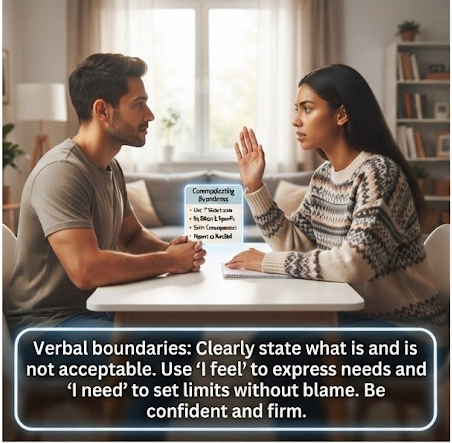
Using “I” statements helps keep conversations calm and non-confrontational. Rather than blaming someone, focus on how you feel and what you need.
Examples include:
- “I need uninterrupted time to complete my work.”
- I get stressed when last-minute changes are made to plans.
- “I prefer discussing disagreements calmly.”
This communication style encourages understanding instead of defensiveness, making it easier for others to respect your boundaries.
Stay Consistent with Your Boundaries
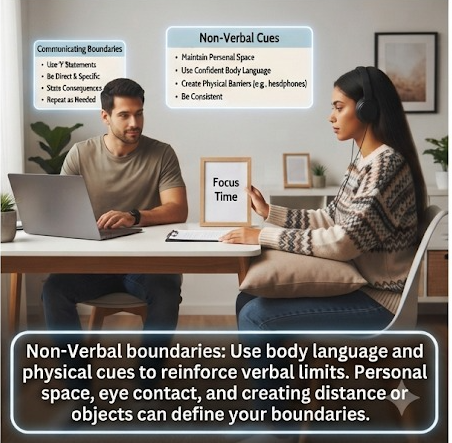
Consistency is essential when setting boundaries. If you repeatedly make exceptions, people may become confused about your expectations.
For example, if you decide not to answer work messages after office hours, avoid responding unless it is a genuine emergency. Consistent actions reinforce the message that your boundaries are important and should be respected.
Remember that maintaining boundaries does not make you rude—it demonstrates self-respect and reliability.
Prepare for Different Reactions
Not everyone will immediately accept your boundaries. Some people may be surprised, disappointed, or even resistant, especially if they are used to unlimited access to your time or energy.
Stay calm and avoid lengthy explanations. Repeat your boundary politely if necessary. You do not need to justify every decision. Respectful repetition often communicates confidence more effectively than arguing.
Healthy relationships adapt to reasonable boundaries over time.
Learn to Say No Without Guilt
Many people struggle with saying no because they fear disappointing others. However, saying yes to everything often leads to exhaustion and resentment.
A polite but firm response can be enough:
- “I appreciate your consideration, but I must refuse.”
- “I cannot handle any more duties at the moment.”
- “That doesn’t work for me.”
Declining a request respectfully allows you to protect your priorities while maintaining positive relationships.
Practice Active Listening
Effective boundaries are part of a two-way conversation. Listen carefully when others share their needs and concerns. Respecting someone else’s boundaries encourages them to respect yours.
Mutual understanding creates stronger communication, healthier friendships, better teamwork, and more balanced family relationships.
Learning how to communicate boundaries clearly is an essential life skill that improves relationships, reduces stress, and supports emotional well-being. By understanding your limits, expressing them confidently, using respectful language, and remaining consistent, you create an environment where honesty and mutual respect can thrive.
Remember, healthy boundaries are not barriers that push people away. Instead, they create clear expectations that strengthen trust, improve communication, and allow relationships to grow in a positive and respectful way.
Read Also: Wedding Website Design