
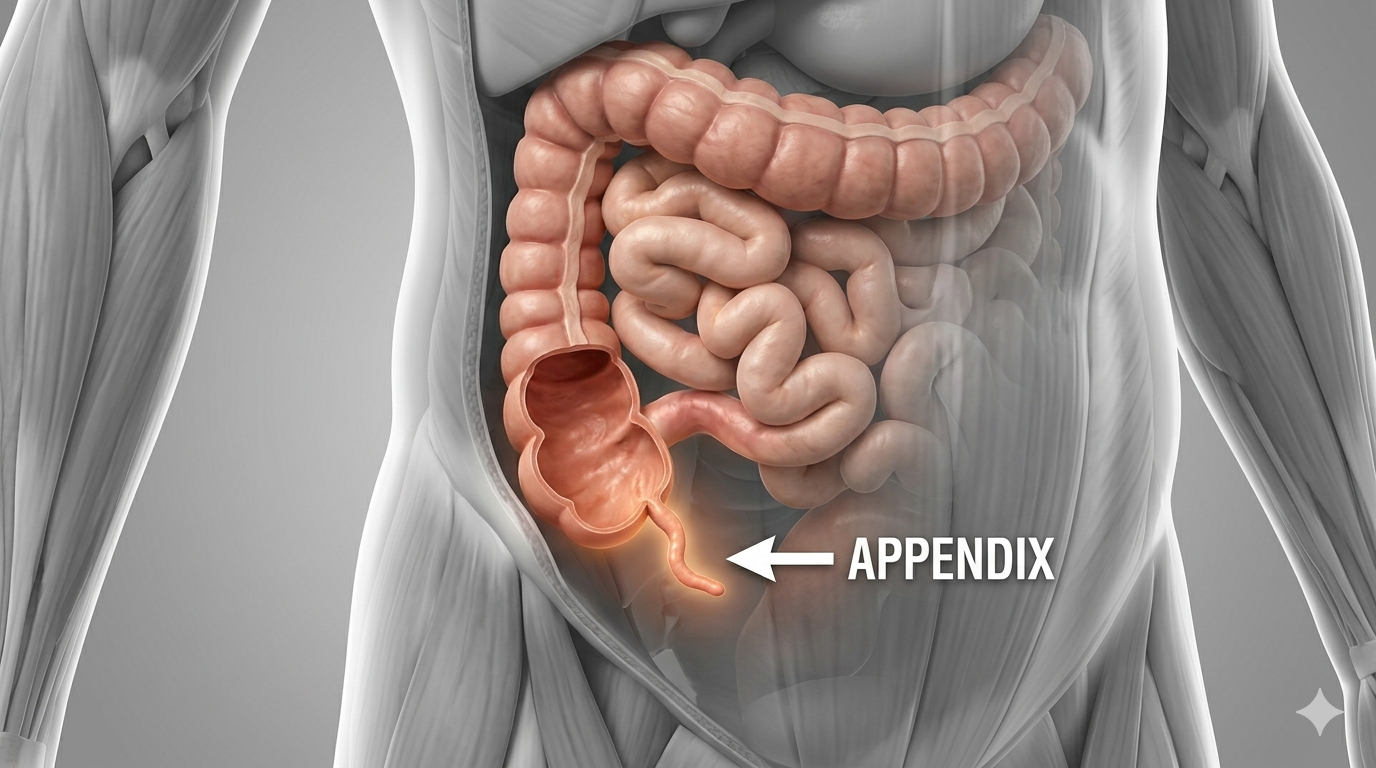
The appendix is a small, tube-shaped organ in the human body that many people don’t think about—until it causes problems. If you’ve ever wondered, “Where is Your Appendix?” This article will provide a straightforward and understandable explanation of its function, potential symptoms, and when to seek medical attention.
Location of the Appendix
The appendix is in the lower right quadrant of your stomach. More specifically, it is attached to the cecum, which is the beginning of the large intestine (colon).
If you imagine your abdomen divided into four sections, the appendix sits in the right lower quadrant (RLQ). Doctors often refer to a specific point called McBurney’s point, which lies about one-third of the distance from your belly button to your right hip bone. This is typically where pain is felt if the appendix becomes inflamed.
What Does the Appendix Do?
For many years, the appendix was considered a vestigial organ, meaning it had no real purpose. However, recent research suggests it may play a role in:
- Supporting the immune system
- Acting as a storage area for good bacteria in the gut
- Helping restore gut flora after infections
Despite these possible functions, the body can function normally without the appendix.
Common Problems Related to the Appendix
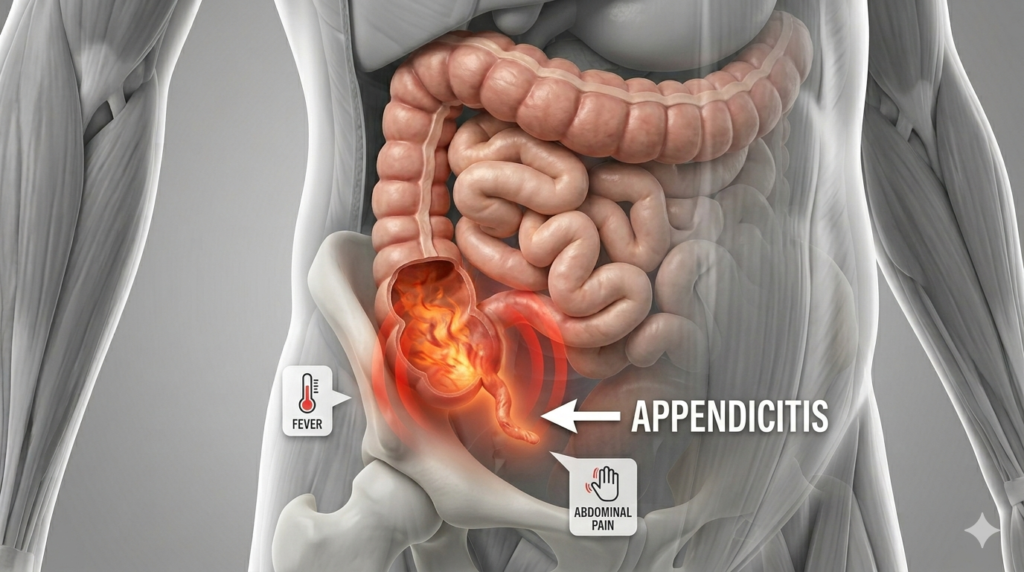
The most well-known condition involving the appendix is appendicitis, which occurs when the appendix becomes inflamed and filled with pus. This condition requires immediate medical attention.
Symptoms of Appendicitis
Here are some common signs:
- Sudden pain near the belly button, shifting to the lower right abdomen
- Pain that worsens when walking, coughing, or moving
- Nausea and vomiting
- Loss of appetite
- Fever
- Constipation or diarrhea
If untreated, the appendix can rupture (burst), leading to a serious infection called peritonitis.
When Should You See a Doctor?
You should seek medical help immediately if you experience:
- Extreme pain in the abdomen, particularly on the right side
- Pain that gets worse over time
- Fever with abdominal discomfort
- Vomiting along with pain
Early diagnosis can prevent complications and often leads to a quicker recovery.
How Is Appendicitis Diagnosed?
Doctors may use several methods to diagnose appendix-related issues:
- Physical examination (checking for tenderness in the lower right abdomen)
- Blood tests (to detect infection)
- Imaging tests like ultrasound or CT scan
Treatment Options
The most common treatment for appendicitis is surgical removal of the appendix, known as an appendectomy. This can be done in two ways:
- Laparoscopic surgery (minimally invasive, faster recovery)
- Open surgery (used in more severe cases)
In some early cases, doctors may try antibiotics, but surgery is usually the safest and most permanent solution.
Can You Live Without an Appendix?
Without your appendix, you may lead a perfectly typical existence. Once removed, it does not affect digestion or overall health in a significant way.
So, Where is Your Appendix? It is a small organ located in the lower right abdomen, attached to the large intestine. While it may have minor immune functions, it is not essential for survival. However, problems like appendicitis can be serious and require immediate attention. Understanding its location and symptoms can help you act quickly and stay healthy.
Best Adventures to do in India
Read Also: Tours And Travels Website Design