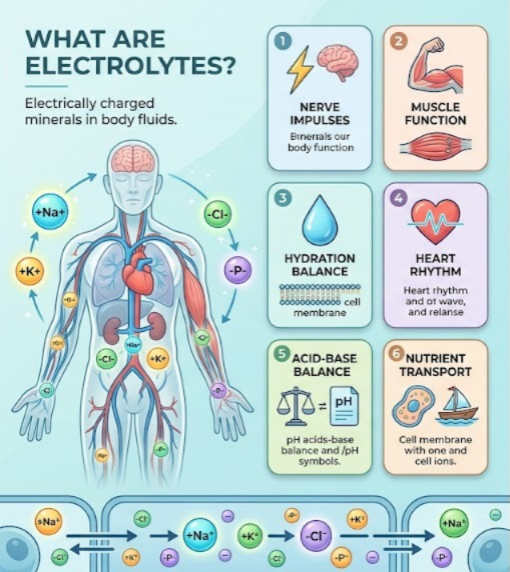
Electrolytes are essential minerals in your body that carry an electric charge. They play a crucial role in maintaining vital bodily functions, including hydration, nerve signaling, and muscle contraction. One of the most common queries is: What are Electrolytes? Common electrolytes include sodium, potassium, calcium, magnesium, chloride, bicarbonate, and phosphate. These minerals are found in your blood, urine, tissues, and other body fluids.
Why Are Electrolytes Important?
Electrolytes are vital for keeping your body functioning properly. They help regulate fluid balance, ensuring your cells neither shrink nor swell excessively. This balance is especially important for maintaining blood pressure and overall hydration levels.
Another key function of electrolytes is supporting nerve function. Electrical impulses rely on electrolytes to travel between cells, allowing your brain to communicate with the rest of your body. Without proper electrolyte balance, this communication can be disrupted.
Muscle function also depends heavily on electrolytes. Minerals like calcium and potassium help muscles contract and relax efficiently. An imbalance can lead to muscle cramps, weakness, or even spasms.
Types of Electrolytes and Their Functions
Different electrolytes serve different purposes in the body:
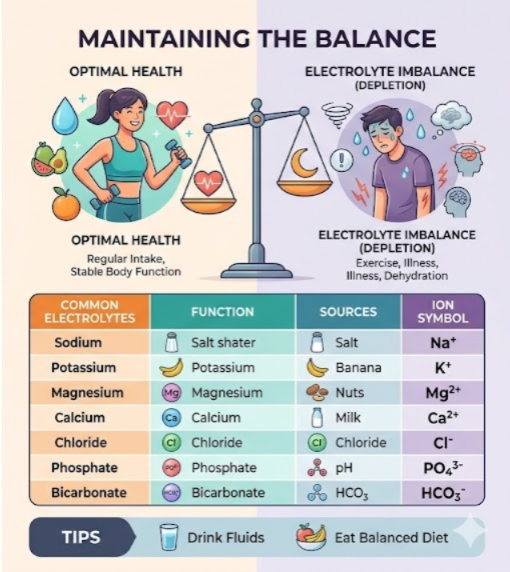
- Sodium: Helps regulate fluid balance and blood pressure.
- Potassium: Supports heart function and muscle contractions.
- Calcium: Essential for strong bones and muscle activity.
- Magnesium: Plays a role in muscle relaxation and energy production.
- Chloride: Maintains fluid balance and supports digestion.
- Phosphate: Important for energy storage and bone health.
- Bicarbonate: Helps maintain the body’s pH balance.
Each of these electrolytes must be present in the right amounts to keep your body functioning optimally.
Causes of Electrolyte Imbalance
An electrolyte imbalance occurs when the levels of these minerals become too high or too low. This can happen due to several reasons:
- Dehydration from excessive sweating, vomiting, or diarrhea
- Poor diet lacking essential nutrients
- Kidney problems affecting mineral regulation
- Certain medications like diuretics
- Intense physical activity without proper hydration
Even mild imbalances can cause noticeable symptoms, while severe imbalances may become life-threatening.
Symptoms of Electrolyte Imbalance
The symptoms of electrolyte imbalance can vary depending on which mineral is affected. Common signs include:
- Fatigue and weakness
- Muscle cramps or spasms
- Headaches
- Irregular heartbeat
- Nausea or vomiting
- Confusion or irritability
If left untreated, severe imbalances can lead to serious complications such as seizures or cardiac issues.
How to Maintain Healthy Electrolyte Levels
Maintaining proper electrolyte balance is essential for overall health. Here are some practical tips:
- Stay Hydrated: Drink enough water throughout the day, especially during hot weather or exercise.
- Eat a Balanced Diet: Include fruits, vegetables, dairy, nuts, and whole grains to ensure adequate mineral intake.
- Use Electrolyte Drinks Wisely: Sports drinks can help replenish lost electrolytes during intense workouts, but avoid overconsumption.
- Monitor Health Conditions: If you have kidney issues or other medical conditions, consult a healthcare provider for guidance.
Best Sources of Electrolytes
You can naturally obtain electrolytes from a variety of foods and beverages:
- Bananas (rich in potassium)
- Dairy products (high in calcium)
- Leafy greens (contain magnesium)
- Coconut water (natural electrolyte drink)
- Salted foods (source of sodium and chloride)
Including these in your daily diet can help maintain a healthy balance.
So, What are Electrolytes? Electrolytes are small but powerful minerals that keep your body running smoothly. From regulating hydration to supporting muscle and nerve function, their role is indispensable. Understanding what electrolytes are and how to maintain their balance can significantly improve your overall health and well-being. By staying hydrated, eating a balanced diet, and paying attention to your body’s signals, you can ensure your electrolyte levels remain in check.
Effects of AI in Upcoming Technology
Manhole – Essential Access Points in Urban Infrastructure
RCPC Manhole Covers and Frames
Read Also: Social Network Website Design