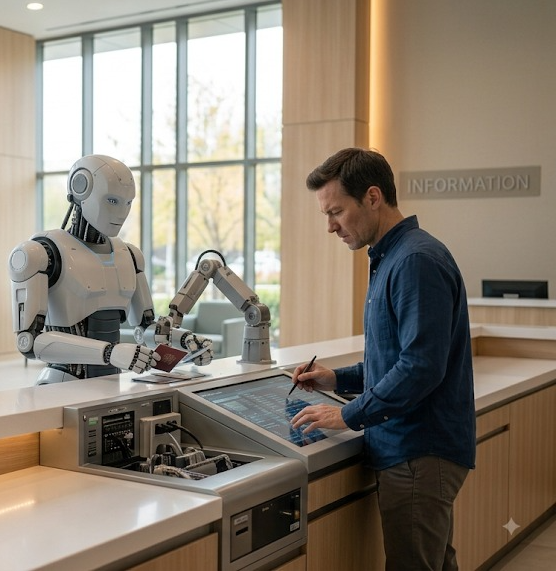
Customer service is no longer limited to human conversations. From chatbots on websites to interactive robots in hotels, airports, banks, and retail stores, technology is becoming an important part of the customer journey. Behind this transformation is an interesting field: the psychology of customer service robots. The research delves into how individuals view, rely on, interact with, and emotionally react to robots created to support them.
Understanding this psychology is important because successful customer service technology depends on more than speed and accuracy. Customers also want to feel understood, respected, and comfortable.
Why Do Customers Interact With Service Robots?
People generally interact with customer service robots because they offer convenience. A robot can provide information instantly, answer frequently asked questions, guide customers through a process, or help them find products without requiring them to wait for an employee.
The psychological appeal often comes from availability and predictability. Customers know that an automated system can respond at any time and usually follows a consistent process. This can reduce frustration during simple transactions.
Nevertheless, clients might have varied expectations of a robot based on the circumstances. For routine questions, automation can feel efficient. For complicated complaints or emotionally sensitive problems, many customers still prefer human assistance.
The Role of Trust in Customer Service Robots
Trust is one of the most important psychological factors behind successful robot-assisted customer service. Customers need to believe that the system is reliable, secure, and capable of providing useful information.
A robot that frequently gives incorrect answers can quickly lose customer confidence. On the other hand, a system that clearly communicates its capabilities can create more realistic expectations.
Transparency also matters. Customers should understand when they are communicating with an automated system rather than a human employee. Clear communication can prevent feelings of deception and make the interaction more comfortable.
Can Robots Create Emotional Connections?
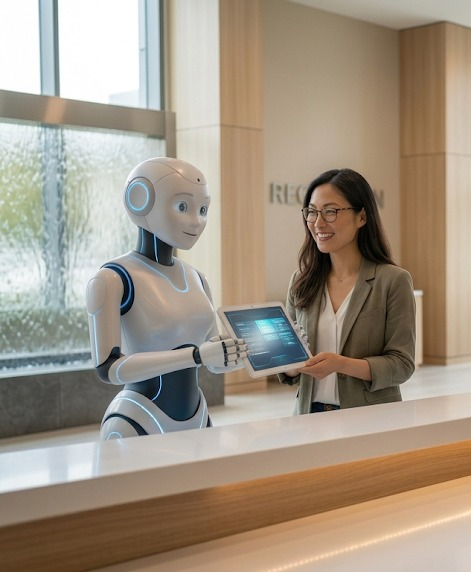
At first, emotional connection and robots may seem incompatible. Yet people naturally respond to conversational interfaces, voices, facial expressions, and social cues.
A friendly tone, polite language, and appropriate responses can make a customer service robot appear more approachable. Some advanced systems can recognize basic conversational patterns and respond accordingly.
However, there is a psychological limit. Customers may become uncomfortable if a robot tries too hard to imitate human emotions. This is related to the broader concept of the uncanny valley, where something appears almost human but still feels noticeably artificial.
The best customer service robots may therefore focus on being helpful and socially appropriate rather than pretending to be human.
Personalization and Customer Psychology
Personalization can significantly influence how customers perceive automated service. When a robot remembers preferences, understands previous interactions, or provides relevant recommendations, customers may feel that the service is more convenient and valuable.
For example, an online shopping assistant might recommend products based on a customer’s previous searches. A hotel robot could provide information about nearby facilities based on a guest’s request.
Nevertheless, personalization must be balanced with privacy. Customers can become uncomfortable when automated systems appear to know too much about them. Responsible data practices are therefore essential for maintaining trust.
How Human-Like Behavior Influences Customers
Human-like characteristics can influence customer behavior. A conversational robot that uses natural language may feel easier to communicate with than a rigid menu-based system.
Simple social behaviors such as greetings, polite responses, and acknowledging a customer’s request can make interactions smoother. Visual design can also influence perception. A robot with a friendly appearance may be perceived differently from a machine designed purely for functional tasks.
The key is to match the robot’s personality and appearance with its purpose. A medical information assistant, retail robot, and hotel concierge may require very different communication styles.
When Customers Prefer Human Employees
Despite rapid advances in artificial intelligence and robotics, customer service robots cannot replace human interaction in every situation.
Customers often want human support when dealing with refunds, serious complaints, complicated financial matters, or emotionally stressful situations. Humans can interpret subtle emotions, exercise judgment, and adapt conversations in ways automated systems may struggle to replicate.
For this reason, the strongest customer service strategies often combine automation with human support. Robots can handle repetitive tasks while employees focus on situations requiring empathy, creativity, and decision-making.
The Future of Customer Service Robotics
The future of customer service robots will likely focus on collaboration rather than complete replacement of human employees. Artificial intelligence, natural language processing, computer vision, and robotics are making automated systems increasingly capable.
As these technologies develop, psychology will remain central to their design. Companies will need to understand not only what robots can do but also how customers feel while interacting with them.
Ultimately, successful customer service robots should make interactions faster, easier, trustworthy, and more comfortable. Technology may provide the tools, but understanding human psychology will determine whether customers actually want to use them.
Adolf Hitler Biography and His Brutality
What Is Middle East and Why Is It Called Middle East?
Read Also:Dating Or Matrimony Website Design