Understanding medical terminology for reproductive health is essential for making informed healthcare decisions. Whether you are visiting a gynecologist, learning about fertility, planning a pregnancy, or simply improving your health knowledge, knowing common reproductive health terms can make conversations with healthcare professionals much easier. Medical terminology may seem confusing at first, but breaking down these terms into simple language helps everyone better understand their reproductive system and overall well-being.
This guide explains the most commonly used reproductive health terms in an easy-to-understand way while highlighting their importance in maintaining reproductive wellness.
What Is Reproductive Health?
Reproductive health refers to the complete physical, mental, and social well-being related to the reproductive system. It includes healthy reproductive organs, access to healthcare, family planning, pregnancy care, fertility treatment, and prevention of sexually transmitted infections (STIs).
Learning the proper medical terminology allows patients to communicate more effectively with doctors and understand medical reports, diagnoses, and treatment options.
Common Medical Terminology for Reproductive Health
1. Ovulation
Ovulation is the event when a mature egg is discharged from an ovary. It typically occurs around the middle of the menstrual cycle and is the most fertile period for pregnancy.
2. Menstrual Cycle
The menstrual cycle is the monthly hormonal process that prepares the uterus for pregnancy. A normal cycle usually lasts between 21 and 35 days and includes menstruation, ovulation, and hormonal changes.
3. Fertility
Fertility refers to the natural ability to conceive a child. Both male and female reproductive health contribute to fertility. Various medical conditions, age, and lifestyle choices can affect fertility.
4. Infertility
Infertility is described as the incapacity to conceive after one year of consistent, unprotected sexual intercourse. Healthcare providers may recommend fertility testing and specialized treatments to identify and address the underlying cause.
5. Hormones
Hormones are chemical messengers that regulate reproductive functions. Important reproductive hormones include estrogen, progesterone, testosterone, follicle-stimulating hormone (FSH), and luteinizing hormone (LH).
Important Female Reproductive Health Terms
Cervix
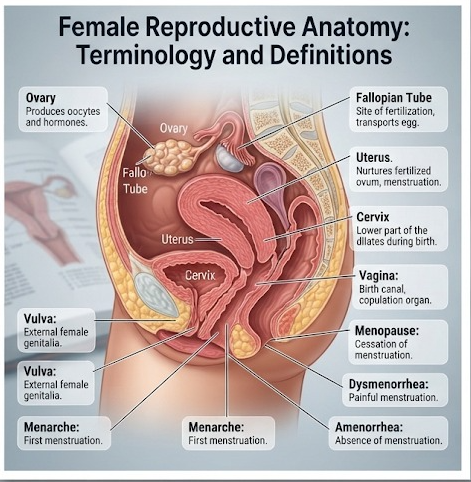
The cervix is the bottom portion of the uterus that links to the vaginal canal. It plays an important role during menstruation, pregnancy, and childbirth.
Uterus
The uterus, commonly known as the womb, is where a fertilized egg implants and develops during pregnancy.
Endometrium
The endometrium is the inner lining of the uterus. It thickens each month in preparation for pregnancy and sheds during menstruation if pregnancy does not occur.
Ovaries
The ovaries are female reproductive organs responsible for producing eggs and reproductive hormones.
Polycystic Ovary Syndrome (PCOS)
PCOS is a common hormonal disorder that can affect ovulation, menstrual cycles, fertility, and metabolism. Early diagnosis and proper management can significantly improve symptoms.
Important Male Reproductive Health Terms
Sperm
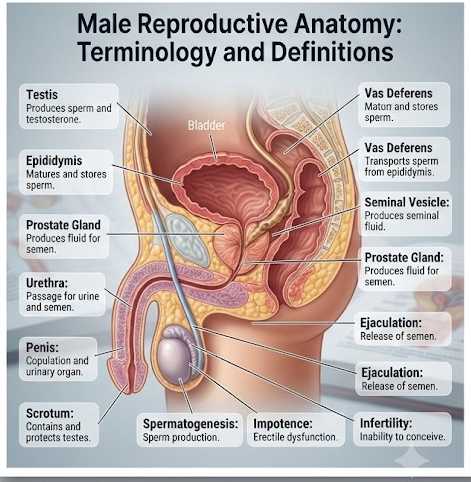
Sperm are male reproductive cells that fertilize the female egg during conception.
Semen
Semen is the fluid that carries sperm during ejaculation. It contains nutrients that help protect and transport sperm.
Prostate
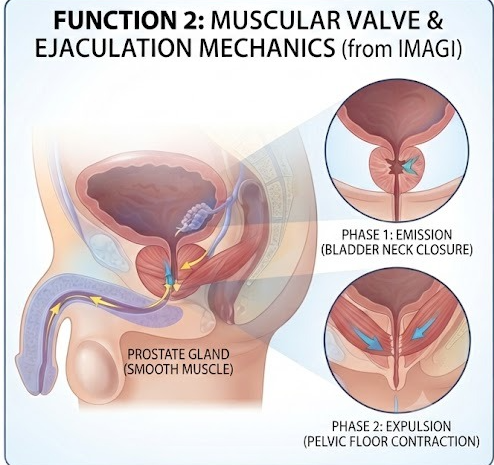
The prostate is a gland that produces part of the seminal fluid. Maintaining prostate health is important for reproductive and urinary function.
Testosterone
Testosterone is the primary male sex hormone responsible for reproductive development, muscle growth, and sperm production.
Reproductive Health Conditions
Several medical conditions commonly appear during reproductive health evaluations:
- Endometriosis
- Uterine fibroids
- Pelvic inflammatory disease (PID)
- Erectile dysfunction
- Sexually transmitted infections (STIs)
- Menopause
- Premature ovarian insufficiency
Recognizing these terms helps individuals better understand diagnoses and available treatment options.
Why Understanding Medical Terminology Matters
Learning reproductive health terminology offers several benefits:
- Improves communication with healthcare providers.
- Helps interpret laboratory reports and medical records.
- Supports informed healthcare decisions.
- Reduces confusion during medical consultations.
- Encourages early detection of reproductive health concerns.
Knowledge empowers patients to participate actively in their healthcare journey.
Tips for Maintaining Reproductive Health
Good reproductive health involves healthy daily habits. Consider these recommendations:
- Schedule regular reproductive health check-ups.
- Maintain a balanced diet and healthy weight.
- Exercise consistently.
- Practice safe sex.
- Avoid smoking and excessive alcohol consumption.
- Manage stress effectively.
- Seek medical advice whenever unusual symptoms appear.
Preventive care plays a vital role in preserving fertility and overall reproductive wellness.
Understanding medical terminology for reproductive health helps individuals confidently navigate healthcare discussions, understand medical conditions, and make informed decisions about their well-being. From ovulation and fertility to hormones, reproductive organs, and common health conditions, these essential terms provide a strong foundation for lifelong reproductive health awareness.
By educating yourself about reproductive health terminology and maintaining regular medical check-ups, you can take proactive steps toward protecting your reproductive system and improving your overall quality of life. Knowledge is one of the most powerful tools for achieving better health outcomes and making informed choices for yourself and your family.
How to Choose the Best Online Courses for Career Advancement
Exploring the Top Scientific Theories That Changed the World