Understanding human anatomy is essential for medical students, nursing students, physiotherapists, fitness professionals, and anyone interested in learning how the human body works. Fortunately, you don’t need expensive textbooks or paid courses to build a strong foundation. Today, there are numerous free human anatomy learning resources that offer interactive lessons, 3D models, videos, quizzes, and detailed illustrations.
In this article, we’ll explore the best free anatomy resources, their benefits, and tips to make your learning journey more effective.
Why Learn Human Anatomy?
Human anatomy is the study of the body’s structure, including bones, muscles, organs, tissues, and body systems. Learning anatomy helps you:
- Understand how the human body functions.
- Prepare for medical and healthcare careers.
- Improve fitness and rehabilitation knowledge.
- Build a foundation for physiology and pathology.
- Enhance problem-solving skills in healthcare.
Whether you’re preparing for exams or learning out of curiosity, free resources can provide high-quality education.
Benefits of Free Human Anatomy Learning Resources
Choosing free educational platforms comes with several advantages:
Cost-Effective Learning
Premium anatomy books and courses can be expensive. Free resources allow students and lifelong learners to access quality educational material without financial pressure.
Learn at Your Own Pace
Most online resources are available 24/7. You can revisit difficult topics, pause video lessons, and practice repeatedly until concepts become clear.
Interactive Learning Experience
Many websites include 3D anatomy models, virtual dissections, quizzes, and animations that make learning more engaging than reading textbooks alone.
Regularly Updated Content
Unlike printed books, many online educational platforms update their content regularly to reflect the latest scientific knowledge.
Top Free Human Anatomy Learning Resources
1. Interactive 3D Anatomy Platforms
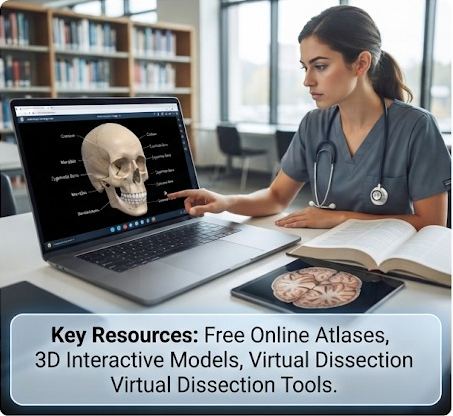
Several free websites provide interactive 3D models that let users rotate, zoom, and explore different body systems. These tools make it easier to visualize muscles, bones, organs, nerves, and blood vessels from every angle.
2. Educational Video Channels
Many educators upload detailed anatomy lectures covering topics such as:
- Skeletal system
- Muscular system
- Nervous system
- Cardiovascular system
- Respiratory system
- Digestive system
Video lessons simplify complex concepts using animations and real-life examples.
3. Open Educational Websites
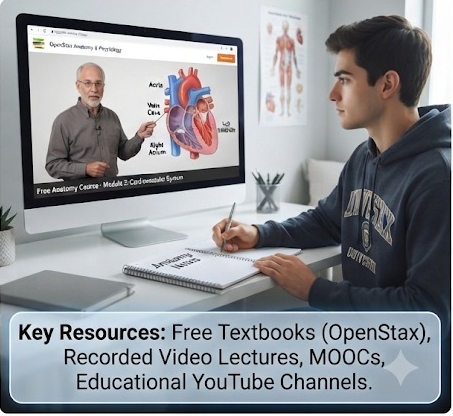
Universities and educational organizations often publish free anatomy lectures, diagrams, practice questions, and downloadable study guides. These trusted resources are excellent for beginners and advanced learners alike.
4. Anatomy Quiz Platforms
Testing your knowledge is one of the fastest ways to improve retention. Free quiz websites offer multiple-choice questions, labeling exercises, and flashcards that reinforce important anatomical structures.
5. Digital Anatomy Atlases
Free digital atlases contain detailed illustrations of every body system. They serve as excellent references while studying or preparing for practical examinations.
Tips for Learning Anatomy More Effectively
Learning anatomy requires consistency rather than memorization alone. Here are some practical tips:
- Study one body system at a time.
- Use diagrams alongside written explanations.
- Practice labeling anatomical structures daily.
- Review concepts regularly using flashcards.
- Watch animations to understand body movements.
- Take quizzes after every study session.
- Revise previous topics every week.
Combining multiple learning methods improves long-term memory and understanding.
Who Can Benefit from Free Anatomy Resources?
Free anatomy learning materials are valuable for many learners, including:
- Medical students
- Nursing students
- Physiotherapy students
- Pharmacy students
- Biology students
- Personal trainers
- Yoga instructors
- Massage therapists
- Healthcare professionals
- Curious lifelong learners
Regardless of your background, these resources provide accessible knowledge suitable for different skill levels.
Common Challenges While Studying Anatomy
Many beginners find anatomy overwhelming because of the large number of structures and unfamiliar terminology. To overcome these challenges:
- Break large topics into smaller sections.
- Focus on understanding relationships between body parts.
- Use visual aids instead of relying only on text.
- Practice regularly instead of cramming before exams.
Patience and consistent practice make anatomy much easier over time.
With today’s digital learning tools, mastering anatomy no longer requires costly textbooks or paid subscriptions. Free human anatomy learning resources offer interactive models, educational videos, quizzes, digital atlases, and comprehensive study materials that support learners at every level. By studying consistently and using a combination of visual and interactive resources, you can build a strong understanding of the human body without spending money.
How to Choose the Best Online Courses for Career Advancement
Exploring the Top Scientific Theories That Changed the World