Intermittent fasting (IF) is a popular eating pattern that alternates between periods of eating and fasting. Unlike conventional diets, which emphasize which meals to consume, intermittent fasting concentrates on when to eat. Many people choose intermittent fasting to support weight loss, improve metabolism, and develop healthier eating habits.
The concept is simple: during the fasting window, you avoid consuming calories, while during the eating window, you eat your daily meals. This method can help your body use stored fat for energy and may offer several health benefits.
Benefits of Intermittent Fasting
Intermittent fasting has gained attention because of its potential health advantages. Some of the most common benefits include:
1. Supports Weight Loss
By limiting the hours during which you eat, intermittent fasting can naturally reduce calorie intake. During fasting periods, the body may burn stored fat for energy, which can contribute to weight loss.
2. Improves Insulin Sensitivity
Research suggests that intermittent fasting may help improve insulin sensitivity, allowing the body to manage blood sugar levels more effectively.
3. Enhances Mental Focus
Many people report improved concentration and mental clarity while fasting. Stable blood sugar levels and reduced energy fluctuations may contribute to better focus throughout the day.
4. Promotes Healthy Digestion
Giving your digestive system a break between meals may help improve digestion and reduce unnecessary snacking.
Popular Intermittent Fasting Methods
There are several intermittent fasting schedules suitable for beginners.
16/8 Method
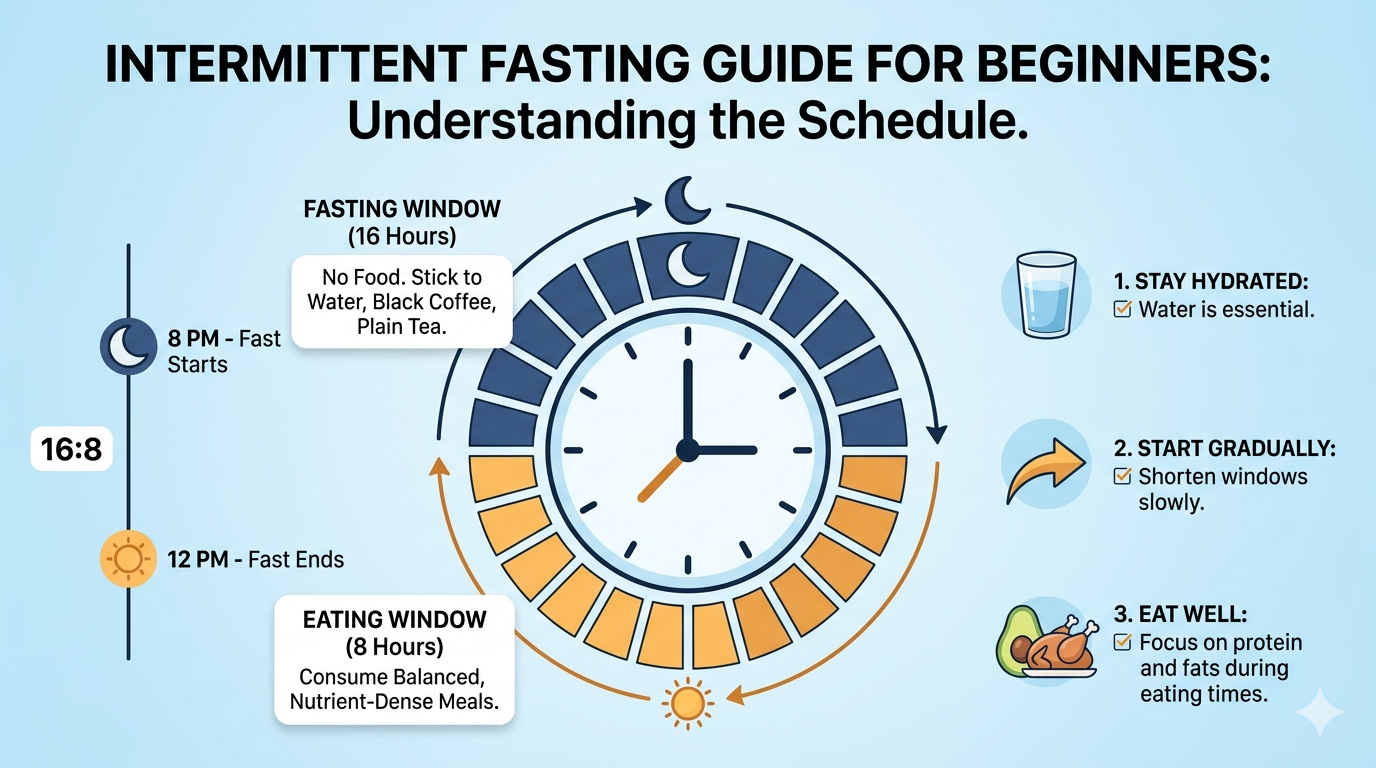
The 16/8 procedure is the one that is used the most frequently. During an 8-hour period, you consume food while fasting for 16 hours. For example, you might eat between 12 PM and 8 PM and fast overnight until noon the next day.
12/12 Method
This beginner-friendly option involves fasting for 12 hours and eating during a 12-hour window. It is easier to follow and helps your body adjust to fasting gradually.
5:2 Method
With the 5:2 method, you eat normally for five days a week and significantly reduce calorie intake on two non-consecutive days.
How to Start Intermittent Fasting
If you are new to intermittent fasting, begin slowly and choose a schedule that fits your lifestyle.
- Start with a 12-hour fasting window.
- Drink plenty of water throughout the day.
- Eat nutrient-rich, whole foods throughout your eating window.
- Avoid overeating when the fasting window ends.
- Listen to your body and adjust your schedule if necessary.
Consistency is more important than perfection. It may take a few weeks for your body to adapt to the new eating pattern.
Foods to Eat During Intermittent Fasting
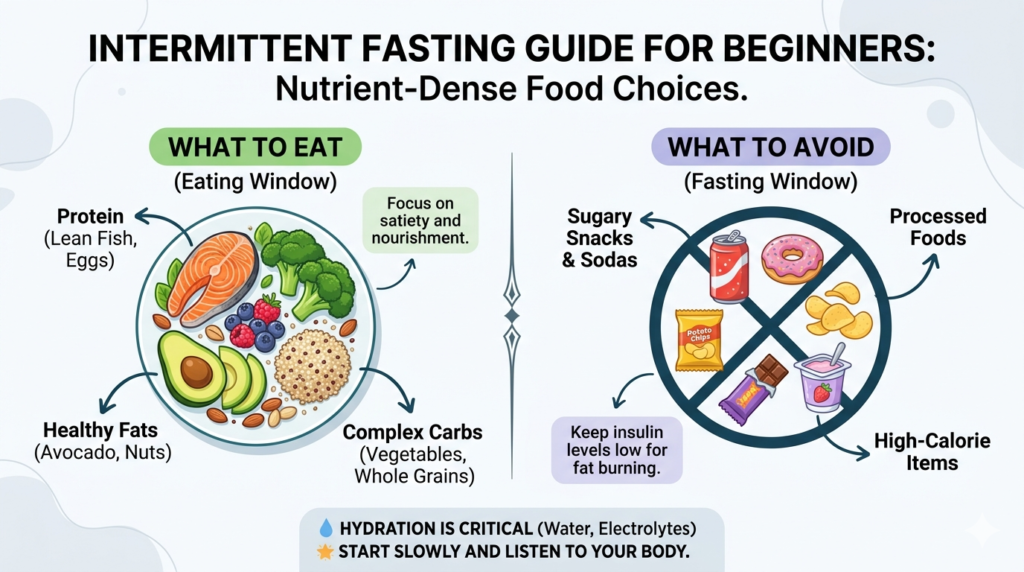
While intermittent fasting focuses on meal timing, food quality remains important.
Choose foods such as:
- Lean protein such as fish, chicken, eggs, and legumes
- Fresh fruits and vegetables
- Whole grains
- Foods rich in healthy fats like olive oil, nuts, and avocados
- Plenty of water and calorie-free beverages
A balanced diet can help maximize the benefits of intermittent fasting and support overall health.
Common Mistakes Beginners Should Avoid
Many beginners make simple mistakes that can reduce results.
Skipping Hydration
Dehydration can cause headaches and fatigue. Drink water regularly during fasting periods.
Eating Unhealthy Foods
Fasting does not compensate for a poor diet. Focus on nutrient-rich foods rather than processed snacks and sugary drinks.
Starting Too Aggressively
Jumping into long fasting periods can be difficult. Begin with shorter fasting windows and gradually increase them.
Intermittent fasting is a flexible and effective approach that can support weight management and overall wellness. Beginners should start with a simple fasting schedule, stay hydrated, and maintain a balanced diet. With patience and consistency, intermittent fasting can become a sustainable lifestyle habit that helps improve health and energy levels over time.
Different Types of Adult Parties around the World
Read Also: Food Beverages Website