Many women become concerned when they notice light bleeding around the time their menstrual cycle is due. One of the most common questions is whether the bleeding is a regular period or implantation bleeding. Understanding the differences between implantation bleeding and a regular period can help reduce confusion, especially for women trying to conceive.
In this article, we’ll explain the key differences, symptoms, causes, and when you should consider taking a pregnancy test or consulting a healthcare professional.
What Is Implantation Bleeding?
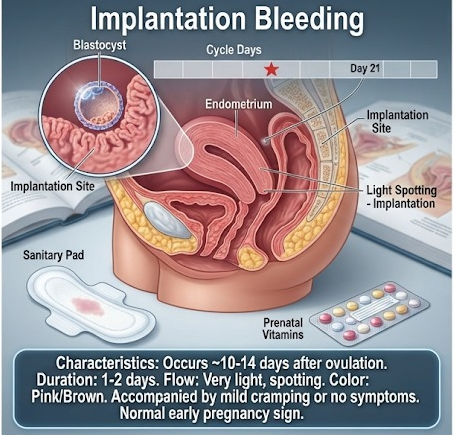
Implantation bleeding is light spotting that may occur when a fertilized egg attaches itself to the lining of the uterus. This process usually happens 6 to 12 days after ovulation, making it one of the earliest possible signs of pregnancy.
Not every pregnant woman experiences implantation bleeding. In fact, only a small percentage notice this symptom, while many have healthy pregnancies without any spotting.
What Is a Regular Period?
A regular period is part of the normal menstrual cycle. It occurs when pregnancy has not taken place, causing the uterine lining to shed and exit the body through the vagina.
Menstrual bleeding generally lasts 3 to 7 days and is usually heavier than implantation bleeding. It often begins lightly before becoming heavier during the middle of the cycle and gradually tapers off.
Implantation Bleeding vs Regular Period-Key Differences
1. Color
Implantation bleeding is usually light pink, brown, or rust-colored.
A regular period typically starts bright red and may become darker as the bleeding continues.
2. Flow
Implantation bleeding is very light and often appears as spotting rather than a steady flow. Most women do not need more than a panty liner.
A menstrual period generally becomes moderate to heavy and requires sanitary pads, tampons, or menstrual cups.
3. Duration
Implantation bleeding usually lasts from a few hours to two days.
A regular period generally lasts between three and seven days.
4. Blood Clots
Implantation bleeding does not usually contain blood clots.
Menstrual bleeding may include small or large blood clots, especially during heavier flow days.
5. Cramping
Implantation cramps are generally mild and short-lived.
Period cramps are often stronger, lasting one or more days, and may affect the lower abdomen and back.

Other Early Pregnancy Symptoms
If implantation bleeding occurs, it may be accompanied by other early pregnancy symptoms, including:
- Missed menstrual period
- Tender or swollen breasts
- Mild fatigue
- Frequent urination
- Nausea or morning sickness
- Increased sensitivity to smells
- Mood changes
- Bloating
Experiencing these symptoms together with light spotting may indicate early pregnancy, although the only way to confirm it is through a pregnancy test.
When Should You Take a Pregnancy Test?
If you suspect implantation bleeding, it’s best to wait until after your missed period before taking a home pregnancy test. Testing too early may produce a false-negative result because pregnancy hormone (hCG) levels may not yet be high enough to detect.
For the most accurate result, use the first urine of the morning and carefully follow the test instructions.
When Should You See a Doctor?
While implantation bleeding is generally harmless, you should contact a healthcare provider if you experience:
- Heavy bleeding similar to or heavier than a period
- Severe abdominal pain
- Large blood clots
- Fever or chills
- Dizziness or fainting
- Bleeding that lasts several days with worsening symptoms
These signs may indicate another medical condition that requires prompt evaluation.
Knowing the difference between implantation bleeding vs regular period can help you better understand your body and recognize the early signs of pregnancy. Implantation bleeding is usually lighter, shorter, and pink or brown in color, while a regular period is heavier, lasts longer, and is bright red.
Although spotting can be an early pregnancy symptom, it is not a definitive confirmation. If you think you may be pregnant, wait until your expected period has passed and take a reliable pregnancy test. If you have concerns about unusual bleeding or persistent pain, seek medical advice for proper diagnosis and peace of mind.
Liver Cancer Symptoms Cause and Remedy
Read Also: Medical Website Design