The deep sea remains one of Earth’s least explored environments, hiding ecosystems that challenge traditional ideas about where life can survive. Far below the ocean surface, researchers continue to discover organisms adapted to darkness, crushing pressure, extreme temperatures, toxic chemicals, and limited nutrients. The deep sea discovery of novel extremophile ecosystems is therefore opening new doors in marine biology, environmental science, biotechnology, and the search for life beyond Earth.
What Are Deep-Sea Extremophile Ecosystems?
Extremophiles are organisms that can thrive under environmental conditions considered harsh or unsuitable for most forms of life. In the deep ocean, these conditions can include intense pressure, very low temperatures, complete darkness, high concentrations of metals and sulfur compounds, and highly acidic or alkaline environments. Some microorganisms can even tolerate multiple extremes at the same time.
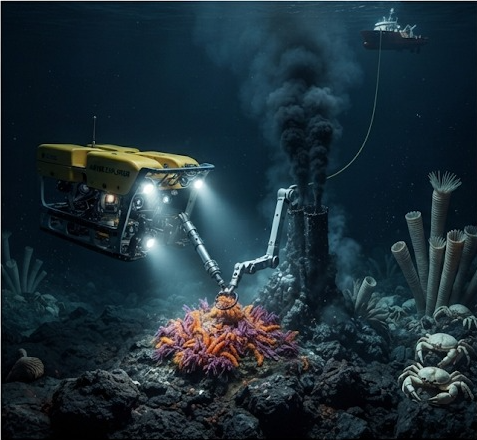
Hydrothermal vents and cold seeps are among the most remarkable examples. Hydrothermal vents release hot, mineral-rich fluids from cracks in the seafloor, while cold seeps release chemically rich fluids more gradually. Both can support highly productive communities despite the absence of sunlight.
Life Without Sunlight
One of the most important discoveries in deep-sea research is that entire food webs can exist without depending directly on sunlight. Instead of photosynthesis, microorganisms around hydrothermal vents use chemosynthesis to obtain energy from chemicals such as hydrogen sulfide, hydrogen, methane, and other compounds.
These microbes form the foundation of unusual ecosystems, supporting animals such as tube worms, mussels, clams, shrimp, crabs, and other specialized organisms. Research shows that microbial communities at hydrothermal vents can use diverse metabolic strategies and contribute to global carbon, sulfur, hydrogen, nitrogen, and metal cycles.
Discovering Previously Unknown Ecosystems
Modern deep-sea exploration uses remotely operated vehicles, autonomous underwater vehicles, environmental DNA analysis, high-resolution imaging, and chemical sensors to investigate habitats that are difficult or impossible for humans to reach directly.
Recent research on the Central Indian Ridge, for example, used environmental DNA metabarcoding to investigate eukaryotic communities across hydrothermal vent fields. Scientists detected substantial biological diversity and numerous unique genetic signatures, highlighting how much remains to be discovered in these isolated environments.
Such discoveries are particularly important because deep-sea habitats can contain organisms that have evolved independently for long periods. Their unusual adaptations may reveal previously unknown biological processes and ecological relationships.
Why Extremophiles Matter to Science

The study of deep-sea extremophiles has applications far beyond marine biology. Their enzymes, proteins, and metabolic pathways may function under conditions that would damage ordinary biological molecules. This makes them interesting for biotechnology, industrial processes, environmental remediation, and pharmaceutical research.
Extremophiles are also valuable for understanding the limits of life. Their ability to survive high pressure, extreme temperatures, unusual chemistry, and darkness provides scientists with clues about how organisms might exist in similarly challenging environments elsewhere in the Solar System.
Deep-Sea Ecosystems and Astrobiology
The discovery of life around hydrothermal vents dramatically changed scientific thinking about habitability. Before these ecosystems were discovered, sunlight was widely considered essential for sustaining most complex biological systems. Deep-sea vents demonstrated that chemical energy from geological processes can support thriving ecosystems in complete darkness.
This discovery has influenced research into potentially habitable subsurface oceans on icy worlds such as Europa and Enceladus. If similar chemical and geological conditions exist there, they could potentially provide energy sources for microbial life.
Protecting Newly Discovered Marine Life
Deep-sea extremophile ecosystems are fascinating but also vulnerable. Hydrothermal vent fields can contain mineral deposits that attract interest for seabed resource exploration. Because many organisms have highly specialized habitats and limited distributions, disturbance could have significant ecological consequences. Researchers have emphasized the uniqueness and sensitivity of Indian Ocean vent ecosystems and the need for stronger protection.
The Future of Deep-Sea Discovery
The deep sea discovery of novel extremophile ecosystems is still in its early stages. As underwater robotics, genetic sequencing, chemical sensing, and artificial intelligence improve, scientists will be able to explore deeper and identify biological communities with greater precision.
Every newly investigated vent, seep, sediment layer, or deep-sea habitat could reveal organisms with unfamiliar adaptations. These discoveries will not only expand knowledge of Earth’s biodiversity but may also help answer fundamental questions about evolution, the origins of life, and the possibility of life on other worlds.
The vast ocean is not just a distant wilderness. It is a living laboratory where nature demonstrates how adaptable life can be—and a frontier that still holds countless biological mysteries.
Effects of AI in Upcoming Technology
Manhole – Essential Access Points in Urban Infrastructure
RCPC Manhole Covers and Frames
Read Also: Social Network Website Design