Nuclear fusion has moved from a distant scientific ambition toward a realistic energy technology. Recent experiments have demonstrated increasingly impressive fusion yields, but achieving a truly net positive nuclear fusion energy system remains a major engineering challenge. The goal is not simply to create fusion reactions, but to produce more usable energy than the entire facility consumes. Understanding the milestones required to reach that point helps explain both the promise and the difficulty of fusion power.
Understanding Net Positive Fusion Energy
Fusion occurs when light atomic nuclei combine under extreme temperatures and pressures, releasing energy. Most modern fusion research focuses on deuterium-tritium reactions because they can produce substantial energy at achievable plasma conditions.
One important measurement is the fusion gain, known as Q. It compares fusion power produced with the external heating power supplied to the plasma. A Q value of 1 represents plasma energy breakeven, while higher values indicate increasing fusion performance. ITER, for example, is designed around a target of Q≥10, meaning 500 MW of fusion power from 50 MW of plasma heating.
However, plasma breakeven is not the same as producing net electricity. A commercial fusion plant must also power magnets, cooling equipment, vacuum systems, pumps, control systems, heating equipment, and other supporting infrastructure.
Recent Fusion Energy Milestones
One of the most important breakthroughs has come from the National Ignition Facility (NIF) in the United States. In June 2026, NIF achieved fusion ignition for the 11th time, producing a reported 7.9 megajoules of fusion yield from a laser-driven experiment, with a target gain of approximately 3.8.
These results demonstrate that ignition can be repeated and improved rather than remaining a single experimental achievement. Earlier advances have also shown the importance of better fuel capsules, laser performance, diagnostics, and computer modeling in increasing fusion output.
Magnetic-confinement research is pursuing a different route. Devices such as tokamaks aim to maintain extremely hot plasma using powerful magnetic fields. ITER is designed to investigate high-gain burning plasma operation, with a planned Q of 10.
Why Net Positive Fusion Is Difficult
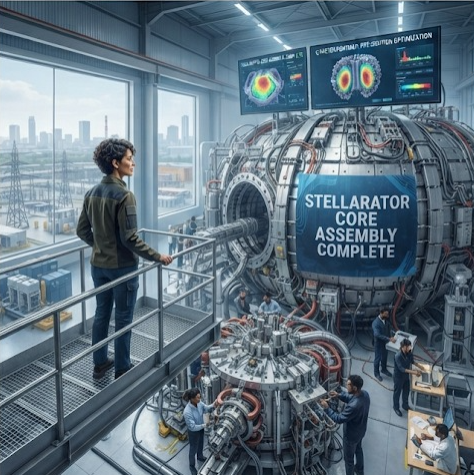
Producing fusion energy is only one part of the challenge. A practical reactor must maintain plasma stability while surviving intense neutron radiation and extreme heat loads.
The first major challenge is plasma confinement. Fusion plasma must remain hot and dense for long enough to sustain efficient reactions. Small instabilities can reduce performance or terminate a plasma pulse.
Another challenge is heat management. Fusion reactors must remove enormous amounts of heat from components surrounding the plasma. Materials must withstand repeated exposure without rapidly degrading.
Fuel management is equally important. Deuterium is abundant, but tritium is scarce and must eventually be produced within the reactor through breeding systems involving lithium-containing blankets. Developing reliable tritium breeding and recycling technology is therefore essential for future fusion power plants.
Moving From Scientific Gain to Engineering Gain
The next milestone is broader than simply increasing Q. Scientists and engineers need to demonstrate that the entire facility can produce useful electricity while consuming less electricity than it generates.
This distinction is often called engineering breakeven or plant-level energy gain. It accounts for the electricity required by the complete power station rather than only the energy used to heat the plasma. ITER itself explains that commercial fusion plants will need to compare electricity delivered to the grid against electricity consumed by the complete facility.
The Road Ahead for Fusion Power
Overcoming net positive nuclear fusion energy milestones will require progress across multiple technologies simultaneously. Better superconducting magnets, advanced plasma control, durable materials, efficient heating systems, tritium breeding, robotics, and thermal conversion technologies must work together.
Long-duration operation is another critical step. A reactor that produces impressive energy for a brief pulse is different from a power station capable of operating reliably for months and years. ITER’s research program therefore includes long-pulse operation and technologies for maintaining components under sustained heat loads.
The journey toward net positive nuclear fusion energy is no longer only about proving that fusion works. Recent ignition and high-yield experiments have demonstrated remarkable scientific progress. The next challenge is transforming those breakthroughs into reliable, economical, and electricity-producing systems.
Achieving commercial fusion will require researchers to move beyond isolated energy records and solve the interconnected problems of plasma stability, materials, fuel breeding, heat removal, maintenance, and whole-plant efficiency. If these milestones can be overcome, nuclear fusion could become an important source of low-carbon energy for future generations.
Effects of AI in Upcoming Technology
Manhole – Essential Access Points in Urban Infrastructure
RCPC Manhole Covers and Frames
Read Also: Social Network Website Design