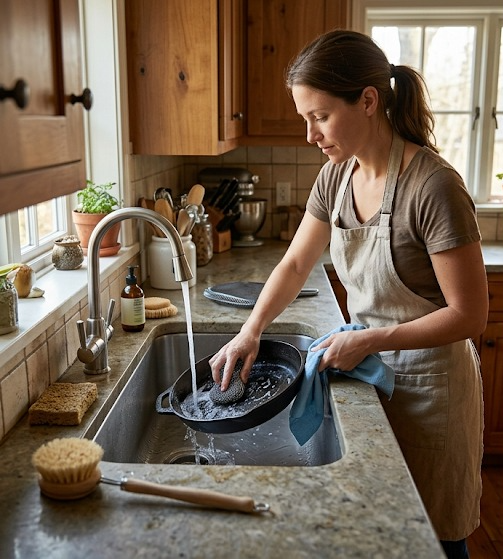
A cast iron skillet is one of the most dependable pieces of cookware you can own. When properly maintained, it can last for decades and become better with regular use. However, cast iron requires a little different care than stainless steel or nonstick cookware. Understanding how to clean, season, dry, and store your skillet can help prevent rust and maintain its naturally nonstick cooking surface. This Cast Iron Skillet Care Guide explains the essential steps for keeping your pan in excellent condition.
Why Proper Cast Iron Care Matters
Cast iron is durable, but it is also prone to rust when exposed to moisture for extended periods. Its cooking surface depends on seasoning, a layer of polymerized oil that protects the metal and improves food release. Harsh cleaning methods, prolonged soaking, or poor drying can gradually damage this protective layer.
Regular care helps preserve the skillet’s seasoning while keeping it safe and pleasant to use. The goal is not to avoid cleaning the pan but to clean it correctly.
How to Clean a Cast Iron Skillet
Cleaning your skillet after every use is an important part of cast iron maintenance. Start by allowing the pan to cool slightly, then remove leftover food with a spatula or scraper.
Use warm water and a soft brush or sponge to clean the cooking surface. A small amount of mild dish soap can also be used when necessary. Contrary to an old misconception, occasional soap use does not automatically ruin a properly seasoned skillet.
Avoid leaving the skillet submerged in water. Prolonged soaking can encourage rust and weaken the seasoning. After cleaning, rinse the pan thoroughly and move immediately to the drying stage.
Dry Your Skillet Thoroughly
Moisture is one of the biggest enemies of cast iron cookware. After washing, dry the skillet completely with a clean towel. For additional protection, place it over low heat on the stovetop for a few minutes. This evaporates any remaining moisture from the surface.
Once the pan is dry, apply a very thin layer of cooking oil. Wipe away excess oil with a paper towel or clean cloth. The skillet should look lightly coated rather than greasy.

Seasoning Your Cast Iron Skillet
Seasoning helps create a protective surface and improves cooking performance. If your skillet looks dull, develops dry patches, or food begins sticking more than usual, it may benefit from additional seasoning.
To season the pan, apply a thin layer of suitable cooking oil over the entire surface. Wipe off excess oil, then place the skillet upside down in an oven according to the temperature and time recommended for your particular cookware. Allow it to cool before storing.
Several light seasoning sessions are generally more effective than applying one thick layer of oil.
How to Prevent Rust
Preventing rust is easier than removing it. Always dry your skillet immediately after washing and avoid storing it while damp. Keep it in a dry, well-ventilated location.
If minor rust appears, scrub the affected area with an appropriate abrasive tool, wash and dry the skillet thoroughly, and then rebuild the seasoning. Severe rust or extensive damage may require more intensive restoration.
Foods to Be Careful With
A well-seasoned cast iron skillet can handle many foods, but acidic ingredients such as tomatoes, vinegar-based sauces, and citrus-heavy recipes may interact with the iron, particularly when the seasoning is new or delicate.
This does not mean acidic foods must always be avoided. Instead, use a well-seasoned skillet and avoid prolonged cooking of highly acidic dishes when the seasoning is still developing.
Smart Storage Tips
Store your cast iron skillet somewhere dry and clean. If you stack cookware, place a paper towel or cloth between pieces to reduce moisture buildup and protect the cooking surface. Avoid sealing a slightly damp skillet inside a cabinet or container.
With consistent cleaning, drying, seasoning, and storage, your cast iron skillet can remain a reliable kitchen companion for many years.
Taking care of cast iron does not have to be complicated. Clean it gently, dry it completely, maintain its seasoning, and protect it from prolonged moisture. With these simple habits, your skillet can develop a durable cooking surface and provide excellent results for everything from everyday meals to special recipes. A little regular maintenance is all it takes to keep this classic cookware performing at its best.
Read Also: Laravel Framework Web Development