

Personality plays a major role in shaping human behavior, emotions, and decision-making. Psychologists have developed several theories to explain personality, but one of the most popular and scientifically accepted models is the Big Five Personality Traits. This model helps individuals understand themselves and others better by categorizing personality into five major dimensions. In this article, we will explore the meaning, importance, and benefits of the Big Five personality traits.
What Are the Big Five Personality Traits?
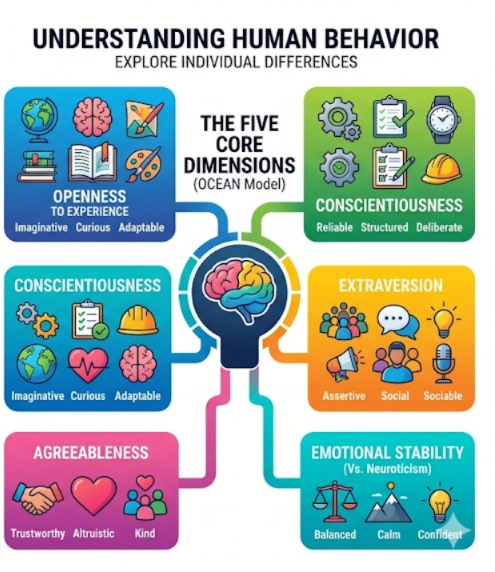
The Big Five Personality Traits, also known as the Five-Factor Model (FFM), is a psychological theory that divides personality into five broad categories. These traits are considered universal and are widely used in psychology, education, and workplace assessments.
The five traits are:
- Openness to Experience
- Conscientiousness
- Extraversion
- Agreeableness
- Neuroticism
Together, these traits create a framework for understanding human personality and behavior.
1. Openness to Experience
Openness refers to a person’s willingness to try new things, explore creative ideas, and embrace change. Individuals with high openness are imaginative, curious, and adventurous. They enjoy art, innovation, and learning new skills.
People with low openness may prefer routine and traditional methods. They are usually practical and less interested in experimenting with unfamiliar experiences.
Characteristics of High Openness:
- Creative thinking
- Curiosity
- Appreciation for art and culture
- Open-mindedness
This trait is often associated with innovation and problem-solving abilities.
2. Conscientiousness
Conscientiousness measures how organized, responsible, and disciplined a person is. Highly conscientious individuals are goal-oriented and reliable. They tend to plan ahead and complete tasks efficiently.
On the other hand, people with low conscientiousness may struggle with time management and organization.
Characteristics of High Conscientiousness:
- Strong self-discipline
- Dependability
- Attention to detail
- Good work ethic
This trait is especially important in academic and professional success.
3. Extraversion
Extraversion describes how social, energetic, and outgoing a person is. Extroverts enjoy social interactions, group activities, and being the center of attention. Being around others gives them energy.
Introverts, who score lower in extraversion, often prefer solitude or small social settings. They may feel drained after long social interactions.
Characteristics of High Extraversion:
- Talkative and friendly
- Enthusiastic
- Confident in social situations
- Energetic personality
Extraversion can influence leadership qualities and communication skills.
4. Agreeableness
Agreeableness reflects kindness, empathy, and cooperation. People with high agreeableness are compassionate, helpful, and trusting. They value harmony and maintain positive relationships with others.
Individuals with low agreeableness may appear more competitive, skeptical, or blunt in their interactions.
Characteristics of High Agreeableness:
- Compassionate nature
- Strong empathy
- Cooperative attitude
- Trustworthiness
This trait is important for teamwork and healthy personal relationships.
5. Neuroticism
Neuroticism measures emotional stability and how individuals respond to stress. People with high neuroticism may experience anxiety, mood swings, and emotional insecurity more frequently.
Those with low neuroticism are generally calm, emotionally stable, and better at handling pressure.
Characteristics of High Neuroticism:
- Anxiety and stress
- Emotional sensitivity
- Frequent mood changes
- Self-doubt
Understanding this trait can help individuals manage emotions and improve mental well-being.
Why Are the Big Five Personality Traits Important?
The Big Five Personality Traits are widely used in psychology because they provide a reliable way to analyze human behavior. These traits help in:
- Improving self-awareness
- Building stronger relationships
- Choosing suitable careers
- Enhancing teamwork and communication
- Supporting mental health development
Many companies also use personality assessments based on the Big Five model during recruitment and employee training.
The Big Five Personality Traits offer valuable insights into human behavior and emotional patterns. By understanding openness, conscientiousness, extraversion, agreeableness, and neuroticism, individuals can improve personal growth, relationships, and career success. Whether in daily life or professional environments, the Big Five model remains one of the most effective tools for understanding personality.
Sherlock Holmes by Sir Arthur Conan Doyle
Byomkesh Bakshi by Sharadindu Bandyopadhyay
Aranyak by Bibhutibhushan Bandopadhyay
Read Also: Education Website Design