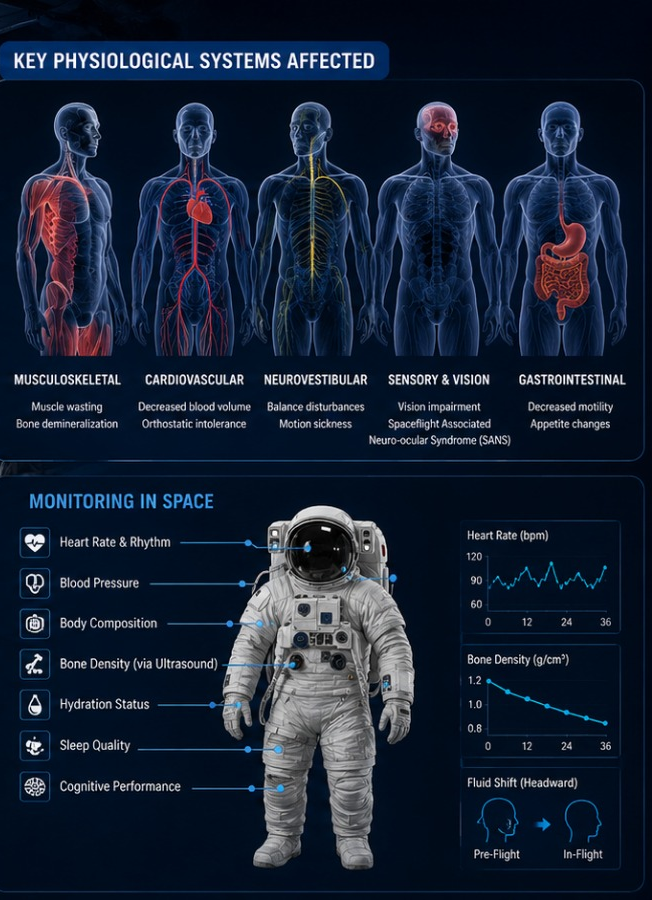
Space exploration pushes the human body into an environment unlike anything experienced on Earth. During long-duration space missions, astronauts may spend months in microgravity, where the normal effects of gravity on bones, muscles, circulation, balance, and other body systems are greatly reduced. Understanding astronaut physiology during long-duration space missions is therefore essential for keeping crews healthy and preparing humans for future journeys to the Moon and Mars. NASA research continues to examine how different systems of the body adapt before, during, and after extended spaceflight.
Effects of Microgravity on the Human Body
Microgravity is one of the most significant challenges for astronaut health. On Earth, muscles and bones constantly work against gravity. In orbit, that workload is dramatically reduced. As a result, the body begins adapting to its new environment.
One major consequence is muscle atrophy. Muscles that normally support posture and movement can lose size and strength when they are not regularly loaded. Research has found that prolonged spaceflight can reduce muscle mass, strength, and aerobic performance even when astronauts follow exercise programs.
Bone Loss During Spaceflight
Bone health is another major concern. Weight-bearing bones, particularly those in the hips and spine, receive much less mechanical stress in microgravity. NASA reports that astronauts can lose approximately 1% to 1.5% of bone density per month during typical four-to-six-month missions. This reduction can increase concerns about fractures and long-term skeletal health.
When bone tissue breaks down faster than it is rebuilt, calcium is released into the bloodstream and eventually excreted through urine. Researchers are studying exercise, nutrition, medications, and other countermeasures that could reduce this process during extended missions.
Cardiovascular Changes in Astronauts
The cardiovascular system also adapts to microgravity. Body fluids shift upward toward the chest and head because gravity no longer pulls them toward the legs. Over time, these changes can contribute to reduced blood volume and cardiovascular deconditioning.
Long-duration spaceflight can also affect aerobic capacity and cardiovascular performance. NASA researchers monitor heart rate, blood pressure, respiration, and vascular health to understand how these changes develop and how effectively exercise can counter them.
Fluid Shifts, Vision, and Brain Function
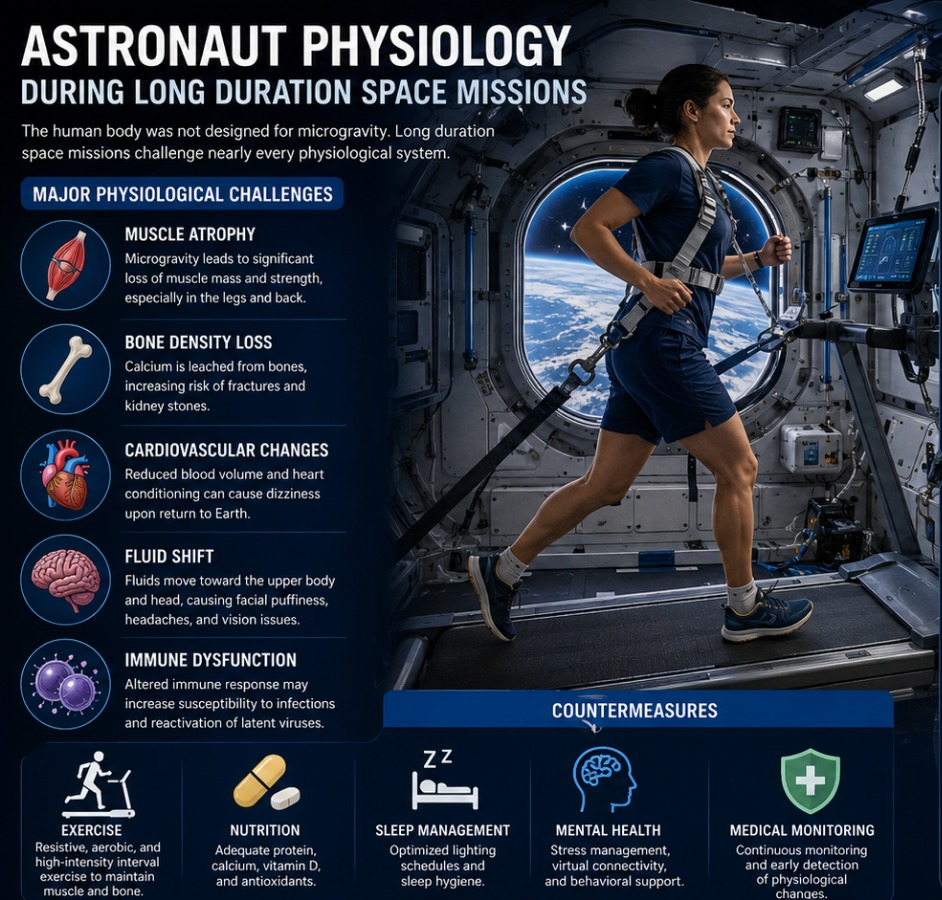
The upward movement of bodily fluids may affect more than the cardiovascular system. Increased fluid pressure around the head can contribute to changes involving the eyes and vision. Researchers are investigating these effects as part of the broader study of spaceflight-associated neuro-ocular changes.
Microgravity can also influence the brain and balance system. Astronauts must adapt because their usual gravity-based signals for orientation are altered. Long-duration missions may therefore affect spatial perception, sensorimotor coordination, and certain aspects of brain function.
Exercise as a Key Countermeasure
Regular exercise is one of the most important strategies for protecting astronaut physiology in space. Astronauts use specialized equipment for resistance training and aerobic workouts to maintain muscle strength, bone loading, and cardiovascular fitness.
However, exercise does not completely eliminate physiological changes. Research indicates that decreases in aerobic capacity, muscle size, and strength can still occur after both short and long missions. This makes the development of improved exercise systems especially important for future deep-space exploration.
Nutrition, Sleep, and Recovery
Proper nutrition supports the body’s ability to withstand prolonged spaceflight. Adequate energy, protein, calcium, vitamin D, and other nutrients can help support muscles and bones. Sleep and circadian rhythm management are also important because spacecraft environments, artificial lighting, work schedules, and mission demands can disrupt normal sleep patterns.
After returning to Earth, astronauts need rehabilitation because gravity suddenly places normal loads back on their muscles, bones, cardiovascular system, and balance mechanisms. Recovery can require carefully monitored exercise and medical assessment.
Preparing for Future Mars Missions
Understanding astronaut physiology during long-duration space missions is becoming increasingly important as exploration moves beyond low Earth orbit. NASA’s CIPHER research program combines multiple studies to investigate bone and joint health, cardiovascular function, brain and behavior, exercise performance, and sensorimotor changes across different mission durations.
Future missions to Mars could last far longer than typical space-station expeditions, making physiological adaptation a central factor in mission planning. Scientists must develop better ways to protect the human body from microgravity, radiation, isolation, and other hazards.
Long-duration space missions challenge nearly every major physiological system in the human body. Muscle loss, bone weakening, cardiovascular changes, fluid redistribution, vision effects, and sensorimotor adaptations demonstrate how strongly humans depend on Earth’s gravitational environment. Through exercise, nutrition, medical monitoring, and advanced research, scientists are developing countermeasures to reduce these risks. The continued study of astronaut physiology will be crucial for making future missions safer and helping humans successfully explore worlds beyond Earth.
Liver Cancer Symptoms Cause and Remedy
Read Also: Medical Website Design