Managing family meals every day can become expensive, especially when grocery prices continue to change. Budget family meal planning offers a simple way to control food expenses while making sure everyone enjoys nutritious and satisfying meals. With a little organization, families can reduce unnecessary purchases, minimize food waste, and prepare delicious meals without exceeding their grocery budget.
Why Budget Family Meal Planning Matters
Meal planning is more than deciding what to cook for dinner. It involves organizing meals according to your family’s needs, available ingredients, and spending limit. A well-planned weekly menu helps prevent last-minute takeout orders and unnecessary trips to the grocery store.
When families know what they will eat throughout the week, they can purchase only the ingredients they actually need. This approach can make grocery shopping faster and significantly reduce impulse buying.
Set a Realistic Weekly Food Budget
The first step in successful family meal planning is creating a realistic food budget. Consider your household size, dietary preferences, and typical grocery expenses. Instead of choosing an unrealistic amount, review your previous shopping bills and identify areas where you can make adjustments.
Divide the weekly budget among essential categories such as vegetables, fruits, grains, dairy products, proteins, and snacks. Keeping a small amount aside for unexpected needs can also make the budget easier to maintain.
Plan Meals Around Affordable Ingredients
One of the best ways to create inexpensive family meals is to build your menu around affordable staple foods. Rice, potatoes, beans, lentils, pasta, oats, seasonal vegetables, and eggs can provide excellent value.
Choose meals that use several of the same ingredients. For example, vegetables purchased for a soup can also be used in fried rice or a vegetable curry. This reduces waste and allows one grocery purchase to support multiple meals.
Shop With a Grocery List
A grocery list is an important part of budget family meal planning. Before visiting the store, check your refrigerator, freezer, and pantry. Write down only the ingredients needed to complete your planned meals.
Avoid shopping while hungry because it can encourage unnecessary snack and convenience-food purchases. Comparing package sizes and prices can also help you find better value.
Make Leftovers Part of the Plan
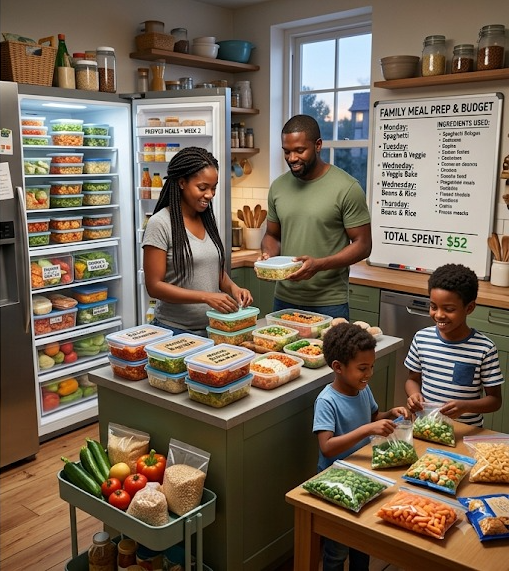
Leftovers do not have to feel repetitive. Cook larger portions and transform remaining food into a different meal the next day. For example, leftover roasted vegetables can become a filling for wraps, while cooked chicken can be added to sandwiches, salads, or rice dishes.
Planning for leftovers saves both money and cooking time. It also helps prevent perfectly good food from ending up in the trash.
Choose Homemade Meals More Often
Cooking at home is usually more economical than frequently ordering restaurant meals or purchasing prepared foods. Simple homemade dishes can be nutritious, filling, and customized to suit everyone’s preferences.
Families can also prepare basic ingredients in advance. Cooking beans, chopping vegetables, preparing sauces, or making dough ahead of time can make busy weekday meals much easier.
Keep Family Meals Flexible
A successful meal plan should not be overly strict. Unexpected events, schedule changes, or changing preferences can happen during the week. Keep a few flexible meal options available, such as sandwiches, eggs, pasta, or rice bowls.
You can also involve children in choosing one or two meals each week. This encourages family participation and may reduce complaints about the menu.
Reduce Food Waste
Reducing food waste is one of the easiest ways to stretch a grocery budget. Store foods correctly, monitor expiration dates, and freeze ingredients that will not be used immediately. Use older ingredients first and regularly organize your refrigerator and pantry.
Small changes can make a noticeable difference to your monthly grocery expenses.
Budget family meal planning makes it possible to enjoy wholesome and varied meals while keeping household food costs under control. By setting a realistic budget, planning around affordable ingredients, shopping with a list, using leftovers, cooking at home, and reducing waste, families can make every grocery purchase count. The goal is not to create a perfect menu but to develop practical habits that save money, time, and food throughout the week.
Read Also: Laravel Framework Web Development