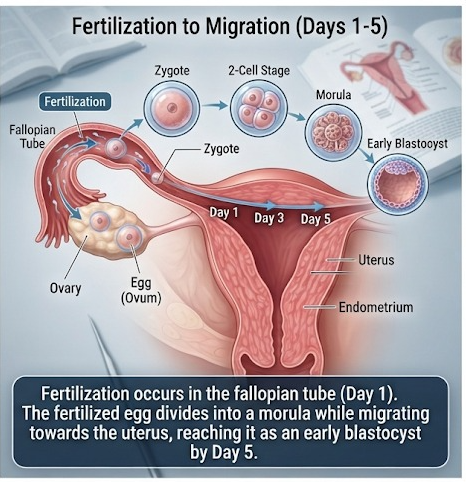
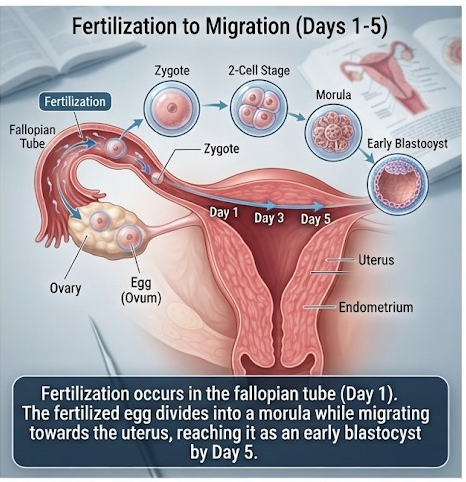
The journey from fertilization to implantation is one of the most fascinating stages of human reproduction. During this short yet critical period, a fertilized egg undergoes rapid changes before attaching itself to the uterine lining. Understanding the timeline from fertilization to implantation can help couples trying to conceive and provide valuable insights into the earliest stages of pregnancy.
What Is Fertilization?
Fertilization occurs when a sperm successfully penetrates and combines with an egg. Typically, this occurs in the fallopian tube shortly following ovulation. Once the sperm and egg unite, they form a single cell known as a zygote. The zygote contains a complete set of genetic material from both parents, marking the beginning of a new life.
Day 1:Formation of the Zygote
Within 24 hours of fertilization, the zygote begins its first cell division. This process, called cleavage, allows the single cell to multiply rapidly. While the zygote is developing, it stays approximately the same size as the cells divide but do not expand the total volume.
At this stage, the fertilized egg starts its journey toward the uterus through the fallopian tube.
Days 2–3:Rapid Cell Division
By the second and third days after fertilization, the zygote has divided into multiple cells. These cells continue to multiply as the embryo travels through the fallopian tube.
At around the 16-cell stage, the developing embryo is referred to as a morula. The morula resembles a tiny ball of cells and represents an important milestone in early embryonic development.
Days 4–5:Development of the Blastocyst
Approximately four to five days post-fertilization, the morula undergoes a transition to become a blastocyst. A blastocyst is a fluid-filled structure containing two distinct groups of cells:
- The inner cell mass, which will develop into the baby.
- The outer layer of cells, which will form the placenta and supporting tissues.
During this stage, the blastocyst enters the uterus and begins preparing for implantation.
Days 5–6: Hatching from the Zona Pellucida
The blastocyst is initially surrounded by a protective shell known as the zona pellucida. Before implantation can occur, the blastocyst must break free from this outer covering in a process called hatching.
Hatching allows the blastocyst to directly interact with the uterine lining, making implantation possible. This stage is crucial for achieving a successful pregnancy.
Days 6–10: Implantation Begins
Implantation typically starts between six and ten days after fertilization. The blastocyst attaches itself to the endometrium, the soft and nutrient-rich lining of the uterus.
Once attached, specialized cells from the blastocyst begin to invade the uterine tissue. This process secures the embryo and establishes the connection needed for nutrient and oxygen exchange.
Many women do not notice implantation, although some may experience mild cramping or light spotting known as implantation bleeding.
Days 10–14: Implantation Completes
By approximately 10 to 14 days after fertilization, implantation is usually complete. The embryo is now firmly embedded within the uterine lining and begins producing human chorionic gonadotropin (hCG), the hormone detected by pregnancy tests.
The production of hCG signals the body to maintain the uterine lining and support the developing pregnancy. At this point, many home pregnancy tests can begin detecting pregnancy.
Why Implantation Is Important
Implantation is a crucial step in pregnancy because it establishes the connection between the developing embryo and the mother’s body. Without successful implantation, pregnancy cannot continue. Factors such as uterine health, embryo quality, and hormonal balance all play important roles in this process.
The timeline from fertilization to implantation spans approximately one to two weeks and involves remarkable biological changes. From the formation of a single-celled zygote to the successful attachment of a blastocyst within the uterus, each stage is essential for a healthy pregnancy. Understanding this timeline provides valuable insight into early pregnancy development and helps individuals better recognize the signs and milestones of conception.
Liver Cancer Symptoms Cause and Remedy
Read Also: Medical Website Design