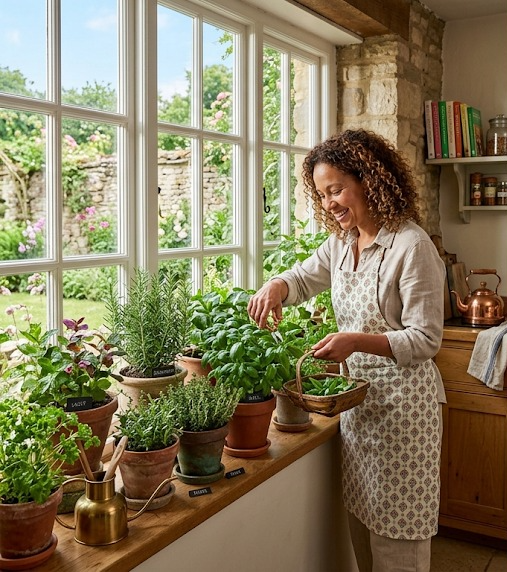
Growing fresh herbs does not require a large backyard, greenhouse, or elaborate gardening setup. Indoor windowsill herb gardens offer a practical way to bring greenery into your home while keeping flavorful herbs within easy reach. With a sunny window, a few suitable containers, quality potting soil, and regular care, almost anyone can create a productive mini herb garden indoors.
Why Choose an Indoor Windowsill Herb Garden?
A windowsill garden is ideal for apartments, small homes, and kitchens with limited outdoor space. Fresh herbs such as basil, mint, parsley, chives, cilantro, thyme, and oregano can thrive indoors when their basic growing requirements are met.
One major advantage is convenience. Instead of purchasing a large bunch of herbs from the store and using only a small portion, you can simply snip the amount you need while cooking. Growing herbs at home can also make your kitchen feel fresher and more inviting.
Choosing the Right Windowsill
The location of your herb garden plays an important role in plant health. Most culinary herbs prefer several hours of bright light each day. A south- or southeast-facing window can often provide suitable natural sunlight, depending on your home’s surroundings and climate.
If your windowsill receives limited sunlight, consider using a small indoor grow light. Rotate containers occasionally so plants receive light evenly and develop balanced growth rather than leaning toward the window.
Best Herbs for Indoor Growing
Not every herb has identical growing needs, but several popular varieties adapt well to indoor containers.
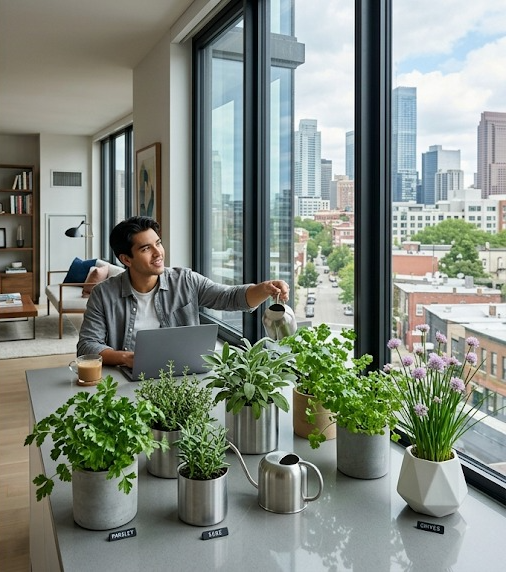
Basil is a favorite because it grows quickly in warm, bright conditions. Chives are compact and can produce fresh green shoots regularly. Mint grows vigorously and is useful for drinks, desserts, and savory dishes. Parsley can be harvested gradually, while thyme and oregano are excellent choices for cooks who enjoy Mediterranean flavors.
When starting an indoor herb garden, choose two or three varieties rather than overcrowding the windowsill. This makes it easier to understand each plant’s watering and lighting needs.
Selecting Containers and Soil
Good drainage is essential for healthy indoor herbs. Choose pots with drainage holes and place a tray underneath them to protect the windowsill from excess water. Decorative containers can be used as outer covers, but the growing pot should still allow water to escape.
Utilize a lightweight, fast-draining potting blend intended for potted plants. Avoid using heavy garden soil indoors because it can become compacted and may not provide adequate drainage.
Watering Your Indoor Herbs
Overwatering is one of the most common problems with indoor herb gardens. Rather than following a strict daily watering schedule, check the soil first. If the upper surface seems arid, the plant might require watering.
Water thoroughly until a little moisture drains from the bottom, then empty excess water from the tray. Different herbs dry out at different rates, so observe each plant individually.
Harvesting Herbs the Right Way
Regular harvesting can encourage many herbs to produce fresh growth. Use clean scissors or garden snips and avoid removing too much of the plant at once. For leafy herbs, harvesting young stems and leaves can help maintain a compact shape.
If an herb begins flowering, the flavor of some varieties may change. Pinching back flower buds can help redirect the plant’s energy toward leafy growth.
Create a Fresh Kitchen Garden
An indoor windowsill herb garden is a simple gardening project that combines beauty, convenience, and fresh flavor. By selecting suitable herbs, providing sufficient light, using containers with drainage, and watering thoughtfully, you can enjoy homegrown ingredients throughout much of the year.
Whether you live in a small apartment or simply want fresh herbs closer to your cooking space, a windowsill garden is an affordable and rewarding way to start growing indoors.
India’s Agricultural Exports Opportunities and Challenges
Read Also: Exploring Opportunities in the Farming Industry