As cities continue to expand and the global population rises, ensuring a stable food supply has become one of the world’s biggest challenges. Traditional farming methods require vast amounts of land, water, and transportation resources, making them increasingly difficult to sustain in densely populated urban areas. Urban vertical farming systems are changing the agricultural scenery. By growing crops in vertically stacked layers within controlled environments, vertical farming offers a sustainable, efficient, and innovative solution for future food production.
What Are Urban Vertical Farming Systems?
Urban vertical farming systems involve cultivating crops indoors using advanced technologies such as hydroponics, aeroponics, and artificial intelligence. Unlike conventional agriculture, these farms utilize vertical space, allowing multiple layers of crops to grow within a single building.
These systems are commonly established in warehouses, shipping containers, skyscrapers, and unused urban spaces. By controlling temperature, humidity, lighting, and nutrients, farmers can optimize plant growth while minimizing environmental impact.
Key Technologies Driving Vertical Farming
Hydroponics and Aeroponics
Hydroponics allows plants to thrive in water enriched with nutrients, eliminating the need for soil, whereas aeroponics supplies nutrients to plant roots by misting them with a fine spray directly. Both methods significantly reduce water consumption compared to traditional farming.
LED Lighting Systems
Modern LED lights provide plants with the precise light spectrum required for photosynthesis. These energy-efficient lighting systems help maximize crop yields while reducing electricity costs.
Artificial Intelligence and Automation
AI-powered sensors continuously monitor crop health, nutrient levels, and environmental conditions. Automated systems can adjust lighting, irrigation, and temperature in real time, improving efficiency and reducing labor requirements.
Internet of Things (IoT)
IoT devices collect and analyze data from various farming operations, allowing growers to make informed decisions and optimize production processes.
Benefits of Urban Vertical Farming
Increased Food Production
Vertical farming maximizes crop output by utilizing vertical space rather than expanding horizontally. Urban areas can generate significant amounts of fresh produce despite having restricted land space.
Reduced Water Usage
Traditional agriculture consumes enormous amounts of water. Vertical farms can reduce water usage by up to 90% through recirculating irrigation systems and precise nutrient management.
Year-Round Crop Cultivation
Controlled indoor environments eliminate dependence on seasonal weather conditions. Farmers can grow crops throughout the year, ensuring a consistent supply of fresh produce.
Lower Transportation Costs
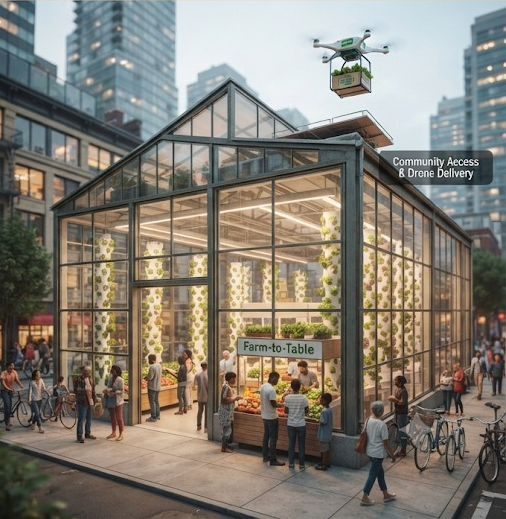
Since vertical farms are located close to consumers, food travels shorter distances from farm to table. This reduces transportation expenses, fuel consumption, and carbon emissions.
Improved Food Safety
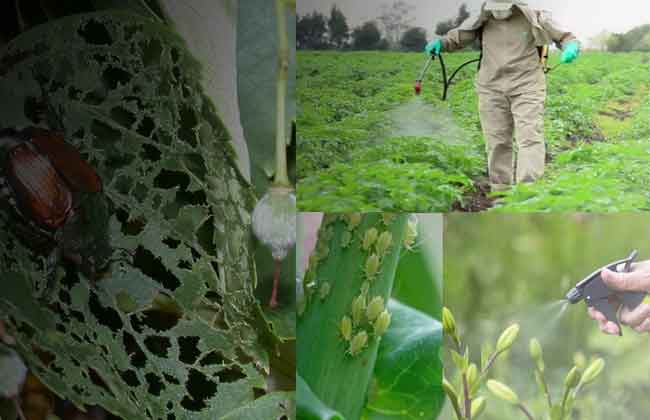
Controlled growing environments minimize exposure to pests, diseases, and harmful contaminants. As a result, crops often require fewer pesticides and chemicals.
Challenges Facing Vertical Farming
High Initial Investment
Setting up a vertical farm requires substantial capital for infrastructure, lighting systems, climate control equipment, and automation technologies. This can be a barrier for small-scale entrepreneurs.
Energy Consumption
Although LED technology has improved efficiency, indoor farming still requires significant electricity for lighting and climate regulation. Future innovations in renewable energy integration will be essential.
Limited Crop Variety
Currently, leafy greens, herbs, and microgreens dominate vertical farming production. Expanding the range of economically viable crops remains an ongoing challenge.
The Future of Urban Vertical Farming
Integration with Smart Cities
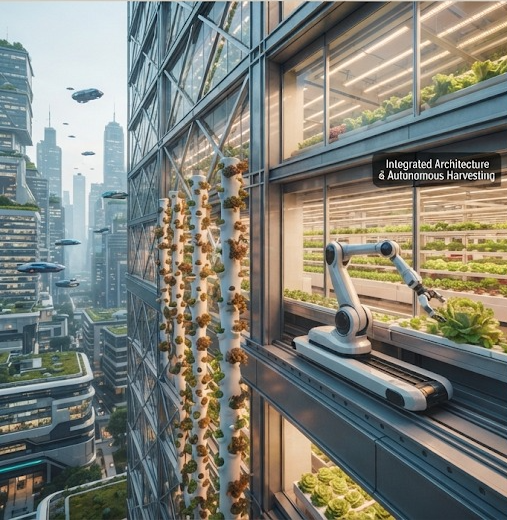
As smart city initiatives grow worldwide, vertical farms are expected to become an integral part of urban infrastructure. Buildings may incorporate farming systems directly into residential and commercial developments.
Renewable Energy Adoption
Solar panels, wind energy, and advanced battery storage solutions will help reduce operational costs and improve the sustainability of vertical farming facilities.
AI-Driven Precision Agriculture
Future vertical farms will leverage advanced artificial intelligence to predict crop performance, optimize resource usage, and automate nearly every aspect of production.
Expansion of Crop Diversity
Research and technological advancements will enable the cultivation of fruits, vegetables, and specialty crops that are currently difficult to grow in vertical farming environments.
Localized Food Networks
Cities will increasingly rely on local food production networks, reducing dependence on long-distance supply chains and improving food security during global disruptions.
The future of urban vertical farming systems looks exceptionally promising. As technology continues to advance, vertical farming has the potential to revolutionize food production by making it more sustainable, efficient, and resilient. By reducing land use, conserving water, minimizing transportation emissions, and enabling year-round cultivation, urban vertical farms can play a critical role in feeding growing populations. While challenges such as energy consumption and startup costs remain, ongoing innovations are rapidly addressing these issues. In the coming decades, urban vertical farming is expected to become a cornerstone of sustainable agriculture and a key component of future smart cities.
India’s Agricultural Exports Opportunities and Challenges
Read Also: Exploring Opportunities in the Farming Industry