Peer pressure is something almost everyone experiences at some point in life. Whether you’re in school, college, the workplace, or even among friends, people may encourage you to do things you’re uncomfortable with. Learning peer pressure rejection lines that work can help you stand your ground while maintaining confidence and self-respect.
The good news is that saying “no” doesn’t have to sound rude or confrontational. A few simple, confident responses can help you avoid situations you don’t want to be part of.
Why It’s Important to Resist Peer Pressure
Giving in to peer pressure can lead to decisions you later regret. It may involve unhealthy habits, risky behavior, or simply doing something that doesn’t match your values.
By using effective rejection lines, you:
- Protect your personal values.
- Build confidence and self-esteem.
- Earn respect from others.
- Make independent decisions.
- Reduce stress and future regrets.
Remember, true friends respect your choices.
Best Peer Pressure Rejection Lines That Work
Here are some simple yet effective responses you can use in different situations.
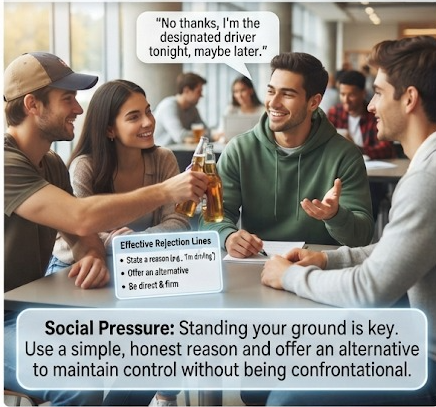
1. “No thanks, I’m good.”
This is one of the easiest and most natural responses. It’s short, polite, and doesn’t invite further discussion.
2. “That’s not really my thing.”
You don’t owe anyone a detailed explanation. This line clearly communicates your preference without sounding defensive.
3. “Maybe another time.”
If you want to avoid confrontation while ending the conversation, this response works well in less serious situations.
4. “I have other plans.”
Whether or not you actually do, this is a polite way to leave an uncomfortable situation without creating conflict.
5. “I’m not comfortable doing that.”
Honesty is powerful. People often stop pushing when they hear you confidently express your comfort level.
6.”I am attempting to avoid getting into any difficulties.”
This response shows maturity and reminds others that you’re thinking about the consequences.
7. “My parents would never allow it.”
For teenagers, this can be an effective excuse that shifts the focus away from personal choice.
8. “No, but thanks for asking.”
A respectful response keeps the conversation friendly while making your decision clear.

Tips for Making Your Rejection More Effective
The words you choose matter, but your confidence matters even more.
- Speak clearly and confidently.
- Maintain eye contact.
- Avoid over-explaining yourself.
- Repeat your answer if someone keeps insisting.
- Leave the situation if the pressure continues.
Confidence often discourages people from asking again.
What to Do If Friends Keep Pressuring You
Sometimes, certain people refuse to accept “no” as an answer. If this happens repeatedly, it may be time to rethink those relationships.
Healthy friendships are based on respect, not pressure. Friends should encourage you to make good decisions instead of making you feel guilty for saying no.
If someone constantly ignores your boundaries, creating some distance may be the healthiest choice.
Building Confidence to Say No
Standing up to peer pressure becomes easier with practice. Remind yourself that your opinions, goals, and values matter. Every time you confidently refuse something that doesn’t align with your beliefs, you strengthen your self-confidence.
You can also practice rejection lines in front of a mirror or with someone you trust. This makes them feel more natural when you need them in real-life situations.
Knowing peer pressure rejection lines that work is an important life skill. You don’t need clever excuses or long explanations to protect your choices. A simple, confident “no” is often enough.
The people who genuinely care about you will respect your decisions. Remember that staying true to yourself is far more valuable than fitting in with the crowd. Confidence, self-respect, and clear communication will always help you make better decisions, regardless of the pressure around you.
Read Also: Wedding Website Design