
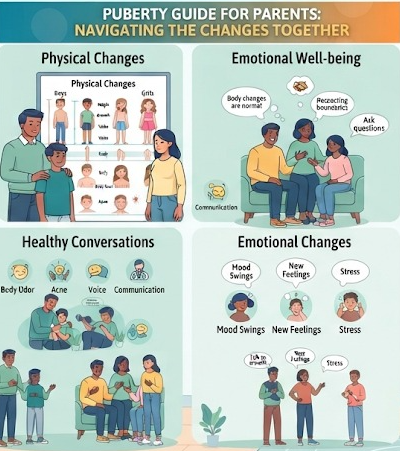
Puberty is a natural stage of growth that marks the transition from childhood to adulthood. During this period, teenagers experience physical, emotional, and mental changes that can sometimes feel confusing or overwhelming. For parents, understanding these changes is equally important to provide the right guidance and support. This puberty guide for parents and teens explains what to expect, how to communicate openly, and ways to make this life stage a positive experience for the entire family.
What Is Puberty?
The process during which a child’s body transforms into an adult one capable of reproduction is known as puberty. It usually begins between the ages of 8 and 13 for girls and 9 and 14 for boys, although every child develops at their own pace.
Hormones released by the brain trigger changes throughout the body. These changes are completely normal and are a healthy part of growing up.
Physical Changes During Puberty
One of the most noticeable aspects of puberty is the physical transformation.
Changes in Girls
- Breast development begins.
- Menstruation (periods) starts.
- Hips widen.
- Body hair grows under the arms and around the pubic area.
- Growth spurts increase height rapidly.
Changes in Boys
- Voice deepens.
- Shoulders become broader.
- Facial and body hair begins to grow.
- Muscles develop.
- Growth spurts increase height and weight.
Both boys and girls may also experience acne, increased sweating, and changes in body odor due to hormonal activity.
Emotional and Mental Changes
Puberty doesn’t only affect the body—it also impacts emotions and behavior. Teenagers may experience mood swings, become more independent, and develop stronger opinions.
Common emotional changes include:
- Feeling self-conscious about appearance.
- Increased sensitivity.
- Curiosity about relationships.
- Stress related to school and friendships.
- Desire for more privacy.
Parents should remember that these emotional changes are a normal part of development and usually improve with maturity.
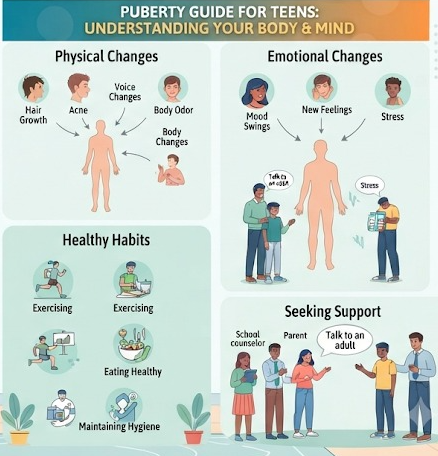
Tips for Parents to Support Teens
Parents play a vital role during puberty. Understanding and open communication can have a big impact.
Encourage Honest Conversations
Create a safe environment where your child feels comfortable asking questions without fear of embarrassment or judgment.
Teach Healthy Hygiene Habits
Explain the importance of daily bathing, using deodorant, brushing teeth, and maintaining proper skin care. Girls should learn about menstrual hygiene, while boys should understand normal body changes.
Respect Privacy
As teenagers grow older, they naturally seek more independence. Respecting their personal space helps build trust and confidence.
Provide Emotional Support
Listen carefully when your teen shares concerns. Instead of criticizing, offer reassurance and practical advice.
Healthy Lifestyle During Puberty
Maintaining healthy habits supports proper growth and development.
Eat a Balanced Diet
A nutritious diet rich in fruits, vegetables, whole grains, lean proteins, dairy products, and healthy fats provides the nutrients needed for growing bodies.
Stay Physically Active
Regular exercise strengthens muscles and bones, improves mood, and supports overall health. Encourage at least 60 minutes of physical activity most days.
Get Enough Sleep
Teenagers generally need 8–10 hours of sleep every night. Good sleep improves concentration, emotional well-being, and physical growth.
Common Myths About Puberty
Many misconceptions surround puberty. Here are a few facts:
- Everyone experiences puberty at different ages.
- Acne is common and does not mean someone has poor hygiene.
- Mood swings are influenced by hormonal changes but can be managed with healthy habits and support.
- Asking questions about puberty is healthy and should be encouraged.
Understanding these facts helps reduce anxiety and builds confidence.
When Should Parents Seek Medical Advice?
While puberty usually progresses naturally, parents should consult a healthcare professional if:
- Puberty starts unusually early or very late.
- Severe emotional or behavioral changes occur.
- Menstrual periods remain irregular for an extended period after they begin.
- Persistent pain or unusual physical symptoms develop.
Early medical guidance can help identify and manage any underlying concerns.
Puberty is an important milestone that brings both challenges and exciting opportunities for growth. With patience, education, and open communication, parents can help teenagers navigate this journey confidently. Understanding the physical, emotional, and mental changes of puberty allows families to build stronger relationships while preparing teens for a healthy and successful future. By working together, parents and teens can transform puberty into a positive learning experience filled with trust, respect, and confidence.
Read Also: Wedding Website Design