

A kitchen can be one of the busiest areas in any home, but it can also become a major source of unnecessary waste. From leftover food and vegetable peels to excessive packaging and disposable products, everyday kitchen habits can create more waste than we realize. The good news is that creating a zero-waste kitchen does not require expensive products or dramatic lifestyle changes. Small, practical adjustments can make your kitchen more sustainable while also helping you save money.
Plan Your Meals Before Shopping
One of the easiest zero-waste kitchen hacks is to plan meals before visiting the grocery store. Check your refrigerator, freezer, and pantry first. Make a shopping list based on what you already have and purchase only the quantities you are likely to use.
Meal planning reduces impulse purchases and helps prevent fresh ingredients from being forgotten at the back of the refrigerator. The EPA also recommends checking existing supplies, planning meals, and buying only what is needed as effective ways to prevent food waste.
Give Leftovers a Second Life
Leftovers do not have to become boring meals or end up in the trash. Get creative by transforming yesterday’s food into something different. Cooked vegetables can become soup, curry, wraps, or fried rice. Extra rice can be turned into a quick stir-fry, while roasted vegetables can be added to sandwiches or salads.
Instead of preparing completely new meals every day, look at your refrigerator as a collection of ingredients waiting to be reused. This easy practice can greatly decrease the amount of food that is wasted.
Store Food the Smart Way
Proper storage is another important part of a zero-waste kitchen. Store fruits and vegetables appropriately and keep leftovers in clean, airtight containers. Label containers with dates so that older food gets used first.
Freezing is particularly useful when you know you will not consume something before it spoils. Bread, cooked meals, chopped vegetables, herbs, and some fruits can often be frozen for later use. According to the EPA, refrigerating or freezing leftovers in clearly labeled containers can help households reduce unnecessary food waste.
Use More of Your Fruits and Vegetables
Many parts of fruits and vegetables that are commonly thrown away can sometimes be repurposed. Broccoli stems can be added to stir-fries or soups, vegetable trimmings can contribute flavor to homemade stock, and citrus peels can be used to add flavor to recipes.
However, always check whether a particular peel, stem, seed, or other part is safe and suitable to eat before using it. Proper washing and food-safety practices should remain a priority.
Replace Disposable Kitchen Products
A sustainable kitchen is not only about food waste. Look at the everyday products you throw away. Replace disposable paper towels with washable cloths where practical. Use reusable containers instead of single-use bags, and consider reusable shopping bags when purchasing groceries.
These changes can reduce the amount of packaging and disposable material entering your household waste stream.
Create a Simple Composting System
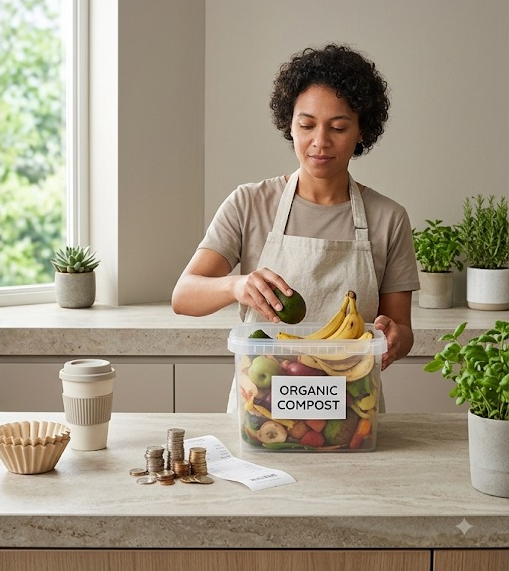
Some food scraps cannot reasonably be reused in cooking. Instead of sending suitable organic waste to the trash, consider composting. Fruit and vegetable scraps, coffee grounds, and other appropriate organic materials can become valuable compost when handled correctly.
The EPA describes composting as a way of recycling organic material and notes its benefits for reducing landfill waste and improving soil.
If home composting is not practical, check whether a local community composting or food-scrap collection service is available.
Follow the “First In, First Out” Rule
Organize your refrigerator and pantry so that older products are placed where you can easily see them. Put newly purchased items behind older ones. This simple zero-waste kitchen hack encourages you to use food before it becomes forgotten.
A weekly refrigerator check can also help you identify ingredients that need to be consumed soon. Turn those ingredients into your next meal rather than waiting until they spoil.
Start Small and Stay Consistent
A zero-waste lifestyle does not mean producing absolutely no waste overnight. The goal is to continuously reduce unnecessary waste through better choices. Start with one or two habits, such as meal planning, reusing leftovers, or composting food scraps. Once those habits become routine, introduce additional changes.
By planning purchases, storing food properly, creatively using leftovers, reducing disposable products, and composting suitable scraps, you can build a more efficient and environmentally responsible kitchen. Zero-waste kitchen hacks are ultimately about making every ingredient and resource count while creating healthier habits for your home and the planet.
Andaman and Nicobar Islands Forests
Tours And Travels Website Design