
Energy efficiency is becoming increasingly important for homeowners who want to reduce monthly utility bills, improve indoor comfort, and create a more environmentally friendly home. One of the easiest ways to identify energy-saving opportunities is by performing DIY home energy audits. You do not always need expensive equipment or a professional auditor to discover where your home may be wasting energy.
What Is a DIY Home Energy Audit?
A DIY home energy audit is a simple inspection of your house to identify areas where electricity, heating, or cooling energy may be unnecessarily lost. It involves checking insulation, windows, doors, lighting, appliances, heating and cooling systems, and other areas that influence household energy consumption.
The main purpose is to understand how your home uses energy and find practical ways to improve its efficiency. Even small changes can make a noticeable difference when they are applied throughout the house.
Start by Reviewing Your Energy Bills
Before inspecting your home, look at your electricity and heating bills from the previous several months. Compare your energy consumption across different seasons and identify unusual increases.
If your energy usage is significantly higher during summer, for example, your air conditioner may be working harder than necessary. Likewise, higher winter usage could suggest inadequate insulation or inefficient heating.
Keeping a record of your monthly usage also helps you measure whether your energy-saving improvements are actually working.
Check Doors and Windows for Air Leaks
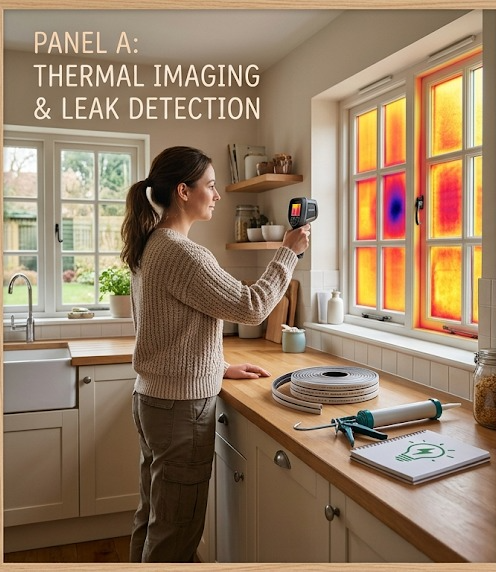
Air escape is a prevalent reason for wasting energy. Carefully inspect windows, exterior doors, and other openings around your home for visible gaps or damaged seals.
On a windy day, you can check for noticeable drafts around window frames and doors. Look closely at weather stripping and caulking. Damaged or worn materials can allow conditioned indoor air to escape while outside air enters.
Sealing these gaps with appropriate weather stripping or caulk can improve comfort and reduce the workload on heating and cooling equipment.
Inspect Your Home’s Insulation
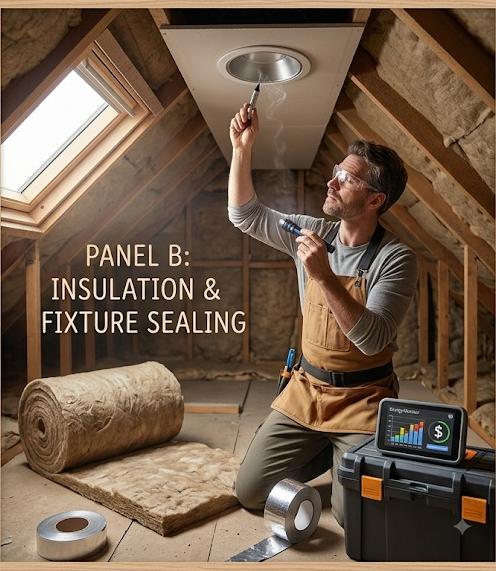
Proper insulation helps maintain a stable indoor temperature by slowing the transfer of heat. Inspect areas that are easy to reach like the attic, basement, crawl spaces, and outer walls for indications of inadequate or harmed insulation.
The attic deserves particular attention because heat can easily escape through the roof during colder weather or enter the home during hot weather. If insulation appears uneven, compressed, wet, or inadequate, consider researching suitable improvements for your home’s climate and construction.
Examine Lighting and Electrical Appliances
Lighting and household appliances can contribute significantly to electricity consumption. During your DIY home energy audit, make a list of frequently used appliances such as refrigerators, washing machines, televisions, computers, and air conditioners.
Replace older incandescent bulbs with energy-efficient LED lighting where appropriate. LEDs generally consume less electricity and last considerably longer.
Also, unplug devices that are rarely used or use smart power strips to reduce standby energy consumption from electronics.
Evaluate Heating and Cooling Systems
Heating and cooling equipment often accounts for a substantial portion of household energy use. Check air filters regularly and replace dirty filters according to the manufacturer’s recommendations.
Inspect vents and registers to make sure furniture, curtains, or other objects are not blocking airflow. If your HVAC system is unusually noisy, struggles to maintain the desired temperature, or appears inefficient, professional servicing may be worthwhile.
Using a programmable or smart thermostat can also help prevent unnecessary heating and cooling when nobody is home.
Look for Water Heating Energy Waste
Hot water consumption is another area worth checking. Inspect hot-water pipes for unnecessary heat loss and look for dripping faucets or leaks. Lowering excessive hot-water usage through efficient fixtures and sensible temperature settings can help reduce energy demand.
Simple habits, such as taking shorter showers and washing clothes with appropriate water temperatures, can also contribute to savings.
Create an Energy-Saving Action Plan
After completing your home inspection, organize your findings according to cost and importance. Start with inexpensive improvements such as sealing air leaks, replacing inefficient bulbs, cleaning filters, and reducing unnecessary electricity use.
Next, consider larger projects such as improving insulation, upgrading windows, or replacing inefficient appliances. Tracking your energy bills after making changes can help determine which improvements provide the greatest benefits.
DIY home energy audits give homeowners a practical way to understand their property’s energy performance without immediately investing in a professional inspection. By checking air leaks, insulation, appliances, lighting, HVAC equipment, and water heating, you can identify several opportunities to reduce wasted energy.
A successful energy audit does not require complicated tools. It starts with careful observation, basic recordkeeping, and a willingness to make improvements. By turning your findings into an organized energy-saving plan, you can work toward a more comfortable, efficient, and cost-effective home.
Read Also: Wedding Website Design