

One of the most exciting milestones in a baby’s development is learning to crawl. Parents often wonder, “When do Babies Start Crawling?” While every child develops at their own pace, understanding the general timeline and signs can help you support your baby’s growth with confidence.
Average Age Babies Start Crawling
The majority of infants start to crawl between the ages of six and ten months. However, this is only a general guideline. Some babies may start as early as 5 months, while others may take closer to 11 months—or even skip crawling altogether and move straight to walking.
It’s important not to compare your baby with others. Developmental milestones vary, and a slight delay is usually not a cause for concern.
Signs Your Baby Is Ready to Crawl
Before babies actually start crawling, they show certain physical and behavioral signs. These include:
- Improved head and neck control
- Rolling over both ways
- Sitting without support
- Pushing up on hands during tummy time
- Rocking back and forth on hands and knees
These movements help strengthen muscles needed for crawling and are a natural part of development.
Different Types of Crawling Styles
Not all babies crawl the same way. In fact, there are several crawling styles you might notice:
- Classic crawl – moving on hands and knees
- Army crawl – dragging the belly along the floor
- Scooting – moving on the bottom
- Bear crawl – keeping arms and legs straight
Each style is normal and helps babies build coordination and strength.
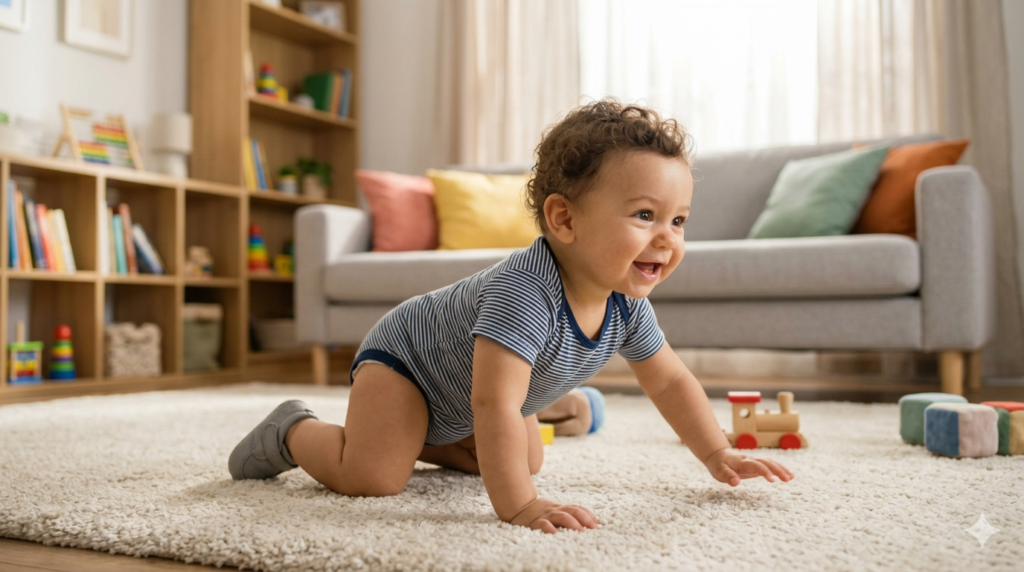
Why Crawling Is Important
Crawling plays a crucial role in a baby’s development. It helps improve:
- Muscle strength in arms, legs, and core
- Coordination and balance
- Motor skills development
- Brain development through movement and exploration
Even if a baby skips crawling, they often develop these skills through other movements.
How to Encourage Your Baby to Crawl
If you want to help your baby learn to crawl, there are simple ways to encourage them:
1. Give Plenty of Tummy Time
Time for the tummy improves the muscles necessary for crawling. Start with a few minutes daily and gradually increase the duration.
2. Use Toys as Motivation
Place toys slightly out of reach to encourage your baby to move toward them.
3. Create a Safe Space
Make sure your baby has a soft, clean, and safe area to explore freely.
4. Limit Time in Walkers or Seats
Too much time in baby gear can restrict movement and delay crawling practice.
When Should You Be Concerned?
While every baby develops differently, you may want to consult a pediatrician if:
- Your baby is not attempting to move by 10–12 months
- They seem stiff or floppy
- They show little interest in movement
Early intervention can help address any developmental concerns effectively.
Do All Babies Crawl?
Interestingly, not all babies crawl. Some skip this stage entirely and go straight to standing and walking. This is generally normal, as long as your baby continues to meet other developmental milestones.
So, When do Babies Start Crawling? The simple answer is: most babies begin between 6 and 10 months, but variations are completely normal. Crawling is an important milestone, but it’s just one part of your baby’s unique developmental journey.
Effects of AI in Upcoming Technology
Manhole – Essential Access Points in Urban Infrastructure
RCPC Manhole Covers and Frames
Read Also: Social Network Website Design