The ocean covers more than 70% of the Earth’s surface, yet much of it remains unexplored. One of the most fascinating questions people ask is: How Deep is The Ocean? The answer is both simple and complex, depending on which part of the ocean you are referring to. In this article, we will explore the average depth, the deepest points, and what lies beneath the surface.
Average Depth of the Ocean
The average depth of the ocean is approximately 3,688 meters (12,100 feet). This measurement takes into account all five major oceans: the Pacific, Atlantic, Indian, Southern, and Arctic. While this number gives a general idea, the ocean floor is not uniform. Some areas are relatively shallow, while others plunge into extreme depths.
The Deepest Part of the Ocean
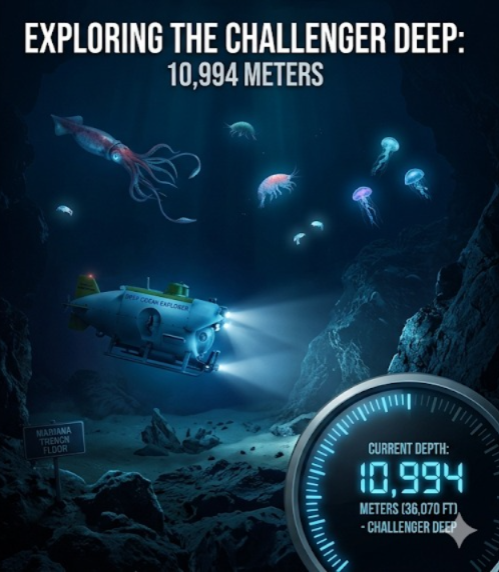
The deepest known point in the ocean is the Challenger Deep, located in the Mariana Trench in the western Pacific Ocean. It reaches an astonishing depth of around 10,984 meters (36,037 feet). To put this into perspective, if Mount Everest were placed inside the trench, its peak would still be over a mile underwater.
This extreme depth makes the Mariana Trench one of the most mysterious and least explored places on Earth.

Ocean Zones Based on Depth
The ocean is divided into different layers based on how deep they are and how much sunlight reaches them:
1. Sunlight Zone (Epipelagic Zone)
- Depth: 0 to 200 meters
- This is the top layer where sunlight penetrates.
- Most marine life, including fish and coral reefs, exists here.
2. Twilight Zone (Mesopelagic Zone)
- Depth: 200 to 1,000 meters
- Very little light reaches this zone.
- Many unique creatures like lanternfish live here.
3. Midnight Zone (Bathypelagic Zone)
- Depth: 1,000 to 4,000 meters
- Completely dark and extremely cold.
- Pressure increases significantly.
4. Abyssal Zone
- Depth: 4,000 to 6,000 meters
- Near-freezing temperatures and high pressure.
- Few organisms survive in this harsh environment.
5. Hadal Zone
- Depth: 6,000 meters and deeper
- Found in ocean trenches like the Mariana Trench.
- Home to rare and highly adapted organisms.
Why Is the Ocean So Deep?
The ocean’s depth is largely due to the movement of tectonic plates beneath the Earth’s surface. When these plates shift, they create trenches, ridges, and basins. Over millions of years, these geological processes have shaped the ocean floor into the deep and complex structure we see today.
Pressure in the Deep Ocean
As you go deeper into the ocean, the pressure increases dramatically. At the deepest point, the pressure is over 1,000 times greater than at sea level. This makes exploration extremely challenging and requires specially designed submarines and equipment.
How Much of the Ocean Is Explored?
Despite modern technology, scientists estimate that over 80% of the ocean remains unexplored. The extreme depth, darkness, and pressure make it difficult to study. However, ongoing research continues to uncover new species and geological features.
So, How Deep is The Ocean? While the average depth is around 3,688 meters, certain areas like the Mariana Trench go much deeper, reaching nearly 11 kilometers below the surface. The ocean is not just deep—it is a vast, mysterious world filled with unknown wonders.
Understanding ocean depth helps scientists learn more about marine life, climate change, and Earth’s geological history. As technology improves, we can expect to uncover even more secrets hidden in the deep blue sea.
India’s Secret Beaches That Offer Peace and Serenity
Top Beaches in India for Solitude and Spiritual Freedom
Tours And Travels Website Design