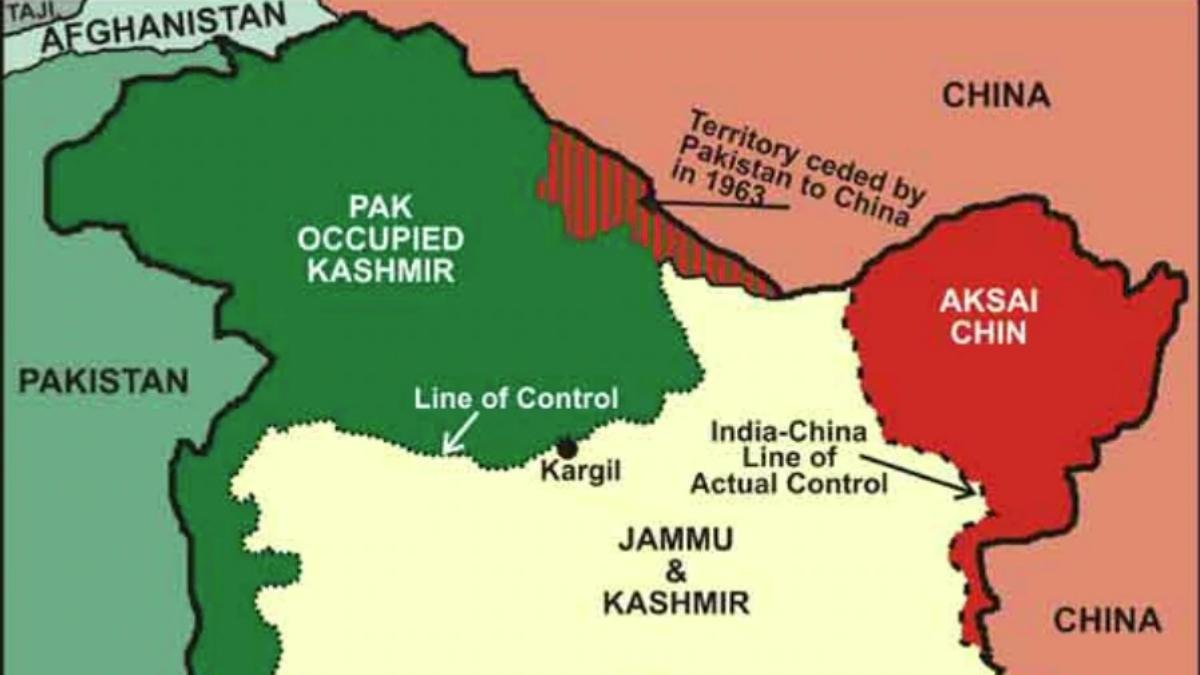
Aksai Chin is one of the most geopolitically sensitive regions in Asia. Often described in media and politics as part of the “Occupied Kashmir”, it lies at the heart of the longstanding territorial dispute between India and China. Although relatively unknown globally compared to Pakistan‑administered Kashmir, Aksai Chin has played a key role in shaping South Asian diplomacy and security.
In simple terms, Aksai Chin refers to the high‑altitude desert region in the eastern part of the larger Kashmir area. While India claims Aksai Chin as part of its union territory of Ladakh, the region has been under the actual control of the People’s Republic of China since the 1950s. Today, this territory remains a major flashpoint between the two nuclear‑armed neighbours.
Where Is Aksai Chin Located?
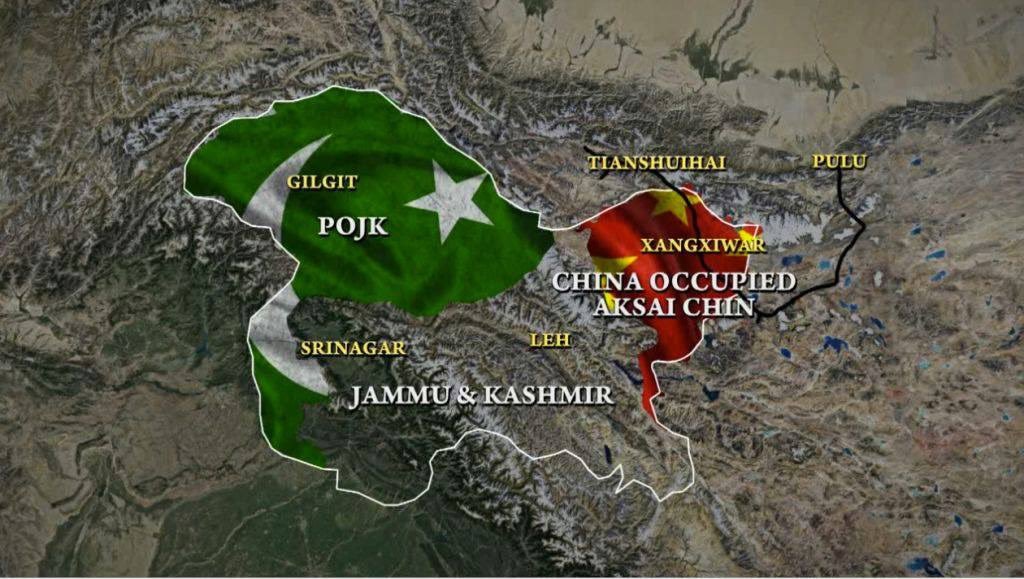
Aksai Chin is situated in the north‑western Himalayas, covering roughly 37,000 square kilometres of high‑altitude desert and salt flats. The name “Aksai Chin” comes from Turkic and Tibetan roots, often interpreted as “white stone desert”, referring to its bleak landscape.
Geographically, Aksai Chin lies:
- Northwest of Ladakh (India)
- South of Xinjiang Province (China)
- East of the Karakoram Range
Its extreme elevation — averaging over 4,500 metres above sea level — makes it one of the most inhospitable regions on Earth.
Why Is Aksai Chin Called ‘Occupied Kashmir’?
The term “Occupied Kashmir” is used mainly in Indian political discourse to describe areas of the former princely state that are under foreign control. While this term is more commonly heard in reference to Pakistan‑administered Kashmir, it is also applied to Aksai Chin due to China’s control over territory that India claims.
India asserts that the entire region of Jammu & Kashmir, including Ladakh and Aksai Chin, legally acceded to India in 1947–48 following the partition of British India. China, however, argues that Aksai Chin has historically been part of its territory, citing historical maps and control dating back centuries.
This clash of claims has led to the use of terms like “Chinese‑occupied Kashmir” by Indian officials and scholars, underlining India’s rejection of China’s sovereignty over the region.
Historical Background of the Dispute
The roots of the Aksai Chin disagreement trace back to the mid‑20th century. After India and China gained independence, both nations sought to define their borders — a task made difficult due to the lack of clear demarcation in the high Himalayas.
Tensions escalated in the 1950s when China began constructing a road connecting Xinjiang to Tibet via the Aksai Chin plateau. India learned of this project in 1957, raising alarm over what it saw as an infringement on its sovereign territory.
Matters came to a head in 1962, when India and China engaged in a brief but intense border conflict, commonly referred to as the Sino‑Indian War. By the conflict’s end, Chinese forces had gained control of Aksai Chin, solidifying their hold over the region.
Why Aksai Chin Matters Today
Even decades after the 1962 war, Aksai Chin remains strategically important for both India and China.
For China:
- It provides a vital land link between Xinjiang and Tibet
- It supports infrastructure such as the G219 national highway
- It strengthens China’s western defence posture
For India:
- Aksai Chin represents territorial integrity
- Its control influences security in Ladakh
- It affects broader India‑China relations and diplomacy
The region has also been the site of several border standoffs, including the 2020 clashes in the Galwan Valley, underlining that the dispute is far from resolved.
In summary, Aksai Chin is a disputed plateau controlled by China but claimed by India as part of Kashmir. Its strategic significance and contested status have shaped diplomatic and military relations between India and China for decades. While the term Occupied Kashmir may be politically charged, it reflects India’s continued claim over the territory.
Understanding Aksai Chin is crucial not only for interpreting contemporary South Asian geopolitics but also for appreciating how historical border decisions continue to influence global relations today.
Best Adventures to do in India
Read Also: Tours And Travels Website Design