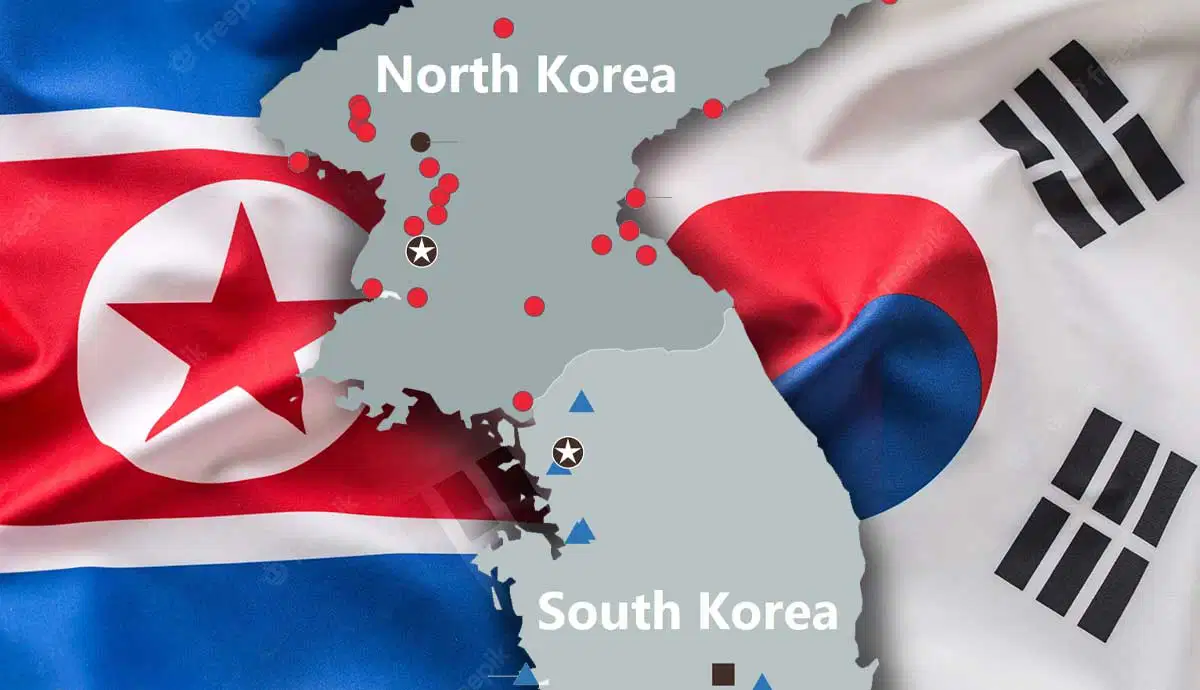
The Korean Peninsula, located in East Asia, is home to two countries that, despite sharing historical roots, have developed into remarkably distinct nations: South Korea (Republic of Korea) and North Korea (Democratic People’s Republic of Korea). While both countries share a common language and culture, decades of political division and differing ideologies have resulted in contrasting economic, social, and political landscapes.
Historical Background: The Division of Korea
Korea was a unified kingdom for centuries until the mid-20th century. Following World War II, Korea was liberated from Japanese occupation but soon became divided along the 38th parallel due to rising tensions between the Soviet Union and the United States. The northern region became World War II,backed by the Soviet Union, while the southern region became South Korea, supported by the United States. This division eventually led to the Korean War (1950–1953), a devastating conflict that cemented the division of the peninsula and established two ideologically opposing nations.
Political Systems: Democracy vs. Dictatorship
One of the most evident differences between South Korea and North Korea is their political systems. South Korea is a democratic republic, with free elections, multiple political parties, and an active civil society. Citizens enjoy freedoms such as free speech, press, and movement, which have fostered a politically engaged population.
In contrast, North Korea operates under a totalitarian regime led by the Kim dynasty since its establishment. The government exercises strict control over all aspects of life, including media, education, and travel. Opposition is not tolerated, and citizens have limited freedom, creating one of the most secretive and isolated countries in the world.
Economic Differences: Prosperity vs. Scarcity

Economically, South Korea and North Korea represent opposite ends of the spectrum. South Korea has transformed into a global economic powerhouse, ranking among the top 10 largest economies in the world. Its economy is driven by advanced technology, automobile manufacturing, shipbuilding, and entertainment industries, including the globally popular K-pop and Korean cinema. South Korea’s high standard of living, robust infrastructure, and thriving business environment make it a model of rapid modernization.
On the other hand, North Korea struggles with widespread poverty and economic stagnation. Its economy is largely state-controlled, with limited access to global markets. Food shortages, underdeveloped infrastructure, and restricted technological growth hinder its development, creating a stark contrast to its southern neighbor.
Social and Cultural Aspects
While both countries share traditional Korean culture, including language, cuisine, and Confucian values, decades of separation have shaped divergent societies. South Koreans experience modern lifestyles with access to education, global media, and international travel. The society emphasizes innovation, competitiveness, and cultural exports.
Conversely, North Korean society is heavily influenced by the state ideology of Juche, emphasizing self-reliance and loyalty to the ruling party. Cultural life is closely monitored, with limited exposure to outside influences. The daily lives of citizens are regulated by government policies, and international information is largely inaccessible.
Military and International Relations
The military posture of both countries is another point of difference. North Korea maintains one of the largest standing armies in the world and continues to invest heavily in nuclear weapons development, creating global security concerns. South Korea, backed by alliances with the United States and other nations, maintains a strong but defensive military force, prioritizing diplomacy and international cooperation.
Though South Korea and North Korea share a common heritage, they have evolved into two distinct countries with unique political, economic, and social systems. South Korea exemplifies democracy, technological advancement, and economic prosperity, while North Korea remains isolated, authoritarian, and economically challenged. The differences between the two nations underscore how historical events, governance, and ideology can shape the trajectory of countries, even those sharing a common cultural foundation.
Best Adventures to do in India
Read Also: Tours And Travels Website Design