
Gold has played a crucial role in shaping the global financial system for centuries. From ancient civilizations to modern economies, it has been regarded as a symbol of wealth, stability, and trust. Understanding how gold became a reserve currency helps explain the foundations of today’s monetary system
What Is a Reserve Currency?
A reserve currency is a foreign currency held by central banks and governments as part of their reserves. It is used for international trade, investments, and financial stability. Before modern fiat currencies dominated global markets, gold itself served as the primary reserve asset.
Early History of Gold as Money
Gold’s journey as a reserve currency began in ancient civilizations such as Egypt, Mesopotamia, and Rome. These societies valued gold for its rarity, durability, and divisibility. Unlike other commodities, gold does not corrode, making it ideal for long-term storage of wealth.
By the time of medieval trade, gold coins became widely accepted across regions. Merchants trusted gold because its value was universally recognized, regardless of language or political boundaries.
The Gold Standard Era
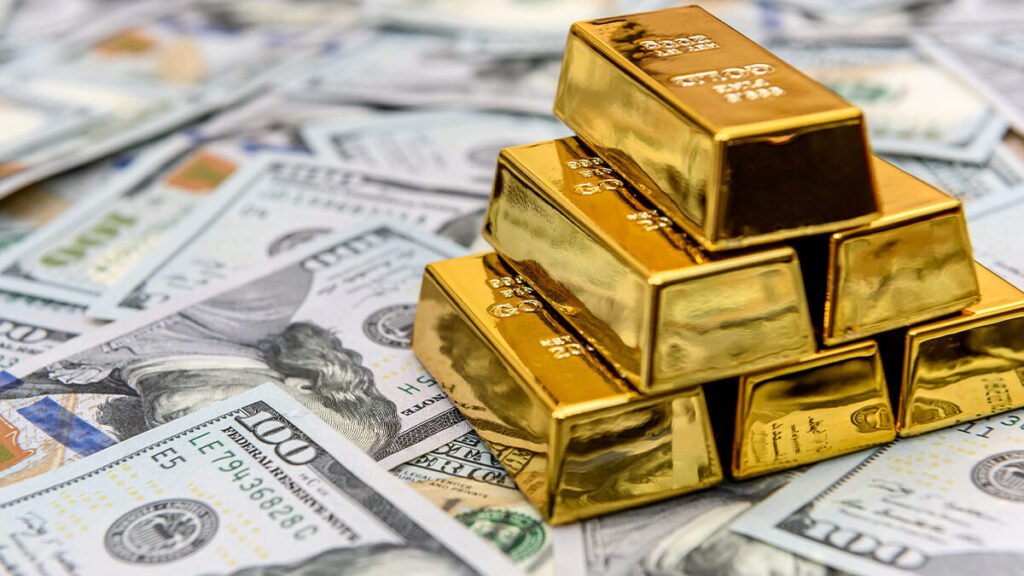
The real transformation of gold into a global reserve asset occurred during the Gold Standard era in the 19th century. Countries began to link their currencies directly to a fixed amount of gold. This meant that paper money could be exchanged for gold at a predetermined rate.
Under the Gold Standard:
- Governments maintained gold reserves to back their currency.
- Exchange rates between countries became stable.
- International trade grew rapidly due to increased trust.
Major economies like the United Kingdom and later the United States adopted this system, making gold the backbone of global finance.
Why Gold Was Trusted Globally
Gold became the preferred reserve asset for several key reasons:
1. Scarcity and Limited Supply
Gold is naturally limited, which prevents inflation caused by excessive supply.
2. Universal Acceptance
Across cultures and nations, gold has always been recognized as valuable.
3. Durability
Gold does not degrade over time, making it ideal for long-term reserves.
4. Independence from Governments
Unlike paper currencies, gold is not controlled by any single government, increasing its reliability.
The Bretton Woods System
After World War II, the global financial system was restructured under the Bretton Woods Agreement in 1944. In this system:
- The US dollar was pegged to gold.
- Various currencies were linked to the US dollar.
This made gold indirectly the foundation of global currency exchange. Central banks held gold reserves to maintain confidence in their currencies.
However, in 1971, the United States ended the direct convertibility of the dollar into gold, marking the end of the Gold Standard system.
Gold in the Modern Financial System
Even though gold is no longer used as a direct reserve currency, it still plays a significant role in global finance.
Central banks continue to hold large gold reserves because:
- It acts as a hedge against inflation.
- It provides security during economic crises.
- It diversifies foreign exchange reserves.
Countries like the United States, Germany, and China maintain substantial gold holdings to strengthen their financial stability.
Why Gold Still Matters Today
In times of economic uncertainty, gold prices often rise as investors seek a safe haven. Unlike fiat currencies, which can lose value due to inflation or political instability, gold tends to retain its purchasing power over time.
This enduring trust is why gold remains a critical component of global reserves, even in a digital and currency-driven world.
Gold became a reserve currency due to its unique properties—scarcity, durability, and universal acceptance. From ancient trade systems to the Gold Standard and Bretton Woods era, gold has been central to global economic stability. While modern economies rely on fiat currencies, gold continues to serve as a trusted store of value and a safeguard against financial uncertainty.
Read Also: Social Network Website Design