Understanding the signs you are ovulating right now can help you better track your menstrual cycle, improve your chances of conception, or simply become more aware of your reproductive health. Ovulation is the stage when one of your ovaries releases a mature egg, making it the most fertile time of your cycle. While every woman experiences ovulation differently, there are several common symptoms that can help you identify when it is happening.
In this article, we’ll explore the most noticeable signs of ovulation and explain why they occur.
What Is Ovulation?
Ovulation usually occurs around the middle of your menstrual cycle, approximately 12 to 16 days before your next period begins. During this time, hormonal changes trigger the release of an egg from the ovary. The egg remains viable for about 12 to 24 hours, while sperm can survive in the female reproductive tract for up to five days, creating a fertile window for pregnancy.
1. Clear and Stretchy Cervical Mucus
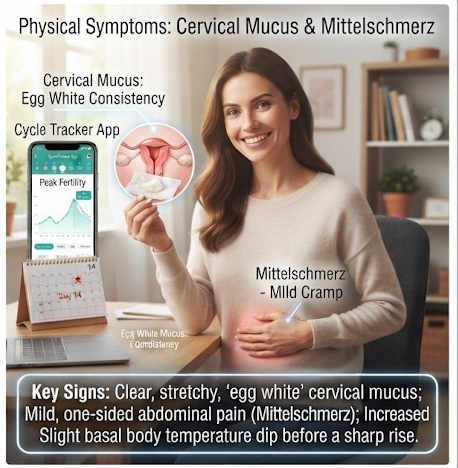
One of the earliest and most reliable signs of ovulation is a change in cervical mucus. Around ovulation, it becomes clear, slippery, and stretchy, resembling raw egg whites.
This fertile mucus helps sperm travel more easily toward the egg, increasing the chances of fertilization.
2. Mild Pelvic Pain (Ovulation Pain)
Some women experience a mild ache or sharp pain on one side of the lower abdomen during ovulation. This discomfort, known as Mittelschmerz, usually lasts from a few minutes to several hours.
The pain typically alternates sides depending on which ovary releases the egg.
3. Increased Sex Drive
A natural rise in estrogen and luteinizing hormone can increase your libido around ovulation. Many women notice they feel more sexually interested during their fertile window, which is the body’s natural way of encouraging reproduction.
4. Breast Tenderness
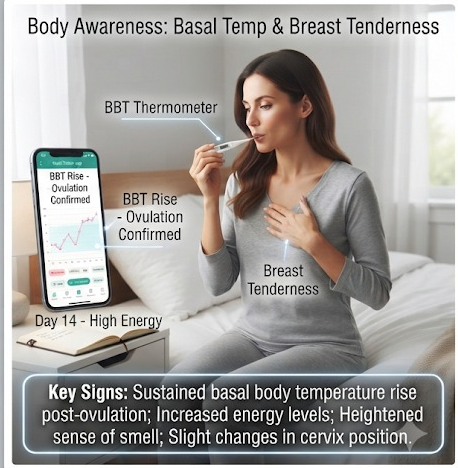
Hormonal fluctuations during ovulation may cause your breasts to feel swollen, tender, or more sensitive than usual. This symptom is generally mild and often disappears after ovulation ends.
5. Slight Increase in Basal Body Temperature
Your basal body temperature (BBT) rises slightly after ovulation due to increased progesterone levels. Although the increase is usually only about 0.3–0.6°C (0.5–1°F), tracking your temperature daily can help confirm that ovulation has occurred.
6. Heightened Sense of Smell
Some women notice a stronger sense of smell during ovulation. Hormonal changes can make certain scents seem more intense, which may also influence food cravings or attraction to particular fragrances.
7. Light Spotting
A small amount of light pink or brown spotting can occur when the egg is released. Ovulation spotting is usually very light and lasts only a day or two. It is generally considered normal and is not experienced by everyone.
8. Changes in Cervical Position
During ovulation, the cervix often becomes softer, higher, more open, and slightly wetter. Women who regularly track fertility may notice these changes through self-examination, although it takes practice to recognize them accurately.
How to Confirm Ovulation
While physical symptoms provide useful clues, they are not always completely accurate. You can improve ovulation tracking by combining symptoms with methods such as:
- Ovulation predictor kits (LH tests)
- Basal body temperature charting
- Fertility tracking apps
- Regular menstrual cycle monitoring
Using multiple methods together provides a clearer picture of your fertile days.
When to Consult a Doctor
If you have irregular menstrual cycles, severe pelvic pain, or difficulty becoming pregnant after trying for several months, consult a healthcare professional. They can evaluate your hormonal health and recommend appropriate fertility testing or treatment if necessary.
Recognizing the signs you are ovulating right now empowers you to better understand your body and reproductive health. Symptoms such as clear cervical mucus, mild pelvic pain, increased libido, breast tenderness, and slight temperature changes are all common indicators that ovulation may be occurring. Since every woman’s body is different, tracking these signs over several months can help you identify your unique fertility pattern and make informed decisions about family planning or overall wellness.
Liver Cancer Symptoms Cause and Remedy
Read Also: Medical Website Design