Conception is one of the most fascinating biological processes in the human body. It marks the beginning of pregnancy, where a sperm fertilizes an egg to create a new life. While many people understand the basics, the complete process involves several carefully timed steps that occur inside the female reproductive system. Learning how conception happens step by step can help couples trying to conceive, students studying biology, and anyone interested in reproductive health.
In this piece, we will describe every phase of the conception process in easy-to-understand language, starting from ovulation and leading up to implantation. We will also address frequently asked questions regarding fertility and pregnancy.
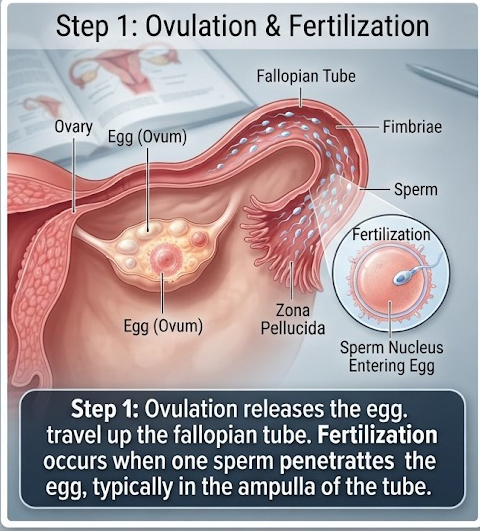
Step 1-Ovulation – The Release of the Egg
Conception begins with ovulation, a process in which one of the ovaries releases a mature egg. This usually occurs around the middle of a woman’s menstrual cycle, approximately 14 days before the next period in a 28-day cycle.
Once released, the egg enters the fallopian tube, where it remains viable for about 12 to 24 hours. During this short window, fertilization can occur if sperm are present.
Healthy ovulation is essential for natural conception because without a mature egg, pregnancy cannot begin.
Step 2-Sperm Travels Through the Female Reproductive Tract
During sexual intercourse, millions of sperm are released into the vagina through semen. Although millions begin the journey, only a few hundred reach the fallopian tube.
The sperm must pass through several obstacles, including:
- The cervix
- The uterus
- The fallopian tubes
Healthy sperm can survive inside the female reproductive tract for up to five days, increasing the chances of meeting the egg during ovulation.
Step 3-Fertilization Takes Place
Fertilization occurs when one healthy sperm successfully penetrates the outer layer of the egg.
Once a single sperm enters the egg:
- The egg immediately blocks all other sperm.
- The genetic material from both parents combines.
- A zygote, which is a solitary cell, is created.
The zygote contains 46 chromosomes, with 23 inherited from each parent. These chromosomes determine many of the baby’s future characteristics, including eye color, hair type, and biological sex.
Step 4-Cell Division Begins
After fertilization, the zygote starts dividing rapidly.
Within the next few days:
- One cell becomes two.
- Two become four.
- Four become eight.
- The cells continue multiplying while traveling toward the uterus.
This developing cluster of cells is known as a morula, which later develops into a blastocyst.
Even though it consists of many cells, it is still microscopic and cannot yet be detected by standard pregnancy tests.

Step 5-The Blastocyst Reaches the Uterus
Around five to six days after fertilization, the blastocyst reaches the uterus.
At this stage, it has two important parts:
- The inner cell mass, which develops into the baby.
- The outer layer, which later forms the placenta.
The uterus has prepared a thick, nutrient-rich lining during the menstrual cycle, making it ready to support pregnancy.
Step 6-Implantation Begins
Implantation is one of the most important steps in conception.
The blastocyst attaches itself to the uterine lining and gradually burrows into it. This usually occurs 6 to 10 days after fertilization.
Once implantation is successful:
- Pregnancy officially begins.
- The placenta starts developing.
- The body starts to generate the hormone known as human chorionic gonadotropin (hCG).
This hormone is what home pregnancy tests detect.
Some women may notice light spotting or mild cramping during implantation, although many experience no symptoms at all.
Step 7-Hormonal Changes Support Pregnancy
After implantation, hormone levels rise quickly.
The body produces increased amounts of:
- hCG
- Progesterone
- Estrogen
These hormones help:
- Maintain the uterine lining
- Prevent menstruation
- Support the developing embryo
- Prepare the breasts for breastfeeding
As hormone levels continue increasing, early pregnancy symptoms such as fatigue, nausea, tender breasts, and frequent urination may appear.
Factors That Affect Conception
Several factors influence the chances of successful conception, including:
- Age of both partners
- Regular ovulation
- Healthy sperm count and motility
- Balanced nutrition
- Healthy body weight
- Reduced stress
- Avoiding smoking and excessive alcohol
- Proper reproductive health
Maintaining a healthy lifestyle can improve fertility and increase the likelihood of pregnancy.
Tips to Improve the Chances of Conception
Partners attempting to get pregnant can enhance their likelihood by:
- Tracking ovulation accurately.
- Having regular intercourse during the fertile window.
- Eating a balanced diet rich in vitamins and minerals.
- Exercising moderately.
- Managing stress levels.
- Taking prenatal vitamins with folic acid.
- Consulting a healthcare provider if pregnancy does not occur after several months of trying.
Understanding how conception happens step by step helps explain the remarkable journey from a single egg and sperm to the beginning of pregnancy. The process involves ovulation, sperm travel, fertilization, rapid cell division, implantation, and hormonal changes that support the developing embryo. Every stage is carefully coordinated, making conception an extraordinary example of human biology. Whether you are planning a family or simply expanding your knowledge, understanding these steps provides valuable insight into how new life begins.
How to Choose the Best Online Courses for Career Advancement
Exploring the Top Scientific Theories That Changed the World