
The internet has become an essential part of children’s daily lives. From online learning and gaming to social media and video streaming, digital platforms offer countless opportunities for education and entertainment. However, these benefits also come with risks, including cyberbullying, online scams, privacy concerns, and exposure to inappropriate content. Teaching children about online safety and how to respond to cyberbullying is one of the most important responsibilities for parents, teachers, and caregivers.
By creating healthy digital habits and encouraging open communication, adults can help children enjoy the online world while staying safe and confident.
What Is Online Safety?
Online safety refers to the practices and guidelines that protect children from digital threats. It involves teaching kids how to use the internet responsibly, protect their personal information, identify suspicious behaviour, and make smart decisions when interacting with others online.
Children should understand that not everyone they meet on the internet is trustworthy. They should also know that once something is shared online, it can be difficult or even impossible to remove completely.
Understanding Cyberbullying
Cyberbullying is the use of digital technology to harass, threaten, embarrass, or intimidate someone. It can happen through social media, messaging apps, online games, emails, or text messages.
Unlike traditional bullying, cyberbullying can occur at any time and often reaches children even when they are at home. Hurtful comments, fake profiles, spreading rumours, sharing private photos without permission, and repeated online harassment are all common forms of cyberbullying.
The emotional effects can be serious, leading to anxiety, stress, depression, low self-esteem, and reduced academic performance.
Tips to Keep Kids Safe Online
Create Strong Passwords
Teach children to use strong and unique passwords for every account. Passwords should include a combination of uppercase and lowercase letters, numbers, and special characters. They should never share passwords with friends.
Protect Personal Information
Children should avoid sharing sensitive information such as their home address, school name, phone number, passwords, or financial details. Explain why privacy matters and how personal information can be misused.
Use Privacy Settings
Most social media platforms and gaming apps provide privacy controls. Help children adjust these settings so only trusted friends can view their profiles, photos, and personal information.
Think Before Posting
Encourage children to pause before posting photos, videos, or comments online. Remind them that digital content can remain online permanently and may be seen by people beyond their intended audience.
Avoid Talking to Strangers
Children should never meet online friends in person without parental knowledge and supervision. They should also avoid responding to suspicious messages or accepting friend requests from unknown people.
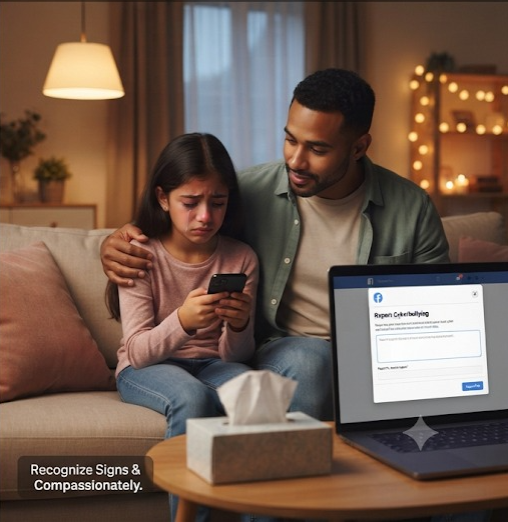
How to Recognise Cyberbullying
Children may not always tell adults they are being bullied online. Watch for warning signs such as:
- Sudden reluctance to use digital devices
- Mood changes after using the internet
- Anxiety or sadness without a clear reason
- Declining school performance
- Avoiding friends or social activities
- Difficulty sleeping or loss of confidence
Identifying these indicators at an early stage can prevent lasting emotional damage.
What Kids Should Do If They Experience Cyberbullying
If a child experiences cyberbullying, they should know they are not alone. Encourage them to:
- Stay calm and avoid responding to hurtful messages.
- Save screenshots or evidence of the bullying.
- Block and report the person responsible.
- Tell a trusted adult immediately.
- Never retaliate with abusive messages.
Parents and teachers should listen without judgement and work together to resolve the issue quickly.
The Role of Parents and Educators
Adults play a critical role in building children’s digital confidence. Regular conversations about internet safety create trust and make children more likely to report problems.
Parents can also establish screen-time rules, monitor younger children’s online activities, and use parental control tools when appropriate. Schools should include digital citizenship and cyberbullying awareness in their educational programmes to help students understand respectful online behaviour.
Building Positive Digital Habits
Encouraging kindness and empathy online is just as important as teaching technical safety skills. Children should treat others with the same respect they expect in real life. They should also learn to verify information before sharing it and avoid participating in online rumours or negative discussions.
Developing responsible digital habits from an early age prepares children to become respectful and informed internet users throughout their lives.
Helping kids navigate online safety and cyberbullying requires teamwork between parents, educators, and children themselves. By teaching responsible internet use, protecting personal information, recognising cyberbullying, and maintaining open communication, families can create a safer online environment. With the right guidance and support, children can confidently explore the digital world while staying secure, respectful, and resilient against online threats.
Read Also: Wedding Website Design