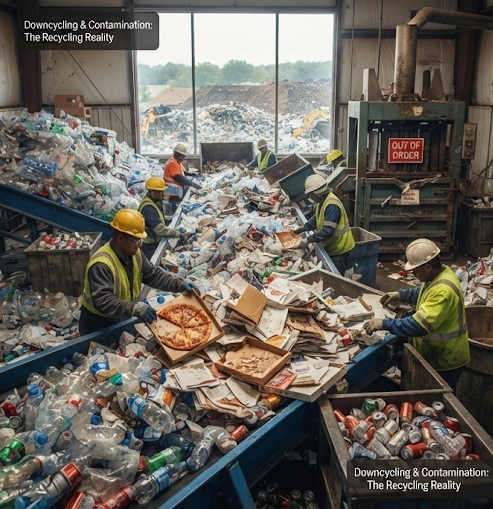
For decades, recycling has been promoted as one of the most effective ways to reduce waste and protect the environment. While recycling remains an essential part of sustainable living, it is no longer enough to solve the growing global waste crisis. Every year, billions of tons of waste are generated, yet only a small percentage is successfully recycled. This reality has led governments, businesses, and environmental experts to embrace the circular economy—a smarter economic model designed to minimize waste, maximize resource efficiency, and extend the life of products.
Unlike the traditional “take, make, and dispose” system, the circular economy encourages continuous use of materials through repair, reuse, refurbishment, and recycling. Understanding why recycling alone falls short is the first step toward building a more sustainable future.
What Is a Circular Economy?
A circular economy is an economic model that aims to maximize the utilization of products, materials, and resources by keeping them in circulation for an extended period. Instead of discarding products after use, they are designed to be repaired, upgraded, reused, or remanufactured.
The goal is to reduce the extraction of new raw materials while minimizing environmental pollution. Businesses adopting circular economy principles focus on creating durable products, reducing waste during manufacturing, and recovering valuable materials at the end of a product’s lifecycle.
This approach not only conserves natural resources but also creates economic opportunities through innovation and sustainable business practices.
Why Recycling Is Not Enough
Although recycling helps reduce landfill waste, it has several limitations that prevent it from being a complete solution.
Limited Recycling Rates
Many recyclable materials never actually get recycled. Contamination, poor waste segregation, and inadequate recycling infrastructure mean that a significant portion of recyclable waste still ends up in landfills or incinerators.
Material Quality Declines
Some materials deteriorate in quality with each recycling cycle. For example, many plastics degrade after repeated processing, making them unsuitable for high-quality products. This process, known as downcycling, eventually leads to waste disposal.
High Energy Consumption
Recycling requires collection, transportation, sorting, and processing, all of which consume energy and produce greenhouse gas emissions. While recycling generally has a lower environmental impact than producing materials from scratch, it still relies on significant resources.
It Doesn’t Reduce Consumption
Recycling addresses waste after products have already been manufactured and consumed. It does little to reduce excessive production, overconsumption, or the extraction of virgin resources. Without changing consumption habits, waste generation continues to rise.
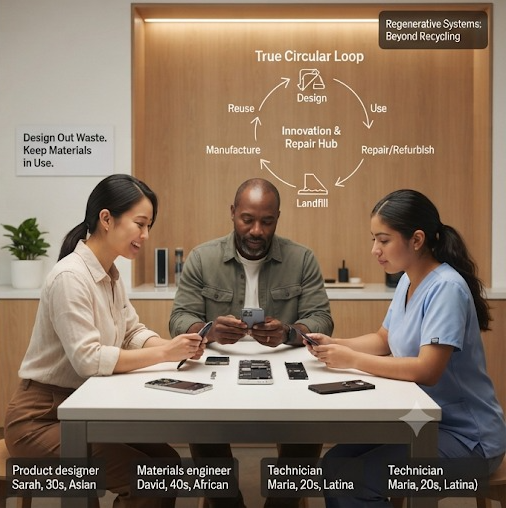
The Key Principles of a Circular Economy
The circular economy goes beyond recycling by addressing the entire product lifecycle.
- Design products for durability and easy repair.
- Encourage reuse before replacement.
- Promote refurbishment and remanufacturing.
- Use renewable and recyclable materials.
- Minimize waste during production.
- Recover valuable resources at the end of product life.
By following these principles, businesses can reduce environmental impact while lowering production costs and improving resource efficiency.
Benefits of Moving Beyond Recycling
Transitioning to a circular economy offers numerous environmental, economic, and social benefits.
Environmentally, it reduces landfill waste, lowers carbon emissions, conserves natural resources, and protects biodiversity. Economically, it creates new industries focused on repair, remanufacturing, and recycling technologies while reducing dependence on expensive raw materials.
Consumers also benefit through longer-lasting products, lower ownership costs, and increased availability of repair services. Governments gain from improved resource security and stronger environmental resilience.
How Individuals Can Support the Circular Economy
Everyone can contribute to a circular economy through simple daily actions:
- Buy durable, high-quality products.
- Repair items instead of replacing them.
- Choose second-hand or refurbished goods.
- Reduce unnecessary purchases.
- Reuse containers and household items.
- Properly recycle materials that cannot be reused.
- Support companies committed to sustainable production.
Small lifestyle changes, when adopted by millions of people, can significantly reduce waste and resource consumption.
Recycling remains an important environmental practice, but it is only one piece of the sustainability puzzle. The growing challenges of climate change, resource depletion, and increasing waste require a broader solution. A circular economy focuses on preventing waste before it is created by designing products for longevity, encouraging reuse, and maximizing the value of existing resources.
As businesses, governments, and consumers embrace circular economy principles, society can move away from the wasteful linear model toward a regenerative system that benefits both the planet and future generations. Recycling should not be abandoned—it should be strengthened as part of a much larger strategy that prioritizes reducing consumption, extending product life, and creating a truly sustainable economy.
Andaman and Nicobar Islands Forests
Tours And Travels Website Design