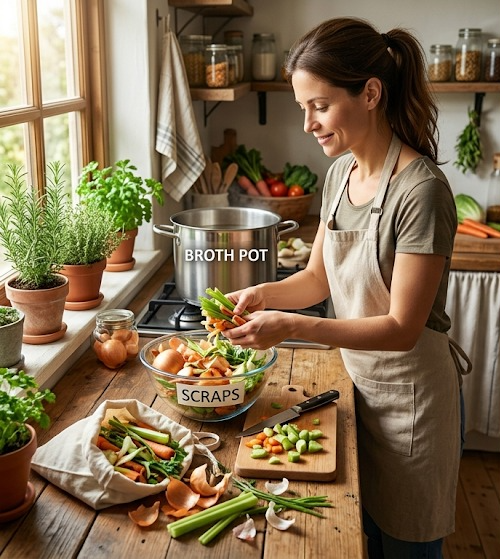
Food scraps often end up in the trash without a second thought, but many of them can become the foundation of a flavorful homemade broth. Vegetable peels, herb stems, onion ends, carrot tops, and other kitchen leftovers can add depth to soups, sauces, rice dishes, and gravies. Turning kitchen scraps into broth is an easy, budget-friendly habit that can help reduce food waste while making everyday cooking more resourceful.
Why Make Broth From Kitchen Scraps?
Homemade scrap broth gives ingredients that might otherwise be discarded another purpose. Instead of throwing away usable vegetable parts, you can collect them and transform them into a versatile cooking ingredient.
It can also be more economical than regularly purchasing packaged broth. Once you begin saving suitable scraps, you may have enough ingredients for a batch without buying anything extra. The process is simple, requires basic kitchen equipment, and can fit naturally into your cooking routine.
Which Kitchen Scraps Work Best?
Not every leftover belongs in a broth pot. Clean vegetable scraps are usually the best starting point. Onion skins and ends, carrot peels and tops, celery leaves, mushroom stems, garlic skins, leek greens, and herb stems can contribute excellent flavor.
You can also save vegetable trimmings from meal preparation in a container or freezer bag. However, avoid scraps that are moldy, spoiled, heavily dirty, or likely to create an unpleasant flavor. Strongly bitter vegetables can also overpower the broth, so use them sparingly.
For a richer broth, you can combine different vegetables with herbs and spices. Bay leaves, parsley stems, peppercorns, and garlic can add extra aroma without requiring expensive ingredients.

How to Turn Scraps Into Broth
Start by collecting clean kitchen scraps throughout the week. Store them in an airtight container in the refrigerator for short-term use or freeze them until you have enough for a batch.
When you’re ready to make the broth, place the scraps in a large pot and cover them with water. Avoid filling the pot too tightly because the ingredients need enough space to circulate.
Bring the water to a gentle boil, then reduce the heat and allow the mixture to simmer. A slow simmer gives the vegetables time to release their flavors. Depending on the ingredients and desired strength, simmering for around 45 minutes to an hour is often sufficient.
Once the broth develops a pleasant aroma and flavor, strain it through a fine-mesh strainer. Discard the solids after straining and allow the liquid to cool promptly before storing it.
Ways to Use Homemade Scrap Broth
Kitchen-scrap broth can become a useful everyday ingredient. Use it instead of water when cooking rice, quinoa, couscous, or other grains. It can also serve as a base for vegetable soup, lentil dishes, stews, sauces, and gravies.
You can freeze the broth in small portions so you only thaw what you need. Ice cube trays are particularly useful for storing small quantities that can be added directly to sauces or pan dishes.
Tips for Better Flavor
Balance is important when making scrap broth. A mixture containing several mild vegetables generally produces a more pleasant result than a collection dominated by one strong ingredient. Taste the broth before seasoning heavily because different scraps naturally contain different levels of flavor.
Keeping a dedicated freezer container for broth scraps can make the habit easier. Label it with the date and add scraps whenever you prepare vegetables.
A Sustainable Kitchen Habit
Turning kitchen scraps into broth is a small change that can make cooking more economical and intentional. It encourages you to look at food preparation differently and find value in ingredients that are commonly overlooked. With a container, some water, and a little cooking time, everyday vegetable trimmings can become a flavorful homemade staple.
By making scrap broth part of your kitchen routine, you can reduce unnecessary food waste, stretch your grocery budget, and add homemade flavor to countless meals—all from ingredients you already have.
Read Also: Laravel Framework Web Development