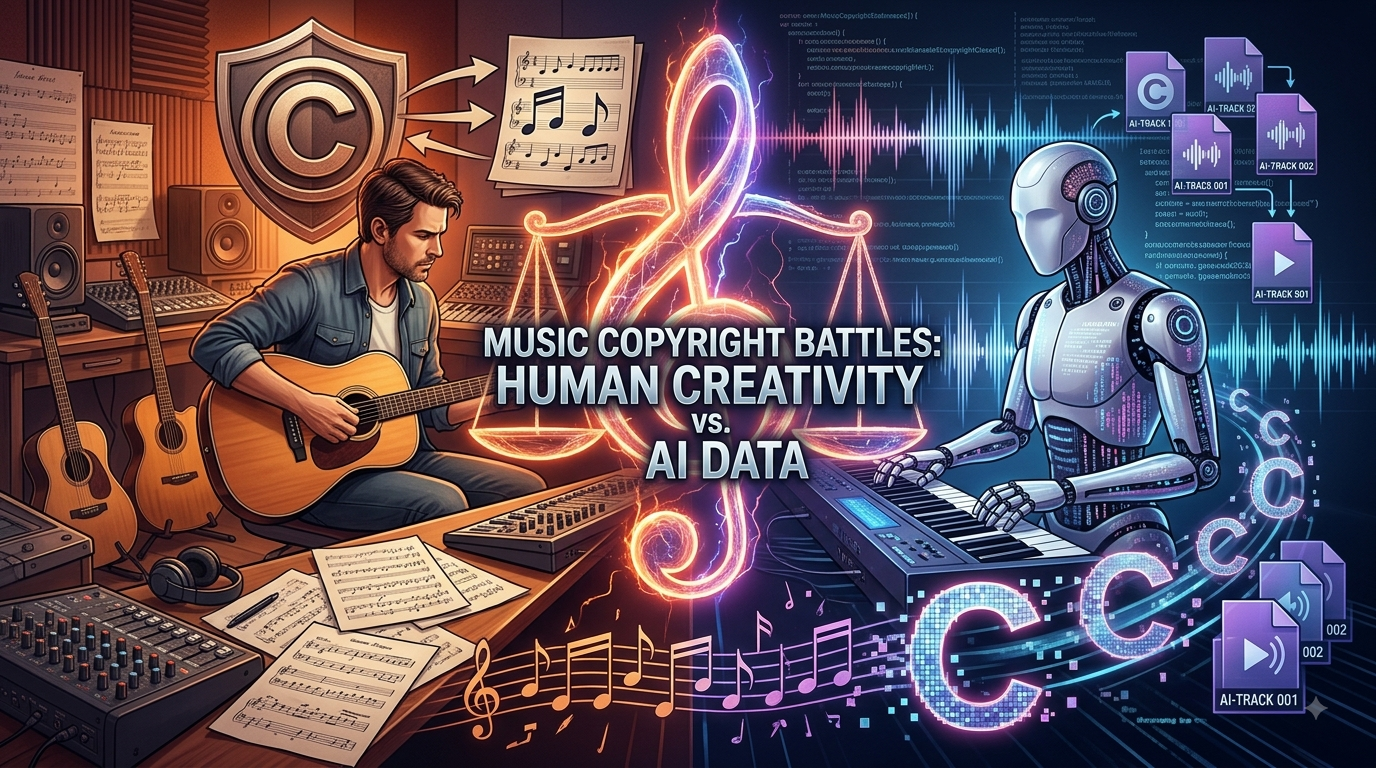
Artificial intelligence is transforming the music industry at remarkable speed. With AI music generators capable of producing melodies, lyrics, arrangements, and synthetic vocals within minutes, musicians, producers, record labels, and technology companies are facing a difficult question: who owns the copyright to AI-generated music? The debate has grown into a major legal and creative issue, particularly as AI-generated tracks become increasingly difficult to distinguish from human-made recordings.
Why AI Music Is Creating Copyright Disputes
Traditional copyright law was designed around human creativity. AI-generated music challenges that assumption because software can now contribute substantially to the final composition. The central question is whether a person who provides a prompt and generates a track should automatically receive copyright protection.
In the United States, the U.S. Copyright Office has stated that copyright protection depends on sufficient human authorship. Simply providing prompts to an AI system does not, by itself, generally establish copyright in the resulting material. However, human-created elements, creative arrangements, selections, and meaningful modifications may qualify for protection.
AI Training Data Adds Another Layer
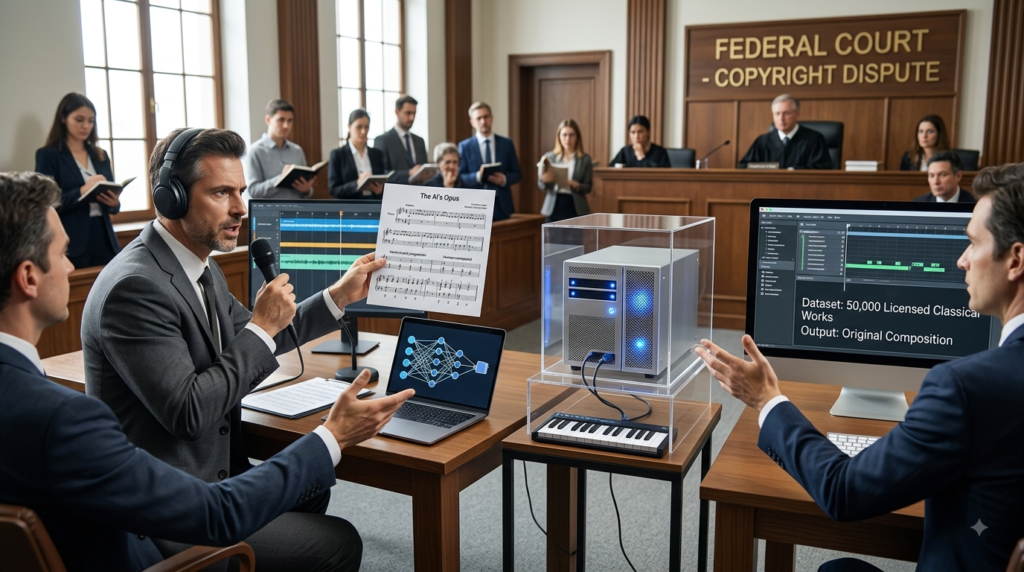
The copyright debate does not stop with the finished song. Another major issue concerns the music used to train generative AI systems.
AI companies may train models using enormous collections of audio recordings, compositions, and other creative works. Musicians and copyright owners have questioned whether their recordings can be used for AI training without permission, licensing agreements, or compensation.
This has created legal conflicts between AI music companies and major rights holders. The disputes could influence how future AI systems obtain training material and whether creators receive payment when their work contributes to commercial AI technologies.
Who Owns an AI-Generated Song?
Ownership becomes complicated when humans and AI collaborate. For example, a producer might generate several musical ideas with an AI platform, select one arrangement, rewrite the lyrics, record original vocals, edit the instrumentation, and substantially transform the final track.
In such circumstances, the human contribution may provide a stronger basis for copyright protection. The U.S. Copyright Office has emphasized that AI can be used as a creative tool without automatically preventing copyright protection for human-authored portions of a work.
By contrast, a song created almost entirely by an AI system with minimal human creative control may face significant limitations when copyright protection is claimed.
Voice Cloning and Artist Identity
AI-generated music has also introduced concerns about synthetic vocals and artist imitation. A producer can potentially create vocals that sound remarkably similar to a recognizable performer, raising questions that go beyond traditional copyright.
An artist’s identity, voice, reputation, and commercial persona can have legal protections that differ from copyright. Consequently, using AI to imitate a famous singer can create potential legal and ethical problems even when the resulting recording does not directly copy an existing sound recording.
Streaming Platforms Face New Challenges
Music streaming services are also dealing with the rapid growth of synthetic content. Large quantities of automatically generated tracks can make it harder for listeners to discover genuine artists and can create opportunities for fraudulent streaming activity.
Recent industry developments show that platforms are moving toward stronger AI identification and labeling systems. Spotify, for example, has announced plans to identify AI personas and address concerns surrounding AI-generated music and platform recommendations.
What the Future Could Look Like
The copyright battles over AI-generated music are unlikely to disappear soon. Governments, courts, music companies, artists, and AI developers will continue debating licensing, authorship, training data, royalties, voice rights, and transparency.
For musicians using AI tools, keeping records of their creative process can be valuable. Saving original recordings, project files, lyrics, edits, prompts, and human-created arrangements can help demonstrate how much creative input went into a final track.
AI-generated music is opening exciting possibilities while creating unprecedented copyright challenges. The future of music will likely involve greater collaboration between human artists and intelligent creative tools, but clear rules will be essential. As courts and lawmakers continue addressing these disputes, the key issue will remain the balance between technological innovation and the rights of human creators.
The strongest path forward may be a music industry where AI can assist creativity while transparency, licensing, attribution, and meaningful human authorship remain at the center of copyright protection.
Indian Classical Music Instruments
Read Also: Laravel Framework Web Development