The full moon has fascinated humans for centuries, inspiring myths, calendars, and even modern-day travel plans. “When is the next full moon?” you might be asking.you’re not alone—this is one of the most searched astronomical questions online. In this article, you’ll find everything you need to know about upcoming full moon dates, their significance, and how to make the most of this celestial event.
What Is a Full Moon?
A full moon occurs when the Earth is positioned directly between the Sun and the Moon, allowing the Moon’s surface to be fully illuminated. This phase happens approximately every 29.5 days, known as a lunar cycle. During this time, the Moon appears as a bright, circular disk in the night sky, making it the perfect opportunity for observation and photography.
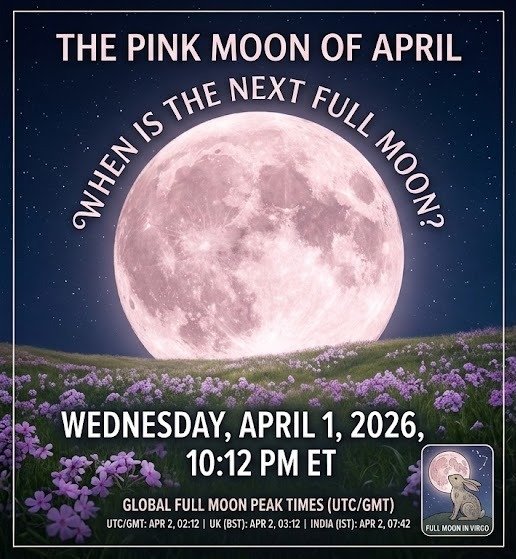
When Is the Next Full Moon?
The next full moon is expected to occur within the upcoming lunar cycle, typically about once a month. Exact dates may vary depending on your time zone, but full moons are predictable events tracked by astronomers worldwide. To get the precise timing in your location, it’s always best to check a reliable lunar calendar.
Names of Full Moons Throughout the Year
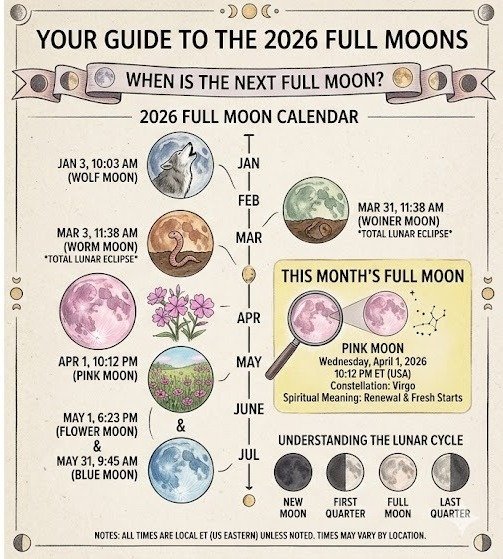
Each full moon has a traditional name, often derived from Native American, European, or agricultural origins. These names are a reflection of natural phenomena and seasonal changes:
- January – Wolf Moon
- February – Snow Moon
- March – Worm Moon
- April – Pink Moon
- May – Flower Moon
- June – Strawberry Moon
- July – Buck Moon
- August – Sturgeon Moon
- September – Harvest Moon
- October – Hunter’s Moon
- November – Beaver Moon
- December – Cold Moon
These names add cultural and historical depth to each lunar event, making full moon watching even more meaningful.
Why Full Moons Are Special
Full moons are not just visually stunning—they also hold scientific and cultural importance:
1. Tidal Effects
The gravitational pull of the Moon is strongest during full and new moons, leading to higher tides known as “spring tides.”
2. Cultural Significance
Many festivals and traditions around the world are aligned with the full moon, including religious observances and harvest celebrations.
3. Wildlife Behavior
Animals often change their behavior during a full moon. For example, nocturnal creatures may become more active due to increased visibility.
Best Ways to Watch the Full Moon
Watching a full moon doesn’t require special equipment, but a few tips can enhance your experience:
- Get away from the city lights and look for a clear, open sky.
- Check weather conditions for visibility
- Use binoculars or a telescope for detailed viewing
- Capture photos using a tripod for stability
The moonrise—when the Moon appears on the horizon—is often the most dramatic time to watch.
Full Moon and Astrology
In astrology, full moons are believed to represent completion, clarity, and emotional intensity. Many people use this time for reflection, goal-setting, or spiritual practices. While not scientifically proven, these beliefs continue to attract interest worldwide.
How to Track Future Full Moons
To stay updated on upcoming full moons, you can:
- Use lunar calendar apps
- Follow astronomy websites
- Set reminders for monthly lunar events
Keeping track helps you plan activities like night photography, camping, or even special events aligned with the fullmoon.
The full moon is one of nature’s most beautiful and consistent phenomena. Whether you’re an astronomy enthusiast, a photographer, or simply someone who enjoys gazing at the night sky, knowing when the next fullmoon occurs allows you to connect with the universe in a meaningful way.
Stay tuned to lunar calendars, mark your dates, and don’t miss the chance to witness the magic of the next full moon lighting up the sky.
Read Also: Social Network Website Design