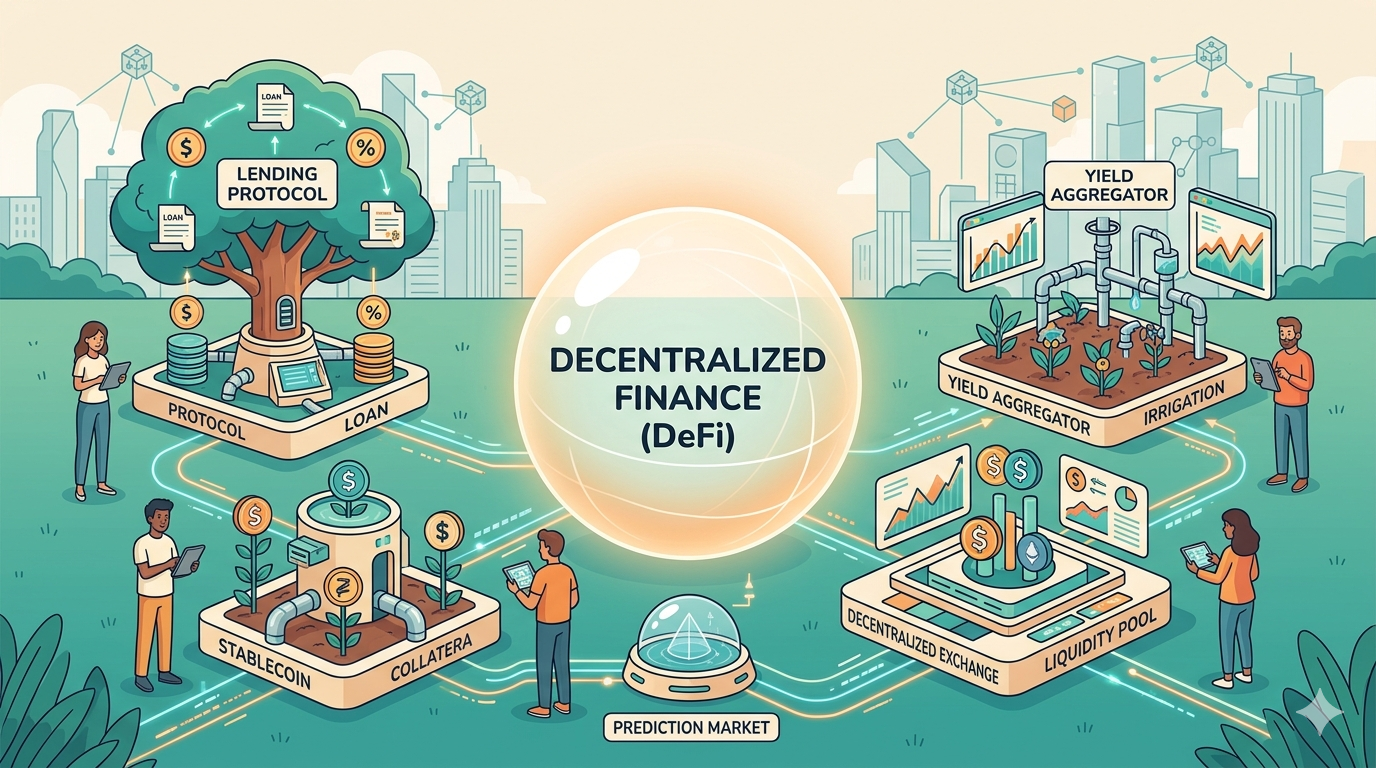
Decentralized Finance, commonly known as DeFi, is a modern financial system built on blockchain technology. Unlike traditional banking, DeFi allows people to access financial services without relying on banks, brokers, or other centralized institutions. Through smart contracts and decentralized applications (dApps), users can borrow, lend, trade, and earn interest directly from their digital wallets.
The main goal of DeFi is to create an open and accessible financial ecosystem where anyone with an internet connection can participate. As blockchain technology continues to grow, DeFi is becoming one of the most important innovations in the financial industry.
How Does DeFi Work?
DeFi operates on blockchain networks, with Ethereum being one of the most widely used platforms. Instead of banks managing transactions, smart contracts automatically execute agreements when specific conditions are met.
For example, if you want to lend cryptocurrency, a smart contract can connect you with borrowers and manage repayments without requiring a middleman. This automation helps reduce costs, increase transparency, and improve accessibility.
Every transaction is recorded on the blockchain, creating a public and secure ledger that cannot easily be altered.
Key Features of Decentralized Finance
1. No Central Authority
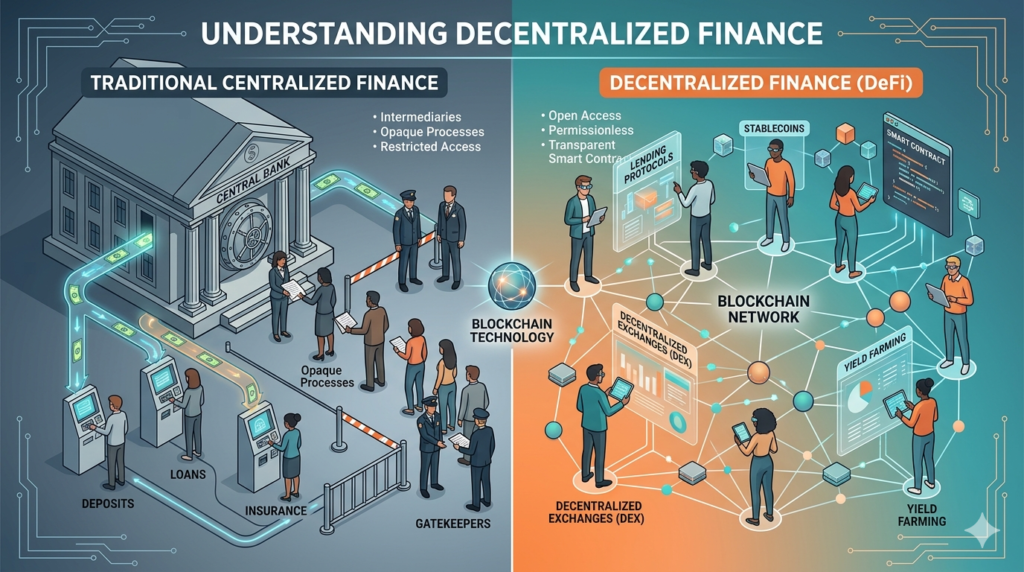
Traditional financial systems rely on banks and financial institutions to process transactions. In DeFi, transactions are handled by blockchain networks and smart contracts, removing the need for centralized control.
2. Accessibility
Anyone with a digital wallet and access to the internet may use DeFi services. This opens up financial chances for those who might not otherwise have access to conventional banking services.
3. Transparency
All transactions on a public blockchain are visible and verifiable. This transparency helps users understand how funds move within the system.
4. Security
Blockchain technology uses cryptographic security measures to protect transactions. While no system is completely risk-free, blockchain networks are designed to be highly secure.
Popular DeFi Services
Decentralized Exchanges (DEXs)
Users may trade cryptocurrencies with one another on decentralized exchanges. Unlike traditional exchanges, users maintain control of their assets throughout the trading process.
Lending and Borrowing
DeFi platforms enable users to lend digital assets and earn interest. Borrowers can access funds by providing cryptocurrency as collateral.
Yield Farming
Yield farming is a process where individuals earn rewards by supplying liquidity to decentralized finance protocols. Users deposit assets into liquidity pools and receive returns based on platform activity.
Staking
Staking allows cryptocurrency holders to lock their assets in a blockchain network and earn rewards for helping secure the network.
Benefits of DeFi for Beginners
One of the biggest advantages of DeFi is financial freedom. Users have full control over their funds without depending on banks or financial institutions. Transactions can often be completed faster and at lower costs compared to traditional financial systems.
DeFi also promotes innovation by offering new ways to earn passive income through staking, lending, and liquidity provision. Additionally, many DeFi platforms operate globally, allowing users to participate regardless of their location.
Risks to Consider
Although DeFi offers many opportunities, beginners should understand the risks. Cryptocurrency values can fluctuate a lot, which may result in the possibility of losing money. Smart contract vulnerabilities and platform security issues may also pose risks.
Furthermore, the DeFi industry is still evolving, and regulations vary across different countries. New users should conduct thorough research and only invest funds they can afford to lose.
Getting Started With DeFi
To begin using DeFi, you typically need a cryptocurrency wallet, some digital assets, and access to a reputable DeFi platform. Start by learning the basics of blockchain technology, understanding how wallets work, and exploring trusted DeFi applications.
Beginners should take a cautious approach, start with small amounts, and gradually gain experience before making larger investments.
Decentralized Finance is transforming the way people access financial services by removing traditional intermediaries and leveraging blockchain technology. For beginners, DeFi offers exciting opportunities to trade, lend, borrow, and earn rewards. By understanding its benefits, risks, and core principles, anyone can take their first steps into the rapidly growing world of decentralized finance with greater confidence.
Top 10 Passive Income Ideas in 2025
Read Also: Auction Website Design And Development