Enterprise training is evolving beyond traditional classrooms, video courses, and slide-based presentations. Spatial computing solutions for enterprise training are creating immersive learning environments where employees can interact with digital content in realistic, three-dimensional spaces. By combining technologies such as augmented reality (AR), virtual reality (VR), mixed reality (MR), computer vision, and 3D environments, businesses can make professional training more engaging, practical, and measurable.
As organizations look for better ways to develop technical skills and improve employee performance, spatial computing offers a powerful approach to experiential learning. Instead of simply reading instructions, employees can practice tasks, explore virtual environments, and learn from simulated situations without the risks associated with real-world mistakes.
What Is Spatial Computing in Enterprise Training?
Spatial computing connects digital information with physical or simulated environments. In an enterprise training setting, this technology allows employees to interact with virtual objects, machinery, workplace scenarios, and digital instructions.
For example, a manufacturing company can create a virtual factory where workers practice operating equipment. Healthcare organizations can simulate clinical environments, while retail businesses can train employees through interactive customer-service scenarios. These experiences can be customized according to job roles, skill levels, and organizational requirements.
Benefits of Immersive Employee Learning
One of the biggest advantages of spatial computing is improved engagement. Workers engage proactively in training rather than merely absorbing information passively. This hands-on approach can make complex concepts easier to understand and remember.
Spatial training can also provide a safe environment for practicing high-risk activities. Employees can rehearse emergency procedures, equipment maintenance, or workplace safety protocols without exposing themselves or others to unnecessary danger.
Another benefit is consistency. Every learner can experience the same training scenario, instructions, and assessment process. Companies can also monitor performance and identify areas where employees need additional support.
Realistic Simulations for Skill Development
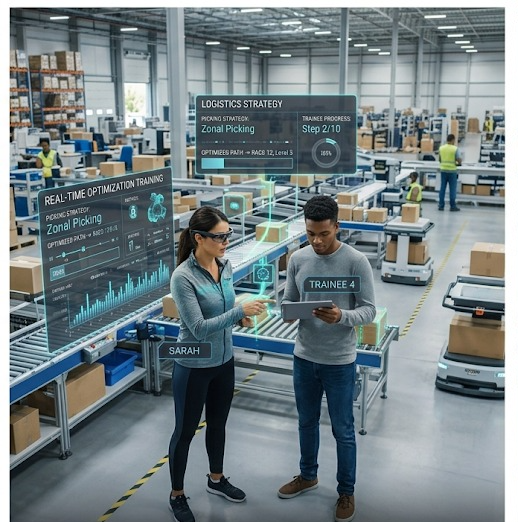
Realistic simulations are particularly valuable for technical and operational roles. With spatial computing, learners can interact with virtual machinery, tools, workspaces, and digital objects.
An employee learning equipment maintenance, for instance, can identify components, follow repair procedures, and troubleshoot simulated problems. Mistakes can be analyzed without damaging expensive equipment. This allows employees to build confidence before applying their knowledge in an actual workplace.

Personalized and Interactive Training
Modern spatial computing platforms can support personalized learning experiences. Training programs can adjust difficulty levels based on employee performance and provide additional practice when necessary.
Interactive scenarios can also improve decision-making skills. Instead of selecting answers from a traditional quiz, employees may need to respond to realistic situations, communicate with virtual characters, or complete a sequence of workplace tasks.
Reducing Training Costs and Downtime
Although implementing spatial computing requires an initial investment in hardware, software, and content development, it can provide long-term operational benefits. Virtual training can reduce the need for physical facilities, travel, printed materials, and repeated access to specialized equipment.
Employees can potentially train from different locations while organizations maintain standardized learning experiences. This is especially useful for large companies with distributed teams and complex training requirements.
The Future of Enterprise Training
As spatial technologies become more accessible, their role in corporate learning is expected to expand. Artificial intelligence can further enhance these environments by creating adaptive scenarios, intelligent virtual instructors, and automated performance feedback.
Businesses that adopt spatial computing solutions for enterprise training can create more interactive, practical, and scalable learning programs. The technology does not simply replace conventional training; it adds an immersive layer that helps employees practice skills in meaningful environments.
Spatial computing is transforming enterprise education by turning training into an interactive experience. From realistic simulations and safety exercises to personalized learning and performance assessment, the technology offers organizations new ways to develop capable and confident employees. As businesses continue embracing digital transformation, spatial computing solutions are likely to become an increasingly important part of effective enterprise training strategies.
Effects of AI in Upcoming Technology
Manhole – Essential Access Points in Urban Infrastructure
RCPC Manhole Covers and Frames
Read Also: Social Network Website Design