
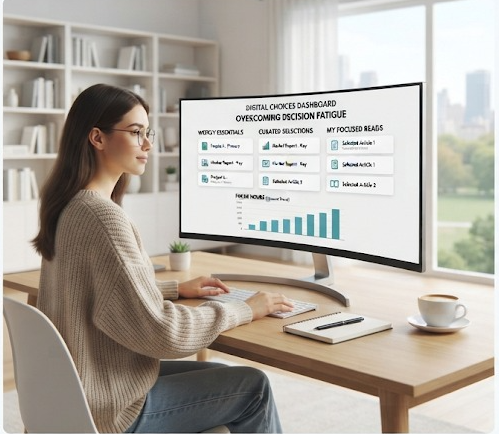
In today’s connected world, making decisions is no longer limited to major life choices. From selecting a streaming show to choosing an app, comparing online products, responding to notifications, or deciding which social media content to follow, digital life constantly demands our attention. This endless stream of choices can lead to decision fatigue, a state where making even simple decisions becomes mentally exhausting. Learning how to overcome decision fatigue in digital choices can improve focus, productivity, and overall well-being.
What Is Digital Decision Fatigue?
Decision fatigue occurs when the brain becomes tired from making too many choices. Digital platforms can intensify this problem because they are designed to present users with numerous options. Endless scrolling, personalized recommendations, multiple subscription plans, app settings, emails, and notifications can create a continuous cycle of small decisions.
Although each choice may appear insignificant, hundreds of them throughout the day can gradually drain mental energy. As fatigue increases, people may become impulsive, avoid decisions altogether, or spend excessive time comparing alternatives.
Why Digital Choices Feel Overwhelming
The internet provides virtually unlimited options. A simple search for a product can produce thousands of results, while entertainment platforms may offer more content than anyone could realistically consume.
Social media adds another layer by constantly presenting new posts, videos, advertisements, and recommendations. Users may repeatedly ask themselves what to watch, read, buy, download, or respond to. This constant evaluation can make digital activities surprisingly tiring.
Another problem is the fear of making the wrong choice. Reviews, ratings, comparisons, and recommendations can be useful, but too much information can create analysis paralysis.
Create Simple Digital Rules
One of the most effective ways to reduce decision fatigue is to establish personal digital rules. Instead of deciding repeatedly, make certain choices in advance.
For example, choose specific times for checking email, limit social media sessions, or decide which streaming services you regularly use. You can also create standard settings for frequently used applications.
These rules reduce the number of decisions you need to make each day. Once a routine becomes familiar, your brain can follow it with much less effort.
Limit Unnecessary Notifications
Notifications are small interruptions that demand attention and often require a decision. Should you open the message? Reply immediately? Ignore it? Check the associated application?
Review your notification settings and disable alerts that are not genuinely important. Keep essential notifications while removing unnecessary promotional messages, social media alerts, and repetitive updates.
A quieter digital environment can reduce interruptions and help preserve mental energy for more meaningful tasks.
Use the “Good Enough” Approach

Digital shopping and research often encourage people to search endlessly for the perfect option. However, perfection is rarely necessary for everyday decisions.
Set a reasonable standard before researching. For example, decide on your budget, essential features, and acceptable quality level. Once an option meets those requirements, make the choice and move forward.
The goal is not to make every decision perfectly. It is to make practical decisions without wasting valuable mental energy.
Organize Your Digital Environment
A cluttered digital environment can increase cognitive load. An overflowing inbox, crowded desktop, unused applications, and dozens of browser tabs can make simple tasks feel more complicated.
Remove applications you no longer use, organize important files, unsubscribe from unnecessary emails, and keep frequently used tools easy to access. A cleaner digital environment reduces the number of choices competing for your attention.
Schedule Technology-Free Breaks
Taking regular breaks from digital devices gives your mind an opportunity to recover. Spend some time walking, exercising, reading a physical book, talking with family, or simply sitting without checking a screen.
Technology-free periods are especially valuable after long stretches of online work or entertainment. They can help restore concentration and prevent digital overload from becoming a daily habit.
Make Digital Choices More Intentional
Overcoming decision fatigue in digital choices does not mean avoiding technology. Instead, it means using technology with greater intention. Establish routines, reduce unnecessary options, silence distracting notifications, and accept sensible choices instead of endlessly searching for perfect ones.
By simplifying your digital environment, you can preserve mental energy for decisions that truly matter. In a world filled with endless online possibilities, sometimes the smartest digital choice is simply to choose less.
Sherlock Holmes by Sir Arthur Conan Doyle
Byomkesh Bakshi by Sharadindu Bandyopadhyay
Aranyak by Bibhutibhushan Bandopadhyay
Read Also: Education Website Design