Choosing the right birth control method is a personal decision that depends on your lifestyle, health, and family planning goals. While hormonal contraceptives work well for many people, others prefer to avoid hormones because of side effects, medical conditions, or personal preferences. Fortunately, there are several non-hormonal birth control options that provide reliable pregnancy prevention without altering the body’s natural hormone levels.
In this guide, we’ll explore the best non-hormonal birth control methods, their effectiveness, advantages, and factors to consider before making a choice.
What Is Non-Hormonal Birth Control?
Non-hormonal birth control refers to contraceptive methods that prevent pregnancy without using synthetic hormones such as estrogen or progestin. These methods work by blocking sperm, preventing fertilization, or helping users avoid fertile days during the menstrual cycle.
Many people choose non-hormonal contraception because it doesn’t interfere with natural menstrual cycles or hormone balance.
List of Non-Hormonal Birth Control Options
1. Male Condoms
Male condoms are among the most popular and widely available birth control methods. They create a barrier that prevents sperm from entering the uterus.
Benefits:
- Easily accessible
- Affordable
- No prescription required
- Protect against sexually transmitted infections (STIs)
Effectiveness: Around 98% with perfect use and approximately 87% with typical use.
2. Female Condoms
Female condoms are inserted into the vagina before intercourse and provide protection by preventing sperm from reaching the egg.
Advantages:
- Hormone-free
- Can be inserted before sexual activity
- Offers some STI protection
- Suitable for individuals allergic to latex (depending on material)
3. Copper Intrauterine Device (Copper IUD)
The Copper IUD is one of the most effective long-term non-hormonal birth control methods. A healthcare provider inserts a small copper device into the uterus.
Copper creates an environment that is toxic to sperm, preventing fertilization.
Benefits:
- More than 99% effective
- Lasts up to 10 years or longer depending on the device
- No daily maintenance
- Can also serve as emergency contraception if inserted shortly after unprotected sex
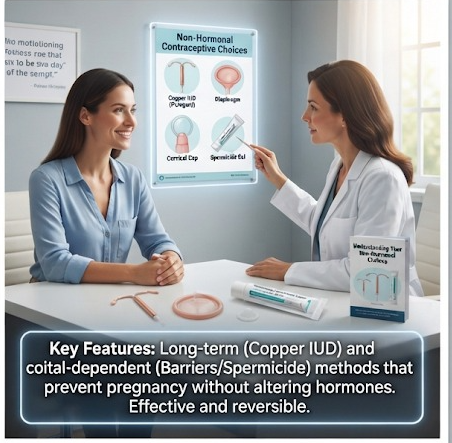
4. Diaphragm
A diaphragm is a reusable silicone cup placed over the cervix before intercourse. It is commonly used with spermicide to improve effectiveness.
Pros:
- Reusable
- Hormone-free
- User-controlled
- Can be inserted several hours before sex
Proper fitting by a healthcare professional is recommended for the best results.
5. Cervical Cap
The cervical cap works similarly to a diaphragm by covering the cervix and preventing sperm from entering the uterus.
Advantages include:
- Small and reusable
- Hormone-free
- Can remain in place for several hours after intercourse
It is generally more effective for people who have never given birth.
6. Contraceptive Sponge
The contraceptive sponge contains spermicide and acts as both a physical and chemical barrier against sperm.
Benefits:
- Available without a prescription in some regions
- Disposable
- Easy to use
- Provides protection for multiple acts of intercourse within the recommended time frame
7. Spermicides
Spermicides are available as gels, foams, creams, films, or suppositories. They work by immobilizing or destroying sperm before fertilization.
They are often combined with barrier methods such as diaphragms or condoms for greater effectiveness.
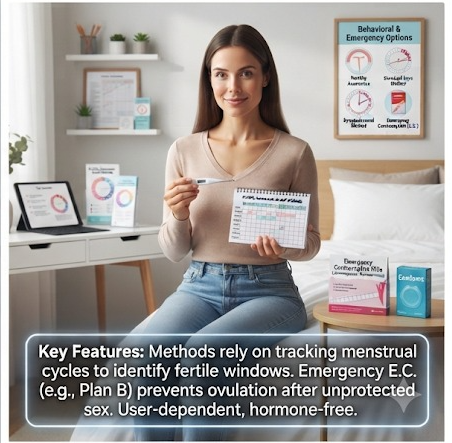
8. Fertility Awareness Methods (FAM)
Fertility awareness involves tracking menstrual cycles, basal body temperature, and cervical mucus to identify fertile days.
Advantages:
- Completely natural
- No medications or devices
- Increases awareness of reproductive health
This method requires careful daily tracking and consistency to achieve the best results.
9. Withdrawal Method
The withdrawal method involves removing the penis before ejaculation to reduce the chance of pregnancy.
Although it is free and requires no devices, it is less reliable than most other birth control methods because pre-ejaculate may contain sperm.
10. Permanent Sterilization
For individuals or couples who are certain they do not want future pregnancies, permanent sterilization may be an option.
Examples include:
- Vasectomy for men
- Tubal ligation for women
These procedures are highly effective but should be considered permanent.
Benefits of Choosing Non-Hormonal Birth Control
Many individuals prefer hormone-free contraception because it offers several advantages, including:
- No hormone-related side effects
- Natural menstrual cycle remains unchanged
- Suitable for people who cannot use hormonal contraceptives
- Long-term options available
- Multiple choices for different lifestyles
How to Choose the Best Non-Hormonal Birth Control
The ideal method depends on several factors, including:
- Age and overall health
- Relationship status
- Frequency of sexual activity
- Desire for future pregnancies
- Need for STI protection
- Personal comfort and convenience
Speaking with a healthcare provider can help determine which option best fits your individual needs.
There is no one-size-fits-all approach to contraception. The wide variety of non-hormonal birth control options allows individuals to choose a method that aligns with their health, preferences, and reproductive goals. From condoms and diaphragms to the highly effective Copper IUD and permanent sterilization, every option has its own benefits and considerations. Understanding how each method works can help you make an informed decision and confidently manage your reproductive health.
Liver Cancer Symptoms Cause and Remedy
Read Also: Medical Website Design