
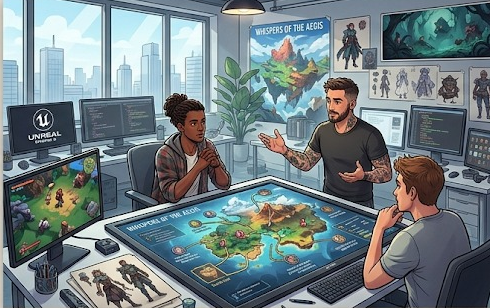
Independent game development has become one of the most creative areas of the gaming industry, giving small teams and solo creators the freedom to experiment with ideas that larger studios may avoid. One of the most noticeable developments is the growing importance of narrative in independent game development. Instead of treating storytelling as a secondary feature, many indie developers are building their entire games around characters, emotions, choices, atmosphere, and player discovery. Current discussions around indie games show increasing interest in narrative-driven experiences and alternative storytelling structures.
Storytelling Beyond Traditional Cutscenes
Modern indie games are increasingly moving away from long cinematic sequences and traditional exposition. Developers are finding creative ways to tell stories through exploration, environmental details, dialogue, objects, sound, and gameplay mechanics. This approach allows players to discover information naturally instead of simply watching the story unfold.
Environmental storytelling is particularly effective for small studios because it can communicate personality and history without requiring expensive cinematics. A damaged building, an abandoned room, or a mysterious object can encourage players to create their own interpretations of the game world.
Player Choice and Branching Narratives
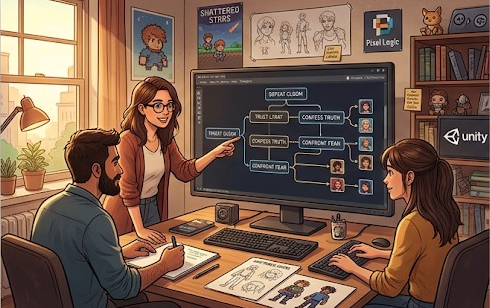
Another major trend is the use of player choice and branching narratives. Independent developers can experiment with decisions that influence relationships, events, endings, or the player’s understanding of the story.
Rather than offering simple good-or-bad decisions, newer narrative designs often focus on difficult choices where every option has consequences. This creates a stronger emotional connection because players feel responsible for what happens.
Branching structures can also encourage replayability. Players may return to a game to discover alternative conversations, hidden scenes, or different conclusions, making relatively short indie experiences feel much richer.
Minimalist and Implied Storytelling
Not every successful narrative game needs thousands of lines of dialogue. Minimalist storytelling has become an important technique, particularly among indie developers working with limited resources. Some games provide only small pieces of information and allow players to connect the clues themselves.
Recent indie releases demonstrate how restrained dialogue, environmental clues, and discoverable narrative fragments can create curiosity without interrupting gameplay. This style can also create strong communities around theories and interpretations because players discuss what they believe actually happened.
Emotional and Personal Stories
Independent developers are also exploring more personal themes. Stories about friendship, grief, identity, family, loneliness, relationships, and everyday struggles can provide experiences that feel different from conventional action-focused blockbusters.
This flexibility allows indie creators to represent characters and perspectives that may receive less attention in mainstream entertainment. Research into indie game storytelling has also identified more layered character portrayals and human-centered narratives as notable features of the space.
Cozy Games and Slower Narratives
The popularity of cozy games is influencing narrative design as well. Instead of constant combat or dramatic conflict, these games may focus on community, relationships, exploration, creativity, and personal growth.
Slower pacing gives developers opportunities to build stories through everyday interactions. A conversation with a neighbor, decorating a home, completing a small task, or returning to a familiar location can gradually reveal character development and world history.
Technology Expands Creative Possibilities
Accessible development tools have lowered many barriers for independent creators. Game engines, digital distribution platforms, narrative tools, and emerging artificial intelligence technologies are giving small teams more ways to prototype and experiment.
AI-assisted development is also becoming part of the wider conversation. Researchers are examining how AI could reduce certain production and coordination costs while simultaneously raising questions about originality, quality, and market saturation. For narrative designers, the most valuable future may be a combination of technological assistance and strong human creative direction.
The Future of Indie Game Narratives
The future of narrative trends in independent game development is likely to focus on meaningful interaction rather than simply delivering larger amounts of content. Players increasingly expect stories that respond to their actions and make them feel involved in the fictional world.
Independent developers have an advantage because smaller teams can often take creative risks, explore unusual themes, and build distinctive storytelling systems without following established franchise formulas. As technology becomes more accessible, the challenge will not simply be creating more games, but creating stories that genuinely connect with players.
Ultimately, indie game narratives continue to prove that memorable storytelling does not require a massive budget. Strong characters, thoughtful world-building, meaningful choices, and creative gameplay can transform a small project into an experience that stays with players long after the screen goes dark.
Top 10 Best Oscar-Winning Movies of All Time
Top 10 Horror Movies on Netflix
Read Also: Video Websites design