Building muscle is one of the best ways to improve strength, boost confidence, and maintain overall health. A proper Muscle Building Plan combines effective workouts, balanced nutrition, and adequate recovery. Whether you are a beginner or returning to fitness after a break, following the right strategy can help you gain lean muscle mass faster and more safely.
Why a Structured Muscle Building Plan Matters
Many people spend hours in the gym without seeing noticeable results because they lack a proper plan. A structured muscle building program helps you stay consistent, track progress, and avoid injuries. It also ensures that your body gets the right balance of exercise, protein, and rest needed for muscle growth.
Muscle growth occurs when your muscles experience controlled stress during workouts and then recover stronger through nutrition and sleep.The term for this phenomenon is muscle hypertrophy.
Best Workout Routine for Muscle Growth
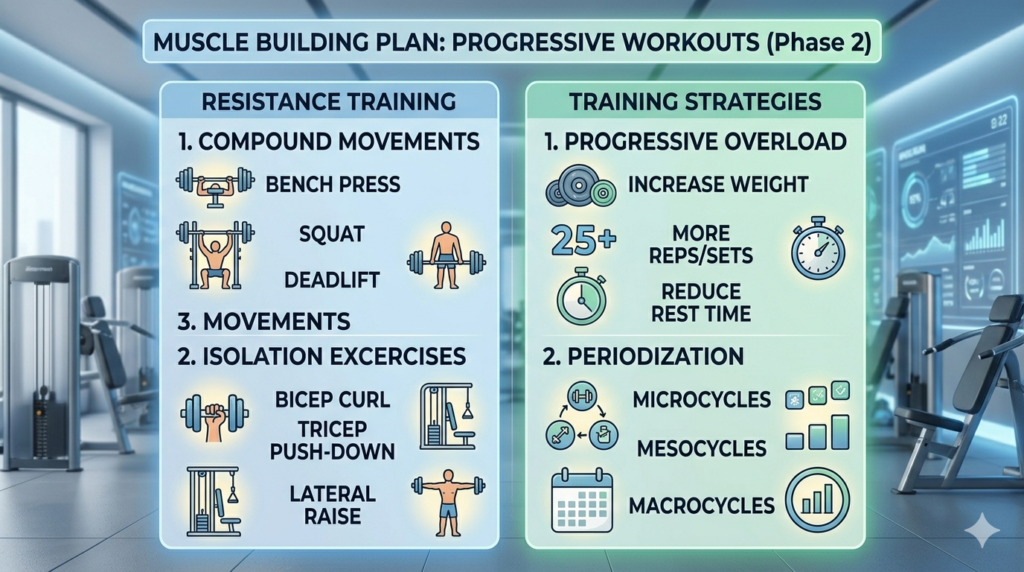
A successful muscle building workout should focus on strength training and progressive overload. Progressive overload means gradually increasing the weight, repetitions, or intensity over time.
Day 1: Chest and Triceps
- Bench Press – 4 sets
- Push-Ups – 3 sets
- Dumbbell Flyes – 3 sets
- Tricep Dips – 3 sets
Day 2: Back and Biceps
- Pull-Ups – 4 sets
- Deadlifts – 4 sets
- Barbell Rows – 3 sets
- Dumbbell Curls – 3 sets
Day 3: Legs and Core
- Squats – 4 sets
- Lunges – 3 sets
- Leg Press – 3 sets
- Plank – 3 rounds
Day 4: Shoulders and Arms
- Shoulder Press – 4 sets
- Lateral Raises – 3 sets
- Hammer Curls – 3 sets
- Tricep Pushdowns – 3 sets
Day 5: Rest or Light Cardio
Rest is essential for muscle recovery. Light walking or stretching can improve blood circulation and reduce soreness.
Importance of Nutrition in Muscle Building
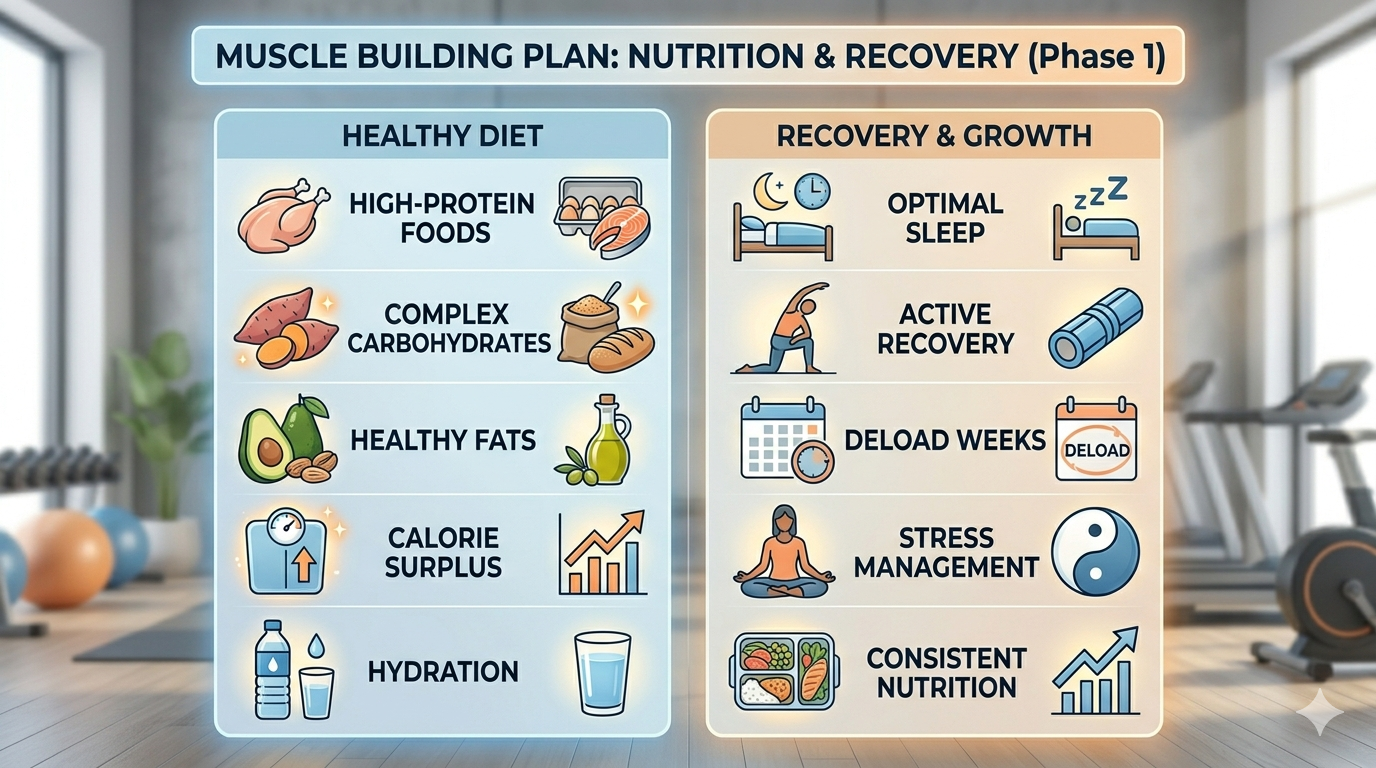
Exercise alone cannot build muscle effectively without proper nutrition. Your body needs enough calories and protein to repair and grow muscle tissue.
High-Protein Foods for Muscle Gain
Include these foods in your daily diet:
- Chicken breast
- Eggs
- Fish
- Greek yogurt
- Cottage cheese
- Lentils and beans
- Nuts and seeds
Protein intake should generally range between 1.6 to 2.2 grams per kilogram of body weight for effective muscle growth.
Healthy Carbohydrates and Fats
Carbohydrates provide energy for intense workouts, while healthy fats support hormone production. Good sources include:
- Brown rice
- Oats
- Sweet potatoes
- Avocados
- Olive oil
- Almonds
Drinking enough water is also important because dehydration can reduce workout performance and recovery speed.
Role of Sleep and Recovery
Muscles grow during rest, not during workouts. Lack of sleep can reduce testosterone levels and slow muscle recovery. Aim for at least 7 to 9 hours of quality sleep every night.
Recovery techniques that help muscle growth include:
- Stretching after workouts
- Foam rolling
- Taking rest days
- Managing stress levels
Overtraining without proper recovery may lead to fatigue and injury.
Common Mistakes to Avoid
Many beginners make mistakes that slow down muscle gain. Avoid these common errors:
- Skipping warm-up sessions
- Not eating enough protein
- Using improper exercise form
- Training without rest days
- lifting weights that are excessively heavy too quickly
Consistency is more important than lifting extremely heavy weights in the beginning.
Supplements for Muscle Building
While whole foods should be your main focus, some supplements may support muscle growth:
- Whey protein
- Creatine monohydrate
- BCAAs
- Multivitamins
Always choose high-quality supplements and consult a fitness professional if needed.
A successful Muscle Building Plan requires dedication, patience, and consistency. Combining strength training, proper nutrition, hydration, and sufficient sleep can help you achieve long-term muscle growth and improved fitness levels. Start with realistic goals, stay committed to your routine, and gradually increase workout intensity over time.
Liver Cancer Symptoms Cause and Remedy
Read Also: Medical Website Design