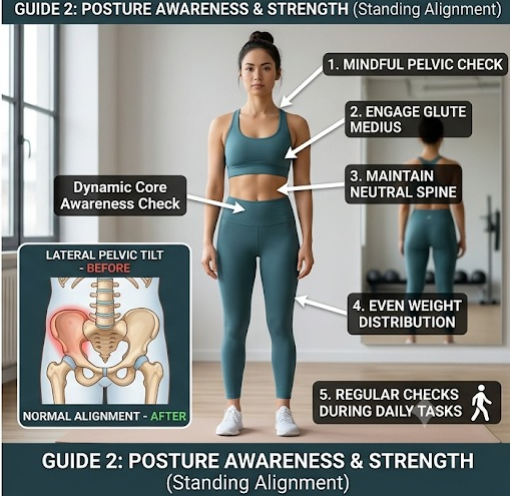
Lateral pelvic tilt is a postural imbalance where one side of the pelvis sits higher than the other. This uneven positioning can affect the alignment of the hips, spine, and legs, leading to discomfort, poor posture, and reduced mobility. While a slight difference in pelvic height is common, a noticeable tilt may contribute to chronic pain or movement limitations if left unaddressed.
Understanding the causes and learning effective correction techniques can help restore balance and improve overall body function.
Common Causes of Lateral Pelvic Tilt
Several factors can contribute to lateral pelvic tilt, including:
- Muscle imbalances between the hips and lower back
- Weak gluteal and core muscles
- Tight hip abductors or adductors
- Unequal weight distribution while standing
- Leg length differences
- Poor sitting or standing posture
- Previous injuries affecting the hips or lower limbs
Identifying the root cause is the first step toward choosing the right corrective exercises.
Symptoms of Lateral Pelvic Tilt
People with lateral pelvic tilt may experience various symptoms, such as:
- One hip appearing higher than the other
- Lower back pain
- Hip discomfort or stiffness
- Uneven shoulders while standing
- Difficulty maintaining proper posture
- The body’s muscles become tighter on one side.
- Knee or ankle pain caused by altered alignment
These symptoms often develop gradually and may worsen without corrective movement strategies.
Best Exercises for Lateral Pelvic Tilt Correction
A combination of stretching and strengthening exercises can help restore pelvic alignment.
1. Side Hip Stretch
Stretch the tighter side of your hip by leaning your body gently in the opposite direction. Hold the stretch for 20–30 seconds and repeat several times.
2. Glute Strengthening
Exercises such as glute bridges, clamshells, and side-lying leg raises strengthen the hip stabilizers, helping the pelvis stay level during movement.
3. Core Stability Training
A strong core provides essential support for pelvic alignment. Practice planks, bird-dog exercises, and dead bugs to improve stability.
4. Hip Mobility Drills
Gentle hip circles and dynamic mobility exercises improve flexibility and reduce muscle stiffness that may contribute to pelvic imbalance.
5. Balance Exercises
Single-leg stands and controlled step-ups improve coordination and strengthen the muscles responsible for maintaining even pelvic positioning.
Lifestyle Changes That Support Recovery
Correcting lateral pelvic tilt involves more than exercise. Healthy daily habits play a significant role in long-term improvement.
- Avoid standing on one leg for extended periods.
- Maintain proper sitting posture with both feet flat on the floor.
- Take regular movement breaks if you work at a desk.
- Wear supportive footwear.
- Strengthen your body consistently rather than only stretching tight muscles.
- Sleep in positions that keep the spine and pelvis aligned.
Small adjustments throughout the day can prevent recurring muscle imbalances.
When to Seek Professional Help
If pain persists despite regular exercise or your pelvic tilt is severe, consult a healthcare professional. A physical therapist can perform a detailed posture assessment and create a personalized rehabilitation plan based on your specific muscle imbalances and movement patterns.
Medical evaluation is also recommended if the pelvic tilt results from structural conditions such as scoliosis, significant leg length discrepancy, or previous fractures.
Tips to Prevent Lateral Pelvic Tilt
Prevention is easier than correction. Follow these simple practices:
- Exercise regularly to strengthen the core and hips.
- Stretch after workouts.
- Practice good posture while sitting and standing.
- Lift heavy objects using proper body mechanics.
- Avoid repetitive movements that overload one side of the body.
- Stay active to maintain flexibility and muscle balance.
Lateral pelvic tilt is a common postural issue that can affect comfort, movement, and overall body alignment. Fortunately, consistent strengthening, targeted stretching, and improved daily posture can significantly reduce symptoms and restore balance over time. By identifying the underlying cause and following a structured correction plan, you can improve mobility, reduce pain, and support long-term musculoskeletal health. If symptoms persist or interfere with daily activities, seeking guidance from a qualified physical therapist is the safest path toward effective recovery.
Liver Cancer Symptoms Cause and Remedy
Read Also: Medical Website Design