Noticing a sudden change in stool color can be alarming, especially when it turns green. While it might look unusual, green poop is often harmless and linked to diet or digestion. Understanding the possible reasons behind this change can help you decide whether it’s normal or something that needs medical attention.
Common Causes of Green Stool
1. Eating Green Foods
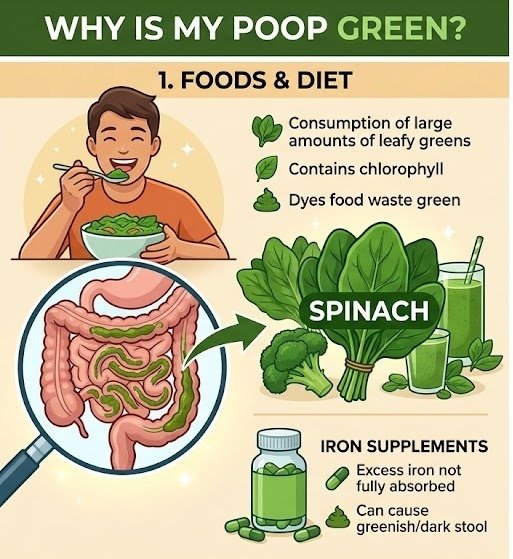
One of the most common reasons for green poop is consuming green-colored foods. Leafy vegetables like spinach, kale, and broccoli contain high amounts of chlorophyll, the pigment that gives plants their green color. This pigment can pass through your digestive system and temporarily change the color of your stool.
Artificial food coloring found in candies, drinks, and processed foods can also lead to green stool.
2. Fast Digestion
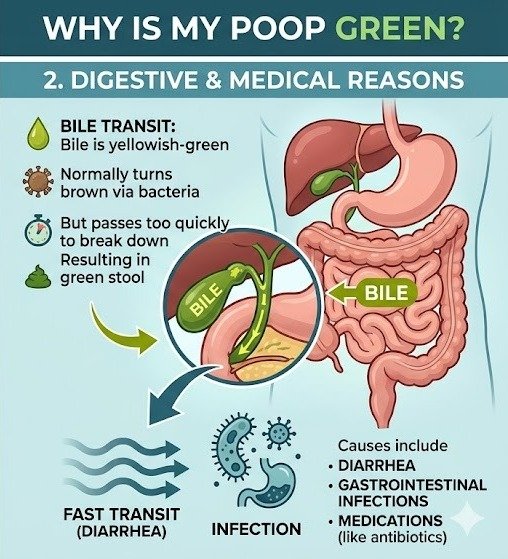
Your digestive system usually breaks down bile—a greenish fluid produced by the liver—turning it brown by the time it exits your body. However, if food moves too quickly through your intestines (a condition known as rapid transit), bile doesn’t have enough time to break down completely, resulting in green-colored stool.
This often happens during episodes of diarrhea or gastrointestinal upset.
3. Iron Supplements or Medications
Certain supplements and medications can influence stool color. Iron supplements, in particular, may cause stools to appear dark green or even black. Antibiotics can also disrupt gut bacteria, which may temporarily affect digestion and stool color.
4. Infections or Illness
Some bacterial, viral, or parasitic infections can speed up digestion, leading to green stool. Conditions like food poisoning or stomach infections often come with other symptoms such as abdominal pain, vomiting, or diarrhea.
5. Changes in Gut Bacteria
Your gut is home to trillions of bacteria that play a key role in digestion. Any imbalance—caused by antibiotics, illness, or dietary changes—can alter how bile is processed, sometimes resulting in green poop.
Is Green Poop Normal?
In most cases, green stool is not a cause for concern. If it’s linked to something you ate or a temporary digestive issue, it usually resolves on its own within a day or two. Paying attention to your recent diet can often explain the change.
When Should You Be Concerned?
While green poop is usually harmless, there are situations where it might signal a deeper issue. You should consider seeking medical advice if:
- Green stool persists for several days without an obvious cause
- You experience severe diarrhea or dehydration
- Your feces contains blood or mucus.
- You have ongoing abdominal pain or cramping
- You notice unexplained weight loss
These symptoms could indicate infections, digestive disorders, or other underlying health conditions that require proper diagnosis.
How to Prevent Green Stool
Preventing green stool depends on its cause. Here are a few simple steps:
- Maintain a balanced diet and monitor food intake
- Stay hydrated to support healthy digestion
- Avoid excessive consumption of artificially colored foods
- Take medications only as prescribed
- Support gut health with fiber-rich foods and probiotics
Green poop can be surprising, but it’s usually your body’s normal response to diet or digestion changes. Most cases are temporary and harmless. However, if the condition persists or is accompanied by other symptoms, it’s important to consult a healthcare professional.
Effects of AI in Upcoming Technology
Manhole – Essential Access Points in Urban Infrastructure
RCPC Manhole Covers and Frames
Read Also: Social Network Website Design