
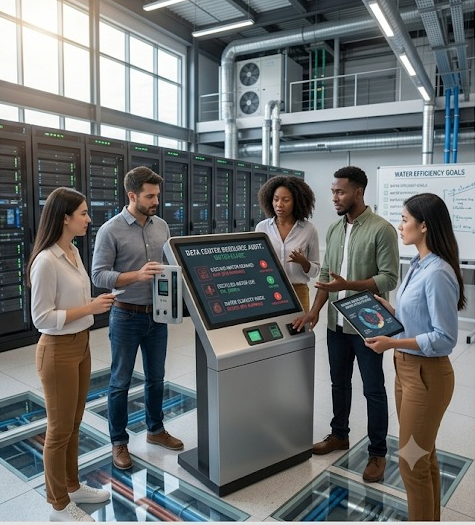
Data centers are the backbone of the modern digital world. Every email, video stream, online transaction, cloud application, and artificial intelligence service depends on powerful computing infrastructure housed in data centers. While these facilities make digital services fast and reliable, they also consume significant amounts of electricity, water, and physical resources. As digital demand continues to grow, understanding the environmental impact of data centers has become increasingly important.
What Are Data Centers?
A data center is a specialized building created to house, handle, and oversee vast quantities of digital data. It contains servers, storage systems, networking equipment, cooling infrastructure, backup power systems, and security technologies.
Large technology companies and cloud providers operate data centers around the world to support websites, applications, business software, streaming platforms, and emerging technologies such as artificial intelligence. The growing dependence on digital services has resulted in rapid expansion of these facilities.
High Energy Consumption
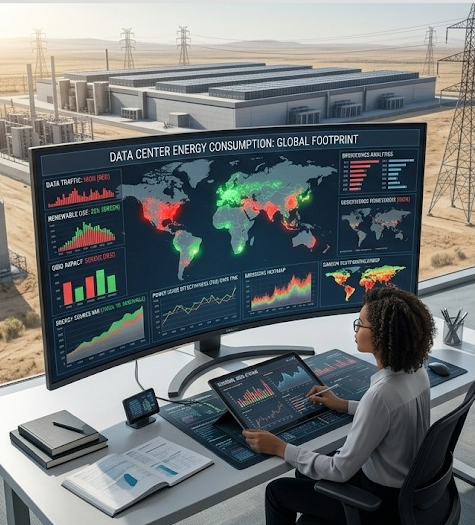
One of the biggest environmental concerns associated with data centers is their electricity consumption. Servers need continuous power to process information and remain available around the clock. Cooling equipment, lighting, networking devices, and backup systems also require energy.
If this electricity comes primarily from coal, natural gas, or other fossil fuels, data centers can contribute indirectly to greenhouse gas emissions. As computing workloads increase, particularly because of cloud computing and AI applications, managing energy demand has become a major sustainability challenge.
Carbon Emissions and Climate Change
The carbon footprint of a data center depends heavily on its energy source and operational efficiency. Facilities powered by carbon-intensive electricity can generate considerably more emissions than those using renewable energy.
Companies are therefore investing in solar power, wind energy, renewable energy contracts, and energy-efficient infrastructure. Improving server utilization and reducing unnecessary computing workloads can also help lower emissions.
Water Usage for Cooling
Electricity is not the only environmental resource affected by data centers. Many facilities use water-based cooling systems to prevent servers from overheating. In regions experiencing water shortages, high water consumption can create additional environmental and community concerns.
Modern facilities are exploring alternatives such as air cooling, closed-loop systems, liquid cooling, and advanced heat-management technologies. Choosing appropriate cooling methods based on local climate and water availability can significantly improve sustainability.
Electronic Waste and Hardware Disposal
Data centers regularly upgrade servers, storage equipment, networking hardware, batteries, and other components. When older equipment reaches the end of its useful life, it can become electronic waste.
Improper disposal of electronic equipment can lead to resource loss and environmental pollution. Responsible recycling, refurbishment, component reuse, and proper disposal programs can reduce the impact of data center hardware.
Land Use and Construction
Building a large data center requires land, construction materials, roads, electrical infrastructure, and supporting facilities. Construction itself can generate emissions and consume substantial quantities of concrete, steel, and other resources.
Developers can reduce these impacts by selecting sites carefully, using energy-efficient building designs, incorporating recycled materials, and considering existing infrastructure when planning new facilities.
How Data Centers Can Become Greener
The technology industry is adopting several strategies to make data centers more environmentally responsible. Renewable energy stands out as a crucial solution. Energy-efficient servers and intelligent workload management can further reduce electricity requirements.
Artificial intelligence can also help optimize cooling, predict equipment failures, and improve power management. Additionally, using heat recovery systems can allow waste heat from computing equipment to be reused for nearby buildings or industrial processes.
The Future of Sustainable Data Centers
The environmental impact of data centers will remain an important issue as digital services continue expanding. The solution is not simply to build fewer facilities but to make existing and future infrastructure more efficient and sustainable.
Better renewable energy integration, responsible water management, efficient cooling technologies, circular hardware practices, and smarter computing can help reduce the digital industry’s environmental footprint.
Data centers provide essential infrastructure for today’s connected society, but their environmental costs cannot be ignored. High electricity consumption, carbon emissions, water usage, electronic waste, and construction impacts all contribute to their overall footprint. Fortunately, advances in renewable energy, cooling systems, hardware recycling, and energy-efficient computing offer practical ways to improve sustainability.
Andaman and Nicobar Islands Forests
Tours And Travels Website Design