
The dissolution of the Soviet Union marked one of the most significant geopolitical events of the 20th century. On December 26, 1991, the Union of Soviet Socialist Republics (USSR) officially ceased to exist, leading to the emergence of 15 independent republics. This historic event reshaped international relations, economy, and global politics, leaving a lasting impact on the modern world.
Background of the Soviet Union
The Soviet Union, founded in 1922, was a federation of multiple socialist republics dominated by Russia. It was established following the Russian Revolution of 1917, which overthrew the Russian monarchy and brought the Bolsheviks to power. For decades, the USSR became a superpower, rivaling the United States during the Cold War era. Its centralized economy, strict political control, and communist ideology defined its global presence.
However, by the 1980s, the Soviet Union faced severe economic stagnation, political corruption, and social unrest. These challenges weakened its internal cohesion and set the stage for eventual dissolution.
Causes Leading to the Dissolution
Several factors contributed to the fall of the Soviet Union. Economic decline was a major factor, as the planned economy struggled with inefficiency, shortages, and low productivity. The arms race with the United States further drained resources.
Political reforms introduced by Mikhail Gorbachev, the last Soviet leader, also played a critical role. His policies of glasnost (openness) and perestroika (restructuring) aimed to modernize the economy and increase transparency. While these reforms were well-intentioned, they unintentionally accelerated nationalist movements and exposed the systemic weaknesses of the Soviet state.
Ethnic tensions among various republics also contributed significantly. Countries such as Ukraine, Lithuania, and Georgia demanded greater autonomy and eventually full independence. The failed 1991 coup by hardline communists against Gorbachev further destabilized the political system, making the collapse inevitable.
Key Events of the Dissolution
The dissolution process began in earnest in 1990 when several republics declared sovereignty. By August 1991, the failed coup attempt against Gorbachev weakened central authority and emboldened independence movements.
On December 8, 1991, the leaders of Russia, Ukraine, and Belarus signed the Belavezha Accords, declaring that the Soviet Union had ceased to exist and establishing the Commonwealth of Independent States (CIS). This agreement paved the way for the formal end of the USSR. On December 25, 1991, Gorbachev resigned as President, officially marking the end of Soviet rule.
Consequences of the Soviet Collapse
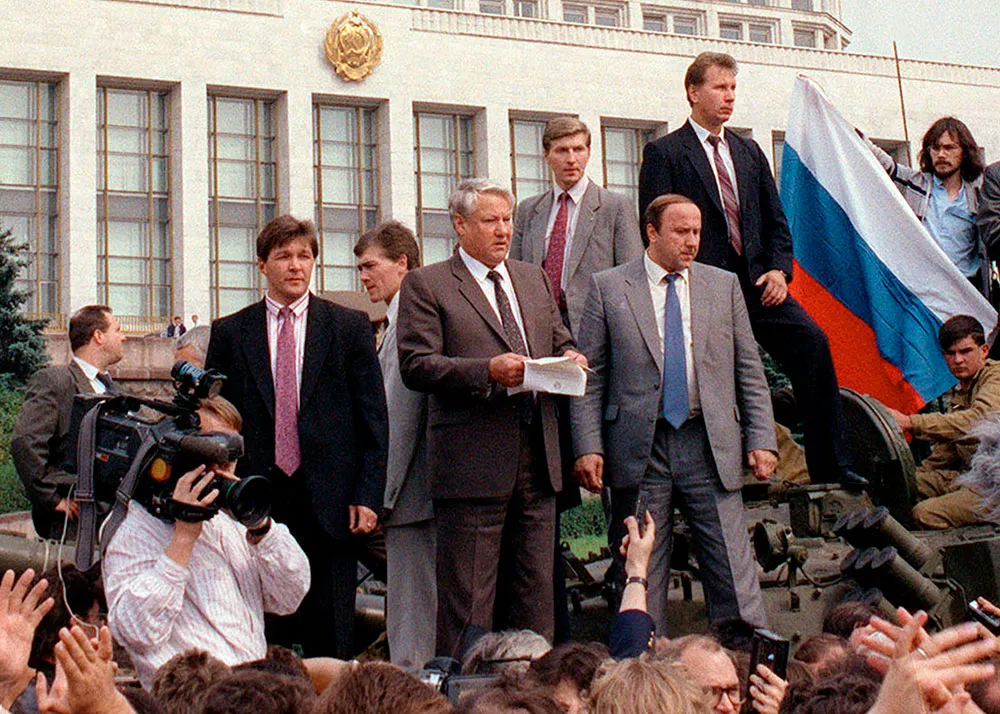
The collapse of the Soviet Union had profound global and domestic consequences. Internationally, it ended the Cold War and shifted the balance of power, leaving the United States as the world’s sole superpower. It also resulted in nuclear disarmament agreements and a reorientation of foreign policies in Europe and Asia.
Domestically, the transition from a centralized economy to a market-based system was challenging. Many former Soviet republics faced economic hardships, inflation, and unemployment. Political instability and conflicts, particularly in regions like Chechnya, Armenia, and Georgia, emerged as new challenges. Despite these difficulties, independence allowed the republics to establish their own governments, economies, and international relations.
Legacy of the Dissolution
The dissolution of the Soviet Union remains a pivotal moment in history. It serves as a reminder of the limitations of centralized power and the influence of economic and social forces on political stability. Gorbachev’s reforms, although controversial, highlighted the importance of openness and restructuring in addressing systemic issues.
Today, the legacy of the Soviet Union is seen in the cultural, political, and economic landscape of Eastern Europe and Central Asia. While some view the dissolution as a tragedy that ended a superpower, others see it as a liberation for nations seeking self-determination.
The dissolution of the Soviet Union was not just the end of a political entity; it was a transformation that reshaped global politics, economics, and society. Understanding this historic event helps explain contemporary international relations and the challenges faced by post-Soviet states in the 21st century.
What Happens After the Death of a Human
Survival of the Fittest Theory by Charles Darwin
Read Also: Education Website Design