
Bringing home a new puppy is exciting, but training your furry friend can feel challenging in the beginning. One of the most effective methods for teaching good behavior and creating a safe environment is crate training. Crate Training Puppy helps with housebreaking, reduces anxiety, and gives your puppy a comfortable personal space. When done correctly, your puppy will see the crate as a secure and relaxing place rather than a punishment.
What Is Crate Training?
Crate training is the process of teaching your puppy to stay comfortably inside a crate for short periods. Dogs naturally look for den-like spaces where they feel protected. A crate can become that safe place for your puppy when introduced properly.
The goal of crate training is not to keep your puppy confined all day. Instead, it helps establish routines, prevents destructive behavior, and supports healthy development.
Benefits of Crate Training a Puppy
Easier House Training
Puppies usually avoid soiling the place where they sleep. They are encouraged to hold their bladder until they are brought outside by the crate. This helps speed up potty training and reduces accidents inside the home.
Provides Safety and Security
A crate keeps your puppy safe when you cannot supervise them. Puppies often chew furniture, wires, shoes, and other dangerous objects. The crate prevents accidents and injuries.
Reduces Separation Anxiety
Proper crate training teaches puppies to stay calm when left alone. Over time, they become more independent and comfortable spending time by themselves.
Helps During Travel
Crate-trained dogs travel more comfortably in cars and during vet visits. Since they are already familiar with enclosed spaces, transportation becomes less stressful.
Choosing the Right Crate
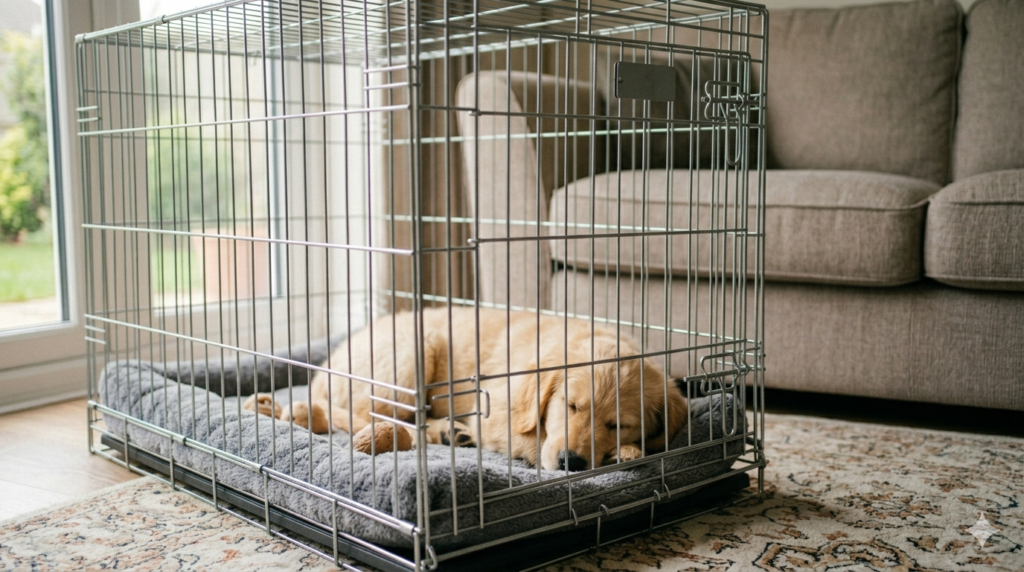
Selecting the correct crate size is very important. Your puppy should be able to stand up, turn around, and lie down comfortably. However, the crate should not be too large because extra space may encourage accidents.
There are several types of crates available:
- Wire crates with good ventilation
- Plastic travel crates
- Soft-sided crates for small breeds
- Heavy-duty crates for strong chewers
Choose a crate that matches your puppy’s size, breed, and behavior.
How to Start Crate Training
Introduce the Crate Slowly
Place the crate in a quiet area of your home where family members spend time. Keep the door open and allow your puppy to explore naturally. Add soft bedding, toys, and treats to create positive associations.
Use Treats and Praise
Encourage your puppy to enter the crate by placing treats inside. Whenever your puppy goes into the crate willingly, reward them with praise and affection.
Feed Meals Inside the Crate
Feeding your puppy inside the crate helps build a positive connection. Start by placing the food bowl near the entrance, then gradually move it further inside.
Start with Short Periods
Close the crate door for a few minutes while staying nearby. Slowly increase the duration as your puppy becomes more comfortable. Avoid forcing your puppy into the cage.
Common Crate Training Mistakes
Using the Crate as Punishment
Never send your puppy to the crate after bad behavior. This creates fear and negative feelings toward the crate.
Leaving the Puppy Too Long
Young puppies have limited bladder control. Leaving them in the crate for excessive hours can cause stress and accidents. Puppies usually need bathroom breaks every few hours depending on their age.
Ignoring Crying Completely
Some whining is normal at first, but constant distress may mean your puppy needs a bathroom break, water, or reassurance. Learn to identify the difference between attention-seeking and genuine discomfort.
Tips for Successful Puppy Crate Training
- Maintain a consistent daily routine
- Take your puppy outside frequently
- Keep the crate clean and comfortable
- Use positive reinforcement only
- Be patient and gentle during the process
Every puppy learns at a different pace. Consistency and kindness are the keys to success.
Crate Training Puppy is one of the best ways to build discipline, safety, and confidence in your new pet. With patience and positive reinforcement, your puppy will learn to enjoy their crate as a peaceful retreat. Proper crate training also makes housebreaking easier and helps prevent destructive habits. By following the right methods, you can create a happy and healthy environment for your puppy while strengthening your bond together.
Essential Pet Grooming Tips for a Healthy and Happy Pet
Tips and Tricks to Train your pet successfully
Read Also: Top 10 Health Benefits of Having a Pet