
Health insurance is no longer a luxury—it’s a necessity. With rising medical costs and unpredictable health emergencies, selecting the right insurance plan can protect both your health and finances. However, with so many options available, it’s important to Compare Health Insurance policies carefully before making a decision.
Why Comparing Health Insurance is Important
Not all health insurance plans are the same. Each policy differs in terms of coverage, premiums, benefits, and exclusions. Comparing plans allows you to:
- Find the most affordable premium
- Understand the extent of coverage
- Identify hidden charges or exclusions
- Choose a policy that matches your healthcare needs
By comparing, you avoid overpaying for unnecessary features or underinsuring yourself.
Key Factors to Compare in Health Insurance
When evaluating different policies, focus on these essential factors:
1. Premium vs Coverage
The premium is the amount you pay regularly for your policy. A lower premium might seem attractive, but it often comes with limited coverage. Always balance affordability with adequate protection.
2. Sum Insured
The insurer will only pay up to this amount during the course of a policy year. Choose a sum insured that can cover major medical expenses such as surgeries, hospitalization, and critical illnesses.
3. Network Hospitals
Insurance companies have tie-ups with specific hospitals where you can avail cashless treatment. A wider network ensures easier access to quality healthcare without upfront payments.
4. Waiting Period
Most policies have a waiting period for pre-existing diseases or specific treatments. Compare how long you’ll need to wait before these conditions are covered.
5. Claim Settlement Ratio
This indicates how many claims an insurer successfully settles. A higher ratio reflects reliability and better customer service.
Types of Health Insurance Plans to Compare
Understanding different types of plans helps you make a better choice:
Individual Health Insurance
Covers a single person. Ideal if you want personalized coverage based on your health needs.
Family Floater Plans
Covers the entire family under one policy. It is cost-effective and suitable for families with fewer health risks.
Critical Illness Insurance
Provides a lump sum amount upon diagnosis of serious illnesses like cancer or heart disease.
Senior Citizen Plans
Designed specifically for individuals above 60 years, offering coverage for age-related medical conditions.
Benefits of Comparing Health Insurance Online
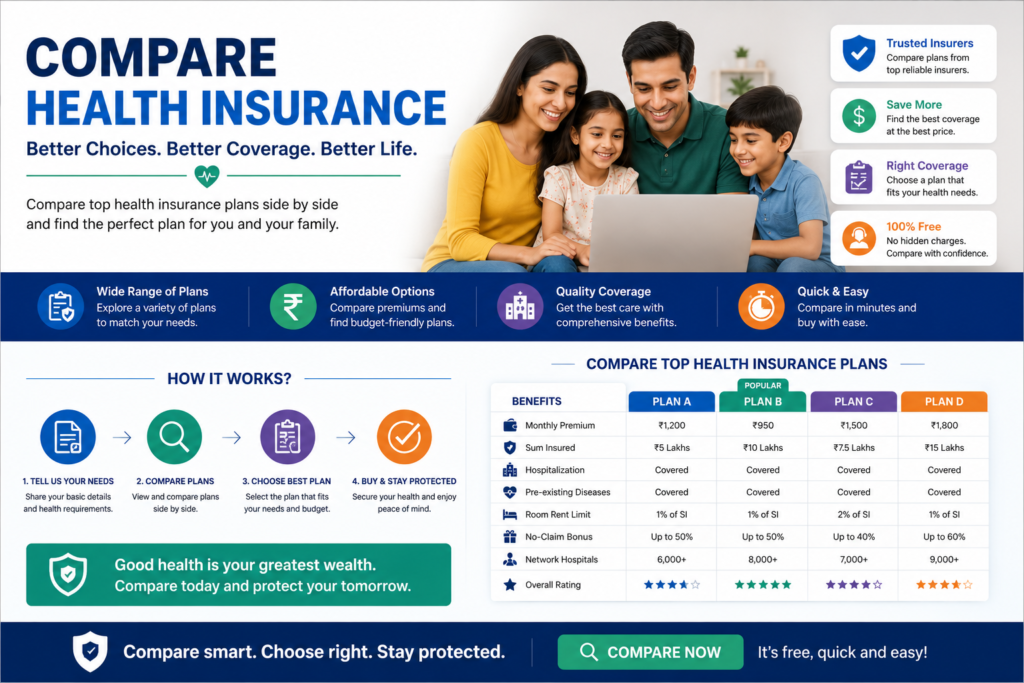
With digital platforms, comparing policies has become easier than ever. Online comparison tools help you:
- Instantly view multiple plans
- Compare premiums and benefits side-by-side
- Read customer reviews
- Save time and effort
Additionally, online platforms often offer discounts and transparent information, helping you make informed decisions.
Common Mistakes to Avoid
While comparing health insurance, avoid these common errors:
- Choosing the cheapest plan without checking coverage
- Ignoring policy exclusions
- Not reading the fine print
- Overlooking co-payment clauses
- Delaying purchase until a medical emergency arises
Being aware of these mistakes ensures you select a policy that truly meets your needs.
Tips to Choose the Best Health Insurance Plan
To make the best choice, follow these practical tips:
- Assess your medical history and family health risks
- Opt for a higher sum insured if budget allows
- Check for add-on benefits like maternity cover or ambulance charges
- Review the insurer’s reputation and customer service
- Compare at least 3–5 policies before deciding
Compare Health Insurance is a crucial step in securing your financial and physical well-being. By analyzing premiums, coverage, benefits, and insurer reliability, you can choose a plan that offers maximum protection at the best value. Take your time, do thorough research, and invest in a policy that ensures peace of mind for you and your family.
Liver Cancer Symptoms Cause and Remedy
Read Also: Medical Website Design