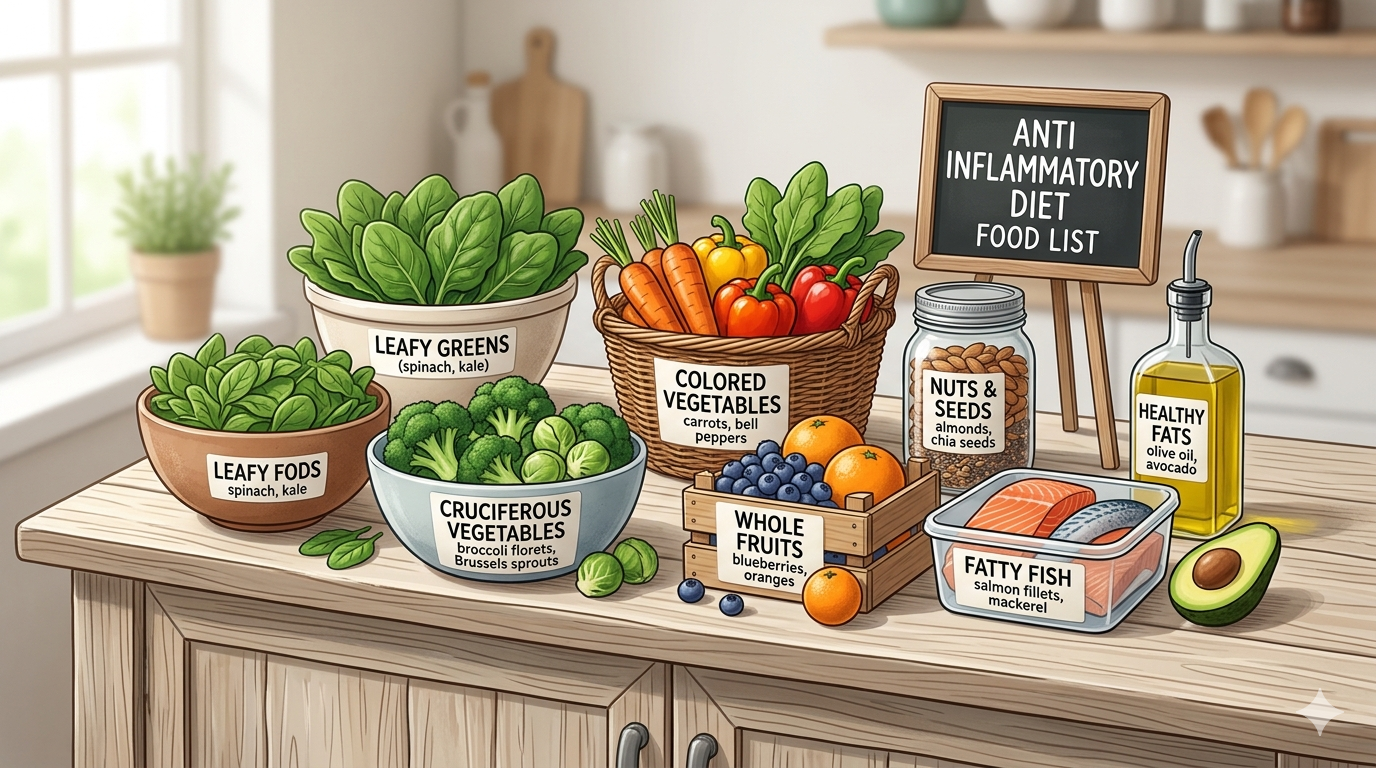
The body’s natural reaction to harm, illness, or hazardous substances is inflammation. While short-term inflammation helps the body heal, chronic inflammation can contribute to various health conditions, including heart disease, diabetes, arthritis, and obesity. Following an anti-inflammatory diet can help reduce inflammation and support overall health. This article provides a comprehensive anti-inflammatory diet food list to help you make healthier dietary choices.
What Is an Anti-Inflammatory Diet?
An anti-inflammatory diet focuses on consuming nutrient-rich foods that help reduce inflammation in the body. These foods are packed with antioxidants, vitamins, minerals, and healthy fats that support the immune system and protect cells from damage.
Foods to Include in Your Diet That Reduce Inflammation
1. Fatty Fish
Fatty fish are among the best sources of omega-3 fatty acids, which are known for their powerful anti-inflammatory properties.
Examples:
- Salmon
- Sardines
- Mackerel
- Tuna
- Herring
Eating fatty fish at least two times per week may help lower inflammation and improve heart health.
2. Leafy Green Vegetables
Green vegetables are rich in antioxidants, fiber, and essential nutrients that fight inflammation.
Best choices include:
- Spinach
- Kale
- Swiss chard
- Collard greens
- Arugula
Adding leafy greens to salads, smoothies, and meals is an easy way to boost your nutrient intake.
3. Berries
Berries contain anthocyanins, powerful antioxidants that help reduce inflammatory markers in the body.
Healthy berry options:
- Blueberries
- Strawberries
- Raspberries
- Blackberries
- Cranberries
These fruits are also low in calories and high in fiber.
4. Nuts and Seeds
Nuts and seeds provide healthy fats, protein, and antioxidants that support inflammation control.
Recommended options:
- Almonds
- Walnuts
- Chia seeds
- Flaxseeds
- Pumpkin seeds
A small handful daily can contribute to better overall health.
5. Olive Oil
Extra virgin olive oil is a key component of the Mediterranean diet and contains oleocanthal, a compound with anti-inflammatory effects similar to some pain-relief medications.
Use olive oil for:
- Salad dressings
- Cooking vegetables
- Healthy marinades
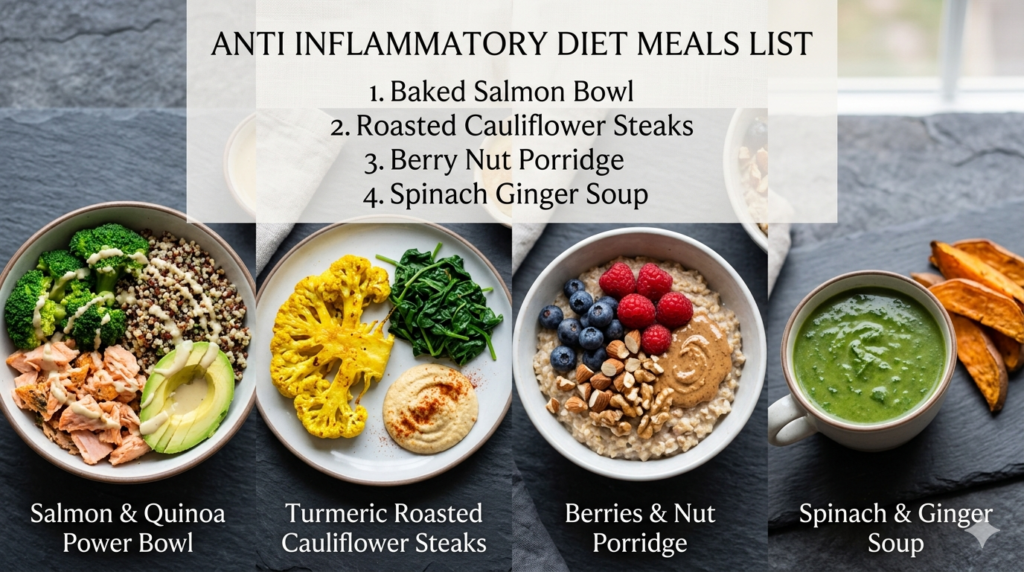
Fruits That Help Fight Inflammation
Many fruits are rich in vitamins and antioxidants that protect the body from chronic inflammation.
Citrus Fruits
- Oranges
- Lemons
- Grapefruits
- Limes
These fruits provide vitamin C, which supports immune function and reduces oxidative stress.
Avocados
Avocados contain healthy monounsaturated fats, fiber, and potassium. They may help reduce inflammatory compounds in the body while supporting heart health.
Anti-Inflammatory Herbs and Spices
Turmeric
Turmeric contains curcumin, a natural compound recognized for its strong anti-inflammatory and antioxidant properties.
Ginger
Ginger has been used for centuries to reduce inflammation and digestive discomfort. It can be added to tea, soups, smoothies, and stir-fries.
Garlic
Garlic contains sulfur compounds that may help strengthen the immune system and reduce inflammation.
Whole Grains for Reduced Inflammation
Refined carbohydrates may increase inflammation, while whole grains provide fiber and nutrients that support gut health.
Healthy whole grains include:
- Brown rice
- Oats
- Quinoa
- Barley
- Whole wheat
Fiber-rich foods help maintain healthy digestion and may lower inflammatory markers.
Green Tea and Other Healthy Beverages
Green tea contains polyphenols and catechins, antioxidants that help combat inflammation and cell damage.
Other healthy beverage choices include:
- Herbal teas
- Water infused with fruits
- Fresh vegetable juices
Avoid sugary drinks and excessive alcohol consumption, as they can promote inflammation.
Foods to Avoid on an Anti-Inflammatory Diet
To maximize the benefits of an anti-inflammatory eating plan, limit or avoid:
- Processed foods
- Sugary snacks and beverages
- Refined carbohydrates
- Fried foods
- Processed meats
- Excessive alcohol
Reducing these foods can help lower inflammation and improve overall wellness.
Following an anti-inflammatory diet is one of the most effective ways to support long-term health. By including fatty fish, leafy greens, berries, nuts, seeds, olive oil, whole grains, and antioxidant-rich fruits in your daily meals, you can naturally reduce inflammation and improve your overall well-being. Making small dietary changes today can lead to significant health benefits in the future.
Liver Cancer Symptoms Cause and Remedy
Read Also: Medical Website Design