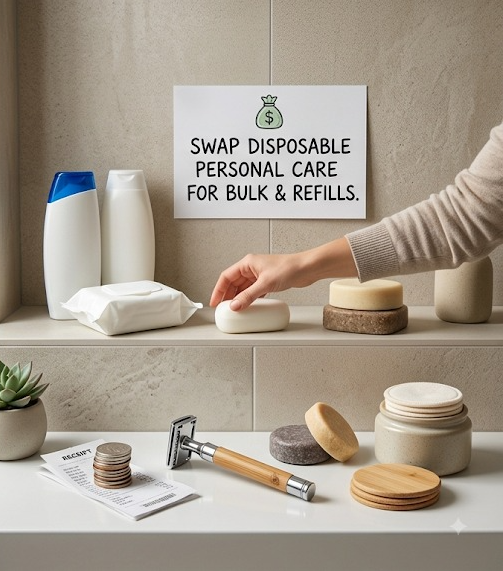
Living a greener lifestyle does not always mean spending more money. In fact, many eco-friendly swaps that save money can reduce household expenses while also helping protect the environment. From reusable products to energy-efficient habits, small changes can make a noticeable difference to your monthly budget.
The best part is that sustainable living does not require a complete lifestyle makeover. You can start with simple replacements that reduce waste, lower consumption, and encourage smarter spending.
Switch to Reusable Water Bottles
Buying bottled water regularly can become an unnecessary expense. A durable reusable water bottle is a simple alternative that can save money over time. Instead of purchasing single-use plastic bottles while traveling, working, or exercising, you can refill your bottle whenever needed.
Reusable bottles also help reduce plastic waste. Choosing stainless steel or another long-lasting material can make this swap useful for years, making it one of the easiest sustainable money-saving ideas to adopt.
Use Cloth Bags Instead of Plastic Bags
Reusable shopping bags are another practical eco-friendly replacement. Plastic bags may seem inexpensive, but repeated shopping trips can add up, especially where stores charge for bags.
Keep a few washable cloth bags near your door or inside your vehicle so they are easy to remember. They can be reused hundreds of times, reducing both shopping expenses and plastic consumption.
Replace Disposable Paper Towels
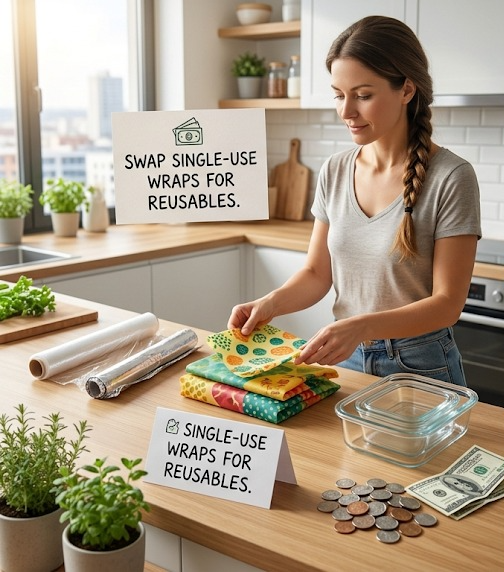
Paper towels are convenient, but buying them repeatedly can increase household costs. Old cotton T-shirts, towels, or other suitable fabrics can be turned into reusable cleaning cloths.
These washable alternatives work well for cleaning kitchen surfaces, windows, furniture, and other areas around the home. Once washed, they can be used again, making them a simple zero-waste swap for saving money.
Choose Energy-Efficient Lighting
Replacing traditional bulbs with LED bulbs can be an excellent long-term investment. LED lighting generally consumes less electricity and lasts considerably longer than many conventional bulbs.
Although quality LED bulbs may cost more initially, their lower energy consumption and longer lifespan can help reduce electricity and replacement costs. Remembering to switch off unnecessary lights can increase those savings further.
Cook More Meals at Home
Food waste and frequent takeout purchases can have a significant impact on your budget. Preparing meals at home gives you better control over ingredients, portions, and spending.
Plan meals around ingredients you already have before buying additional groceries. Store leftovers properly and use them creatively in another meal. This approach reduces food waste while helping you avoid unnecessary restaurant and delivery expenses.
Repair Before Replacing
When something breaks, replacing it immediately is not always the most economical option. Clothes, furniture, appliances, and household items may sometimes be repaired instead.
Learning basic repair skills can save money and extend the useful life of your belongings. Simple actions such as sewing a loose button, repairing a small tear, or fixing minor household problems can prevent unnecessary purchases.
Buy Second-Hand When Practical
Second-hand shopping is both environmentally responsible and budget-friendly. Buying used furniture, books, clothing, electronics, or other suitable products keeps usable items in circulation and reduces demand for new resources.
Before purchasing something new, consider whether a good-quality used alternative could meet your needs. However, check condition, safety, warranties, and expected lifespan before making a purchase.
Reduce Your Everyday Consumption
One of the most effective eco-friendly swaps that save money is simply buying less. Before making a purchase, ask whether you genuinely need the item.
Avoiding impulse purchases reduces clutter, saves money, and lowers the environmental impact associated with manufacturing, packaging, transportation, and disposal.
Start Small and Build Sustainable Habits
Eco-friendly living becomes easier when changes are introduced gradually. Start with swaps that require little effort, such as reusable bags, refillable bottles, washable cleaning cloths, and energy-efficient lighting.
Over time, these habits can reduce recurring expenses while creating a more sustainable household. The goal is not perfection but making thoughtful choices that benefit both your wallet and the planet.
Living in a sustainable way and cutting costs can be done simultaneously. By choosing reusable products, reducing energy consumption, repairing belongings, planning meals, and purchasing thoughtfully, you can lower everyday expenses while producing less waste.
The most valuable eco-friendly swaps that save money are often the simplest ones. Start with a few practical changes today, turn them into regular habits, and gradually create a greener lifestyle that is easier on both the environment and your budget.
Andaman and Nicobar Islands Forests
Tours And Travels Website Design