Cellular biology of human reproduction is the study of how specialized cells work together to create new life. Every human begins as a single fertilized cell formed through the union of male and female reproductive cells. This remarkable process involves cell division, genetic inheritance, hormone regulation, and embryonic development. Understanding the cellular biology of human reproduction helps explain fertility, pregnancy, genetic disorders, and advances in reproductive medicine.
What Is Cellular Biology in Human Reproduction?
The structure and operation of cells, the fundamental building blocks of life, are the focus of cellular biology. In human reproduction, the two most important reproductive cells are the sperm cell and the egg cell (ovum). These cells carry genetic material that combines during fertilization to produce a unique individual.
Unlike most body cells, reproductive cells contain only 23 chromosomes instead of the usual 46. This ensures that when fertilization occurs, the resulting embryo receives a complete set of 46 chromosomes—23 from each parent.
Formation of Reproductive Cells
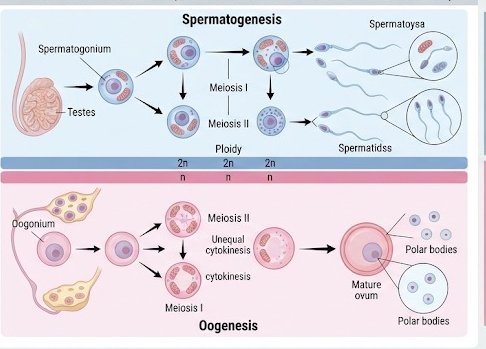
The production of reproductive cells occurs through a specialized type of cell division called meiosis.
In males, meiosis takes place in the testes and produces millions of sperm cells every day. In females, meiosis occurs in the ovaries, where one mature egg is typically released during each menstrual cycle. Meiosis not only reduces the chromosome number by half but also creates genetic variation through the exchange of genetic material. This variation contributes to the uniqueness of every individual.
Fertilization-The Beginning of Human Life
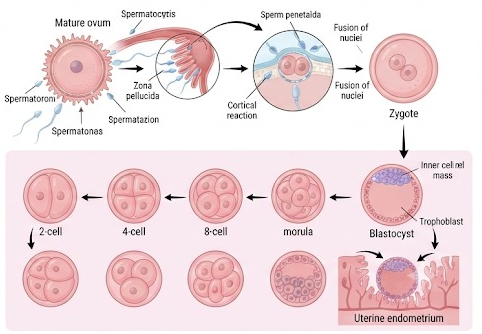
Fertilization occurs when a healthy sperm successfully penetrates the outer layer of a mature egg. Once inside, the genetic material from both cells combines to form a single-celled zygote.
The zygote contains all the genetic instructions needed for growth and development. Immediately after fertilization, rapid cell division begins while the zygote travels through the fallopian tube toward the uterus. This early stage is essential for establishing a healthy pregnancy.
Cell Division and Early Embryonic Development
After fertilization, the zygote undergoes repeated mitotic cell divisions, producing many genetically identical cells.
These divisions transform the single cell into a multicellular embryo. Within a few days, the embryo develops into a blastocyst, a hollow structure containing an inner cell mass that will eventually form the baby. The blastocyst implants into the lining of the uterus, where it receives nutrients and oxygen necessary for continued development.
Proper cell division during this stage is crucial because errors may lead to developmental abnormalities or pregnancy loss.
The Role of DNA and Genes
DNA carries the hereditary information responsible for physical characteristics, growth, and body functions. During reproduction, genes inherited from both parents determine traits such as eye color, hair texture, blood type, and even susceptibility to certain inherited diseases.
Every cell in the developing embryo contains identical DNA, but different genes become active in different cells. This selective gene expression allows cells to specialize into muscles, nerves, skin, bones, and internal organs.
Hormonal Regulation of Reproductive Cells
Hormones coordinate every stage of human reproduction. Hormones released by the brain encourage the production of sex hormones and reproductive cells by the testes and ovaries.
In females, estrogen and progesterone regulate ovulation, prepare the uterus for implantation, and support pregnancy. In males, testosterone promotes sperm production and maintains reproductive function. A balanced hormonal system is essential for normal fertility and healthy embryonic development.
Importance in Modern Medicine
Knowledge of the cellular biology of human reproduction has transformed medical science. It supports treatments for infertility, including in vitro fertilization (IVF), genetic screening of embryos, fertility preservation, and advanced prenatal testing.
Researchers also use stem cell biology and reproductive genetics to better understand inherited diseases, improve pregnancy outcomes, and develop innovative therapies for reproductive health disorders.
The cellular biology of human reproduction reveals the extraordinary processes that create and sustain human life. From meiosis and fertilization to embryonic development and genetic inheritance, every stage depends on highly coordinated cellular activities. Understanding these biological mechanisms not only enhances our knowledge of human development but also supports medical advances that improve reproductive health, fertility treatment, and the prevention of genetic diseases. As research continues to evolve, cellular biology remains one of the most important foundations of modern reproductive science.
How to Choose the Best Online Courses for Career Advancement
Exploring the Top Scientific Theories That Changed the World